

What is KLOW peptide?
KLOW is a research-context name for one vial that holds four peptides: GHK-Cu, KPV, BPC-157, and TB-500. Each one is a known peptide with its own research. KLOW is the name sellers use when all four come premixed.
The most common version is an 80 mg vial with 50 mg of GHK-Cu and 10 mg each of KPV, BPC-157, and TB-500. Some sellers use a different ratio, so read the label. KLOW is sold as a research compound. The FDA hasn't approved it, and no published trial has tested the four peptides together.
Looking for doses?
Amounts and schedules are in the KLOW dosing guide, along with the KLOW dosage chart and vial math.
Where the name comes from
The letters don't stand for anything official. Most people read KLOW as a twist on GLOW, an older blend of GHK-Cu, BPC-157, and TB-500. The K is usually taken to mean KPV, the peptide KLOW adds. Since nobody owns the name, two sellers can print "KLOW" on vials with different contents. Check the label and the test report before you trust a product.
You'll also see it called "KLOW 80," "KLOW blend," or "KLOW stack." They all mean the same four-peptide mix. The 80 is the total milligrams in the vial.
What's in KLOW: the four peptides
Each peptide in KLOW comes from a separate line of research, and the evidence behind them is uneven. GHK-Cu makes up most of the vial. The other three share the rest equally.
KLOW ingredients in the standard 80 mg vial
Peptide
Share of vial
50 mg (62.5%)
What it is
A copper-binding peptide found naturally in blood
Studied for
Collagen, skin repair, changes in gene activity
Best evidence so far
Cell, animal, and skin-cream studies
Peptide
Share of vial
10 mg (12.5%)
What it is
Three amino acids from the end of the hormone alpha-MSH
Studied for
Gut inflammation
Best evidence so far
Mouse colitis studies only
Peptide
Share of vial
10 mg (12.5%)
What it is
A 15-amino-acid peptide based on a stomach protein
Studied for
Tendon, ligament, muscle, and gut repair
Best evidence so far
Mostly animal studies, plus a few small human pilots
Peptide
Share of vial
10 mg (12.5%)
What it is
A lab-made peptide based on thymosin beta-4
Studied for
Cell movement and wound closure
Best evidence so far
Phase 2 wound trials of full thymosin beta-4
| Peptide | Share of vial | What it is | Studied for | Best evidence so far |
|---|---|---|---|---|
| GHK-Cu | 50 mg (62.5%) | A copper-binding peptide found naturally in blood | Collagen, skin repair, changes in gene activity | Cell, animal, and skin-cream studies |
| KPV | 10 mg (12.5%) | Three amino acids from the end of the hormone alpha-MSH | Gut inflammation | Mouse colitis studies only |
| BPC-157 | 10 mg (12.5%) | A 15-amino-acid peptide based on a stomach protein | Tendon, ligament, muscle, and gut repair | Mostly animal studies, plus a few small human pilots |
| TB-500 | 10 mg (12.5%) | A lab-made peptide based on thymosin beta-4 | Cell movement and wound closure | Phase 2 wound trials of full thymosin beta-4 |
Ratios vary between sellers. 50 / 10 / 10 / 10 mg is the most common split, and no regulator sets it.
GHK-Cu, the copper peptide
GHK-Cu is a small peptide made of three amino acids (glycine, histidine, and lysine) bound to copper. It's found naturally in human blood, and levels drop with age. Much of the research comes from Loren Pickart's lab. Those studies report more collagen and elastin, antioxidant effects, and shifts in the activity of thousands of genes in cell data. Because GHK-Cu is most of the vial, mixed KLOW often looks light blue from the copper.
KPV, the anti-inflammatory fragment
KPV is three amino acids (lysine, proline, and valine) from the end of a hormone called alpha-MSH. In mouse studies of colitis, KPV got into gut cells through a transporter called PepT1. Inside the cells, it turned down NF-κB, a protein that switches on inflammation. Of the four peptides in KLOW, KPV is the one picked for inflammation. The other three are mostly studied for repair.
BPC-157, the repair peptide
BPC-157 is a chain of 15 amino acids based on a protein found in stomach juice. Animal studies report faster tendon and ligament healing, new blood vessel growth, and protection of the gut lining. Human data is scarce. A 2025 review counted 36 studies, and only one of them was in people.
TB-500, the cell-movement peptide
TB-500 is a lab-made peptide based on thymosin beta-4. Thymosin beta-4 binds actin, the protein cells use to move around. Researchers study it for helping cells crawl into a wound and close it. Most human trials tested full-length thymosin beta-4, which is a bigger molecule than the TB-500 in research vials. Labels vary too, so "TB-500" on one vial may not match "TB-500" on another.
KLOW peptide benefits: what people use it for
The KLOW benefits people talk about are research-context interests and community reports. Each one traces back to studies of a single peptide. None has been shown for the blend.
Soft-tissue and tendon recovery
This is the top reason people bring up KLOW. The interest comes from BPC-157 and TB-500, which researchers have studied in tendon, ligament, muscle, and wound models. Most of that work is in animals. The human data comes from thymosin beta-4 trials on skin ulcers, which say little about tendons.
Skin quality and collagen
GHK-Cu is behind this one. Lab and skin-cream studies report more collagen and elastin and better skin repair. Very little of that research used the injected form that comes in KLOW vials. Skin is also where KLOW and GLOW overlap most.
Gut lining and gut inflammation
KPV lowered colitis in mice, and animal studies of BPC-157 report protection of the stomach and gut lining. Neither peptide has solid human gut data in the form used in KLOW.
Background inflammation
This is the use KPV adds. BPC-157, TB-500, and GHK-Cu also calm inflammation in lab studies, but only as a side effect of repair. KPV is studied mainly for its effect on inflammation signals.
All-in-one recovery
Many people call KLOW a "healing stack" because one vial covers repair, skin, and inflammation interests at once. That's a convenience argument. No study of the combination backs it up.
No proof for the blend
Not FDA-approved. No published trial has evaluated the four-peptide KLOW combination together. Each benefit above comes from studies of single peptides, most of them in animals or cells.
KLOW results and before-and-after photos
Lots of people search for KLOW results and before-and-after photos. There's no way to check those photos. They rarely name the product, list what else changed, or show that the vial matched its label, so read them as personal stories. For how long the single-peptide studies ran, see the KLOW cycle length guide.
How to choose a KLOW vendor
Many research suppliers sell KLOW, and nobody controls the name, so two vials with the same label can hold different things. Testing a blend is also harder than testing one peptide. The seller has to show that all four peptides are there in the right amounts. Before you buy, check these five things.
- 01
Check the ratio on the label
A standard KLOW vial lists 50 mg GHK-Cu, 10 mg KPV, 10 mg BPC-157, and 10 mg TB-500, for 80 mg total. If the label shows only the total, ask the seller for the breakdown.
- 02
Ask for a COA that matches your lot
A certificate of analysis (COA) should carry the same lot or batch number as your vial. If the COA has no date, or the seller posts the same one for every batch, it can't tell you much about your vial.
- 03
Look for HPLC and mass spec results
HPLC measures purity. Mass spectrometry (MS) confirms which peptides are in the vial. For KLOW, the report should name all four peptides. One purity number for the whole blend isn't enough.
- 04
Prefer an outside lab
Results from an independent lab carry more weight than the seller's own testing. Some sellers also post endotoxin or sterility tests, which is a good sign.
- 05
Check the basics
Look for real contact details, a clear shipping and storage policy, and "research use only" labeling. Cold packs or insulated shipping help protect peptides on the way to you.
Red flags
- No COA, or a COA with no lot number, date, or lab name.
- A single purity number for the blend, with no result for each peptide.
- Medical claims like "heals" or "cures," or dosing advice for people, on the product page.
- A price far below what other sellers charge for an 80 mg vial.
- A ratio on the COA that doesn't match the label, or a label that changes from order to order.
- Powder that arrives wet, clumped, brown, or cloudy. A light blue color is normal for blends with GHK-Cu.
Run the same checks on this seller. Check the COA for your lot before using the product in research.
Featured KLOW supplier
Choose your region
Use discount code SAVE10 at Peptira checkout. See why we love Peptira.
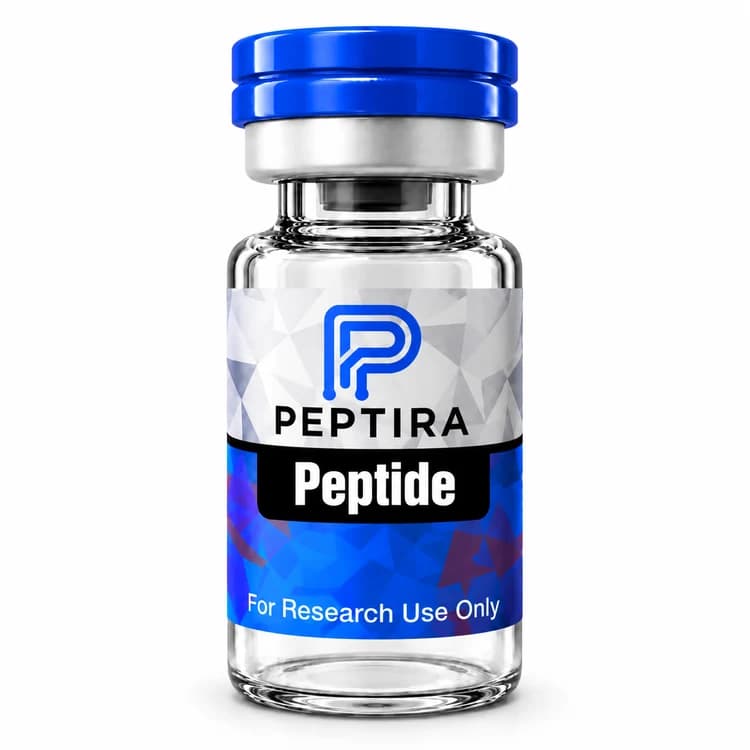
KLOW
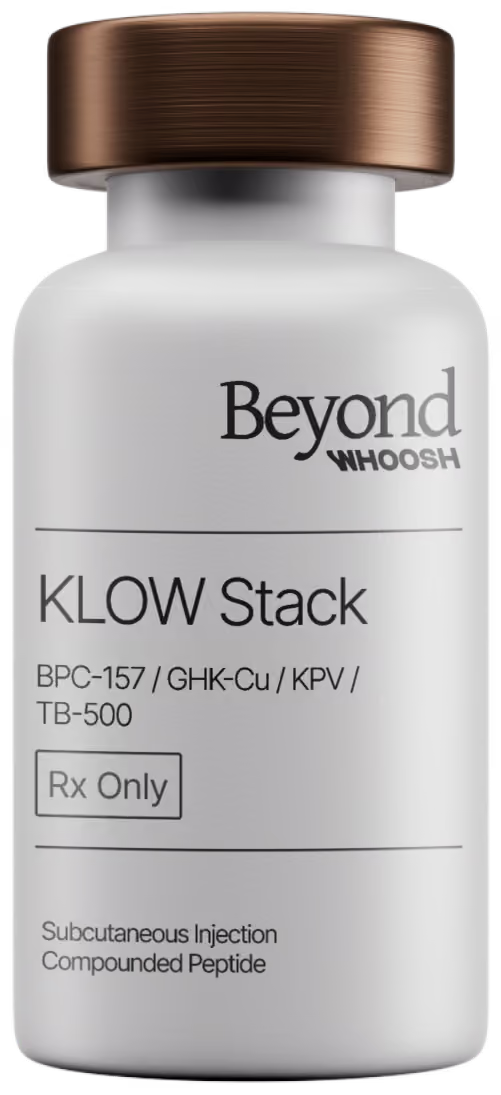
Pharmacy Grade KLOW Stack
At-Home Blood Test
Research Supplies
Disclosure: supply links may earn PDP a commission at no cost to you.
Affiliate disclosure: PDP may earn a commission from eligible supply links at no added cost to you. Product details, testing, prices, and discount terms can change, so check the current listing before ordering.
Companion Supplies & Routine Support
Why these four peptides are combined
The idea behind KLOW is layering. Each peptide is studied in a different step of tissue repair, and the hope is that four steps together cover more than one. People usually describe the layers like this:
Rebuild: GHK-Cu
Studied for collagen production, tissue remodeling, and changes in gene activity.
Blood flow: BPC-157
Studied in animals for new blood vessel growth and for protecting soft tissue and the gut lining.
Cell movement: TB-500
Studied for helping cells move into damaged tissue and close wounds.
Inflammation: KPV
Studied for calming inflammation through NF-κB, mostly in gut models.
What KPV adds over GLOW
GLOW already covers rebuilding, blood flow, and cell movement. KLOW keeps those three and adds KPV. The GLOW peptides calm inflammation only as a side effect of repair, while KPV goes after the inflammation signal itself. That's why people who pick KLOW over GLOW usually care about inflammation or gut health. Without that interest, the two blends are almost the same.
Why GHK-Cu takes up most of the vial
GHK-Cu is 62.5% of a standard KLOW vial. KLOW kept that share from GLOW, where GHK-Cu was already the biggest part. So any amount drawn from a KLOW vial is mostly GHK-Cu, and there's no way to change the other three on their own. Separate vials avoid that problem but take more work.
The combination hasn't been tested
No study has checked whether GHK-Cu, KPV, BPC-157, and TB-500 work better together, worse together, or no differently than alone. The layering idea comes from how each peptide works by itself. Nobody has tested it as a combination in animals or people.
What the research shows
There's no direct evidence for KLOW. We couldn't find a peer-reviewed human or animal study of the four-peptide combination, and ClinicalTrials.gov lists no trial of it. Every claim about KLOW comes from separate studies of each peptide.
Evidence for each KLOW ingredient
Peptide
TB-500 / thymosin beta-4
Strongest human data
Two Phase 2 trials in leg ulcers and pressure ulcers (full-length thymosin beta-4)
Most of the evidence
Animal studies of wounds, the heart, and the eye
Peptide
BPC-157
Strongest human data
Three small pilot studies (knee pain, bladder pain, IV safety)
Most of the evidence
Animal studies of tendons, muscle, and the gut
Peptide
GHK-Cu
Strongest human data
Skin-cream studies, with little data on the injected form
Most of the evidence
Cell and gene-activity studies
Peptide
KPV
Strongest human data
None published
Most of the evidence
Mouse colitis studies
| Peptide | Strongest human data | Most of the evidence |
|---|---|---|
| TB-500 / thymosin beta-4 | Two Phase 2 trials in leg ulcers and pressure ulcers (full-length thymosin beta-4) | Animal studies of wounds, the heart, and the eye |
| BPC-157 | Three small pilot studies (knee pain, bladder pain, IV safety) | Animal studies of tendons, muscle, and the gut |
| GHK-Cu | Skin-cream studies, with little data on the injected form | Cell and gene-activity studies |
| KPV | None published | Mouse colitis studies |
Rows run from strongest to weakest evidence. None of these studies used the KLOW blend.
TB-500 and thymosin beta-4
Thymosin beta-4 has the best human data of the four. Treadwell and colleagues (2012) reported two Phase 2 trials in people with leg ulcers from poor circulation and with pressure ulcers. Wounds healed faster in the patients who responded. A 2012 review by Goldstein and colleagues explains how it may work: it binds actin, helps cells move, and helps keep cells alive. These trials used full-length thymosin beta-4 rather than TB-500, and none led to an FDA-approved drug.
BPC-157 evidence
BPC-157 has dozens of animal studies and very few human ones. A 2025 systematic review by Vasireddi and colleagues found 35 animal or lab studies and 1 clinical study. A 2025 review by McGuire and colleagues came to a similar view and called BPC-157 investigational, meaning it's still being tested. The few human reports are small pilots without control groups. One IV safety pilot (Lee and Burgess, 2025) had two people in it.
GHK-Cu evidence
GHK-Cu has decades of lab research. Pickart and Margolina's 2018 review reports shifts in thousands of human genes in a cell-line database, and KLOW marketing often quotes that number. Gene changes in cells don't show that GHK-Cu does anything in a living person, though. Most human GHK-Cu studies tested skin creams. Few looked at the injected form in KLOW vials.
KPV evidence
The KPV research we found is all in mice and cells. Kannengiesser and colleagues (2008) found that it lowered inflammation in two mouse models of colitis. Dalmasso and colleagues (2008) showed that it enters gut cells through PepT1. We found no published human trial of KPV.
Summary
Of KLOW's four peptides, one has Phase 2 wound trials, one has three small human pilots, one has strong lab and skin-cream data, and one has only been tested in mice. That doesn't add up to proof that the blend works in people. KLOW is an untested research blend.
KLOW vs GLOW vs Wolverine
These three blends build on each other. Wolverine has two peptides, GLOW adds a third, and KLOW adds a fourth. KLOW and GLOW differ by one ingredient, KPV.
KLOW vs GLOW vs Wolverine at a glance
Peptides
Wolverine
BPC-157 + TB-500
GLOW
GHK-Cu + BPC-157 + TB-500
KLOW
GHK-Cu + KPV + BPC-157 + TB-500
Typical vial
Wolverine
10-20 mg
GLOW
70 mg
KLOW
80 mg
Main research focus
Wolverine
Soft-tissue and tendon repair
GLOW
Repair plus skin and collagen
KLOW
Repair and skin, plus inflammation and gut
Includes GHK-Cu
Wolverine
No
GLOW
Yes
KLOW
Yes
Includes KPV
Wolverine
No
GLOW
No
KLOW
Yes
Human trials of the blend
Wolverine
None
GLOW
None
KLOW
None
| Wolverine | GLOW | KLOW | |
|---|---|---|---|
| Peptides | BPC-157 + TB-500 | GHK-Cu + BPC-157 + TB-500 | GHK-Cu + KPV + BPC-157 + TB-500 |
| Typical vial | 10-20 mg | 70 mg | 80 mg |
| Main research focus | Soft-tissue and tendon repair | Repair plus skin and collagen | Repair and skin, plus inflammation and gut |
| Includes GHK-Cu | No | Yes | Yes |
| Includes KPV | No | No | Yes |
| Human trials of the blend | None | None | None |
These are the most common vial sizes. Sellers vary.
KLOW vs GLOW
GLOW and KLOW have the same amounts of GHK-Cu, BPC-157, and TB-500. KLOW adds 10 mg of KPV. For skin, collagen, and tissue repair research, GLOW covers the same ground. KLOW makes more sense when inflammation or gut health is part of the research question. Neither blend has been tested in a trial, so no study shows that one beats the other. See the GLOW stack guide for more on GLOW.
KLOW vs Wolverine
Wolverine is the two-peptide base of BPC-157 and TB-500. It's aimed at soft-tissue and tendon research and leaves out GHK-Cu and KPV. KLOW covers more ground. It also has more ingredients that can go wrong in manufacturing, and more possible causes if a side effect shows up. The Wolverine stack guide covers the simpler blend.
KLOW vs separate vials
Some people skip the premix and buy each peptide alone. With separate vials, each peptide can be changed or dropped, and it's easier to tell which one caused a side effect. A KLOW vial is simpler and often costs less, but every draw gives all four peptides in the same fixed ratio.
KLOW side effects, safety, and FDA status
No one has published a safety study of the KLOW blend. What we know comes from research on single peptides and from user reports. For a longer list of reported side effects and who is usually told to avoid KLOW, see the side effects section of the KLOW dosing guide.
Injection-site reactions
Users most often report redness, stinging, or mild swelling where they injected. Some see a faint blue tint at the site and put it down to the copper in GHK-Cu.
Copper build-up from GHK-Cu
GHK-Cu is most of the vial. Using it for a long time without a break could, in theory, lead to copper build-up. That worry is the main reason community protocols include time off. People with copper disorders such as Wilson's disease are often told to avoid it.
New blood vessel growth from BPC-157 and TB-500
Both peptides help grow new blood vessels in animal studies. That's part of why repair researchers are interested in them. It's also a worry for anyone with current or past cancer, since tumors need blood vessels too.
Unknown interactions
No study has looked at what happens when the four peptides are taken together. Nobody knows whether they interact.
Quality and contamination
Research peptides aren't made to drug-grade standards. Purity, sterility, and the true amount in the vial vary from seller to seller. With four peptides in one vial, there are four chances for an ingredient to be wrong or missing.
Is KLOW FDA-approved?
No. The FDA hasn't approved KLOW or any of its four peptides for use in people. Their status for compounding pharmacies has changed several times since 2023:
FDA compounding timeline for KLOW's peptides
When
2023
What happened
The FDA put BPC-157, TB-500, KPV, and injectable GHK-Cu in 503A Category 2, its list of substances with possible safety risks. That kept most compounding pharmacies from using them.
When
April 2026
What happened
The FDA took BPC-157, TB-500, and KPV off Category 2 (effective April 22) and scheduled an advisory committee review. Injectable GHK-Cu got a separate review, planned by February 2027.
When
July 23, 2026
What happened
The Pharmacy Compounding Advisory Committee narrowly voted to recommend adding BPC-157, KPV, and TB-500 to the 503A Bulks List. FDA staff scientists had advised against it.
When
October 2026
What happened
The vote isn't binding. The FDA still has to propose and finalize a rule, which can take up to a year. Until it does, pharmacies can't compound these peptides under 503A.
| When | What happened |
|---|---|
| 2023 | The FDA put BPC-157, TB-500, KPV, and injectable GHK-Cu in 503A Category 2, its list of substances with possible safety risks. That kept most compounding pharmacies from using them. |
| April 2026 | The FDA took BPC-157, TB-500, and KPV off Category 2 (effective April 22) and scheduled an advisory committee review. Injectable GHK-Cu got a separate review, planned by February 2027. |
| July 23, 2026 | The Pharmacy Compounding Advisory Committee narrowly voted to recommend adding BPC-157, KPV, and TB-500 to the 503A Bulks List. FDA staff scientists had advised against it. |
| October 2026 | The vote isn't binding. The FDA still has to propose and finalize a rule, which can take up to a year. Until it does, pharmacies can't compound these peptides under 503A. |
Leaving Category 2 and winning a committee vote don't count as approval. Check the FDA's bulk drug substances page for the latest status.
BPC-157 and TB-500 are also on the World Anti-Doping Agency's S0 list of unapproved substances, so they're banned in tested sports. KLOW sold online carries a "research use only" label, which means it isn't meant or approved for use in people.
Disclaimer
This page is an educational research reference and is not medical advice. KLOW is not an FDA-approved treatment. Information is provided for research-context understanding only.
What users report about KLOW (anecdotal)
People search Reddit and forums for KLOW experiences a lot. The themes here come up most often in those threads. They're anecdotal: nobody verified them, there's no comparison group, and many posters changed other things at the same time or used products of unknown quality.
Commonly reported positives
- Better skin texture or tone, which people usually credit to GHK-Cu.
- Less joint or tendon pain while recovering from training or an injury.
- Calmer digestion or less bloating, often credited to KPV and BPC-157.
- Using one vial instead of four.
Commonly reported complaints
- Stinging or redness where they injected, often blamed on the copper peptide.
- Mild tiredness, headache, or nausea in the first week.
- No noticeable effect.
- The cost, and doubts about whether the vial matched its label.
- No way to tell which of the four peptides caused an effect.
How to read user reports
User reports can point out common side effects and questions worth looking into. They can't show whether KLOW works, because there's no comparison group and no way to confirm what was in each vial.
KLOW peptide FAQ
Q1: What is KLOW peptide?
KLOW is a research-context name for a blend of four peptides: GHK-Cu, KPV, BPC-157, and TB-500. It usually comes as an 80 mg vial with 50 mg of GHK-Cu and 10 mg each of the other three. The FDA hasn't approved it, and no published trial has tested the four peptides together.
Q2: What's in KLOW?
A standard KLOW vial has 50 mg of GHK-Cu, a copper peptide studied for collagen and skin repair. It also has 10 mg each of KPV, studied for gut inflammation in mice; BPC-157, studied for tendon and gut repair in animals; and TB-500, a peptide based on thymosin beta-4 that's studied for wound closure. Some sellers use other ratios, so check the label and COA.
Q3: What are the benefits of KLOW peptide?
People talk about KLOW for soft-tissue recovery, skin and collagen, gut comfort, and inflammation. Those ideas come from studies of each peptide alone, mostly in animals or cells. No published study has shown any benefit for the KLOW blend.
Q4: Is KLOW FDA-approved?
No. The FDA hasn't approved KLOW or any of its four peptides for use in people. In July 2026, an FDA advisory committee narrowly voted to recommend adding BPC-157, KPV, and TB-500 to the compounding list. The vote isn't binding, and the FDA hadn't issued a final rule by October 2026. Injectable GHK-Cu is going through a separate review.
Q5: Is there research on KLOW as a combination?
No. We didn't find any published human or animal study of GHK-Cu, KPV, BPC-157, and TB-500 together, and ClinicalTrials.gov lists no registered trial. Everything said about KLOW comes from separate studies of each peptide.
Q6: What is the difference between KLOW and GLOW?
GLOW has three peptides: GHK-Cu, BPC-157, and TB-500. KLOW has the same three in the same amounts plus 10 mg of KPV. KPV is studied mostly for calming inflammation, so people tend to pick KLOW when inflammation or gut health is part of their research interest.
Q7: What is the difference between KLOW and Wolverine?
Wolverine blends two peptides, BPC-157 and TB-500, and is aimed at soft-tissue and tendon research. KLOW adds GHK-Cu for collagen and skin research and KPV for inflammation research. Neither blend has been tested in a trial.
Q8: What dose of KLOW should I use?
Amounts and schedules are in the KLOW dosing guide, which has the KLOW dosage chart, vial math, and the research-context protocols behind them.
Q9: Is this medical advice?
No. This page is an educational research reference, not medical advice. KLOW is not an FDA-approved treatment. Anyone considering peptide research should work within their applicable regulations and seek qualified medical guidance.
Sources & Research
- 1. Pickart L, Margolina A Regenerative and Protective Actions of the GHK-Cu Peptide in the Light of the New Gene Data International Journal of Molecular Sciences (2018)
- 2. Pickart L, Vasquez-Soltero JM, Margolina A GHK Peptide as a Natural Modulator of Multiple Cellular Pathways in Skin Regeneration BioMed Research International (2015)
- 3. Kannengiesser K, Maaser C, Heidemann J, Luegering A, Ross M, Brzoska T, et al. Melanocortin-Derived Tripeptide KPV Has Anti-Inflammatory Potential in Murine Models of Inflammatory Bowel Disease Inflammatory Bowel Diseases (2008)
- 4. Dalmasso G, Charrier-Hisamuddin L, Nguyen HT, Yan Y, Sitaraman S, Merlin D PepT1-Mediated Tripeptide KPV Uptake Reduces Intestinal Inflammation Gastroenterology (2008)
- 5. Vasireddi N, Hahamyan H, Salata MJ, Karns M, et al. Emerging Use of BPC-157 in Orthopaedic Sports Medicine: A Systematic Review HSS Journal (2025)
- 6. McGuire FP, Martinez R, Lenz A, Skinner L, Cushman DM Regeneration or Risk? A Narrative Review of BPC-157 for Musculoskeletal Healing Current Reviews in Musculoskeletal Medicine (2025)
- 7. Lee E, Burgess K Safety of Intravenous Infusion of BPC157 in Humans: A Pilot Study Alternative Therapies in Health and Medicine (2025)
- 8. Goldstein AL, Hannappel E, Sosne G, Kleinman HK Thymosin β4: A Multi-Functional Regenerative Peptide. Basic Properties and Clinical Applications Expert Opinion on Biological Therapy (2012)
- 9. Treadwell T, Kleinman HK, Crockford D, Hardy MA, Guarnera GT, Goldstein AL The Regenerative Peptide Thymosin β4 Accelerates the Rate of Dermal Healing in Preclinical Animal Models and in Patients Annals of the New York Academy of Sciences (2012)
- 10. U.S. Food and Drug Administration July 23-24, 2026 Meeting of the Pharmacy Compounding Advisory Committee FDA Advisory Committee Calendar (2026)
- 11. U.S. Food and Drug Administration Bulk Drug Substances Nominated for Use in Compounding Under Section 503A (April 2026 update) FDA (2026)
- 12. ABC News FDA advisers narrowly vote to add 6 peptides to a drug compounding list. What's next? ABC News (2026)
- 13. World Anti-Doping Agency Prohibited List: S0 Non-Approved Substances WADA (2026)
Related Dosing Protocols
Educational use only
This page is an educational research reference and is not medical advice. KLOW is not an FDA-approved treatment. Information is provided for research-context understanding only.
Need the KLOW dosage chart?
The KLOW dosing guide has the 80 mg vial math, the KLOW dosage chart, and the research-context protocols behind them. Those numbers are research references, not personal dosing advice.

Written by Garret Grant
Founder & Lead Researcher · B.S. Civil Engineering, UCLA
Last updated: October 2026
Human-researched and AI-assisted with full editorial review. I verify sources, protocol interpretation, and final judgments personally. See methodology.
Share this page
See our research first on Google
Add us as a preferred source for Top Stories.