

AOD-9604 Dosage Quick Answer
Community research plans often reference 300 to 500 mcg of AOD-9604 per day. Published human trials mainly studied oral and intravenous forms, so subcutaneous amounts come from community practice rather than an approved clinical protocol. With a 5 mg vial mixed with 3 mL of bacteriostatic water, 300 mcg equals about 18 units and 500 mcg equals about 30 units on a U-100 syringe.
Research and education only
These figures are provided for research and education only. They are not a recommendation for human use.
AOD-9604 is a 16-amino-acid synthetic peptide. It matches the last 15 amino acids of human growth hormone, positions 177-191, with an extra tyrosine added at one end to help stabilize the molecule. It is also called HGH Fragment 176-191 or hexadecapeptide 177-191.
Researchers studied AOD-9604 to learn whether the fat-metabolism part of growth hormone could work without the muscle-building, blood-sugar, and IGF-1 effects of the full hormone. Most research has focused on fat metabolism, while separate animal studies have also looked at joints and cartilage.
Route
Published human studies mainly used oral and intravenous forms. Subcutaneous amounts are community research practices, not an approved clinical protocol.
Common research dose
Community research plans often reference 300-500 mcg per day. This range is anecdotal and is not clinically proven.
Measure
At 3.0 mL reconstitution of a 5 mg vial, 1 unit on a U-100 syringe is roughly 16.67 mcg.
Cycle context
Phase 2 protocols ran 12-24 weeks. Community-research planning commonly mirrors that length.
Status
Not FDA-approved. Listed on the WADA Prohibited List. Reviewed by FDA against compounding inclusion in December 2024.
AOD-9604 Dosing Protocol
Published human research with AOD-9604 used oral and intravenous routes. Community research plans now often model subcutaneous amounts, but no approved clinical protocol or published human pharmacokinetic study has established those subcutaneous amounts.
The table below summarizes a common community research-planning structure. It is not a dosing recommendation or a published clinical protocol.
Community research-planning example using a 5 mg vial mixed with 3 mL of bacteriostatic water.
Phase
Initial 4 weeks
Daily research amount
300 mcg
Volume
0.18 mL
U-100 units
18 units
Phase
Weeks 5-12
Daily research amount
500 mcg
Volume
0.30 mL
U-100 units
30 units
Phase
Optional extension
Daily research amount
300-500 mcg
Volume
0.18-0.30 mL
U-100 units
18-30 units
| Phase | Daily research amount | Volume | U-100 units |
|---|---|---|---|
| Initial 4 weeks | 300 mcg | 0.18 mL | 18 units |
| Weeks 5-12 | 500 mcg | 0.30 mL | 30 units |
| Optional extension | 300-500 mcg | 0.18-0.30 mL | 18-30 units |
This is an anecdotal community structure. Published human studies used different routes and dose designs.
Evidence boundary
The largest Phase 2b trial used oral dosing for 24 weeks and did not show statistically significant weight loss versus placebo. Community subcutaneous plans should not be presented as trial-tested or approved dosing.
AOD-9604 Supplies Needed
Plan based on subcutaneous research dosing of 300-500 mcg/day from a 5 mg vial reconstituted with 3.0 mL bacteriostatic water.
Recommended U.S. and Canada Supply
Choose your region
Use discount code PEPPAL at Peptide Partners checkout. See why we love Peptide Partners.
AOD-9604 (10mg vials)
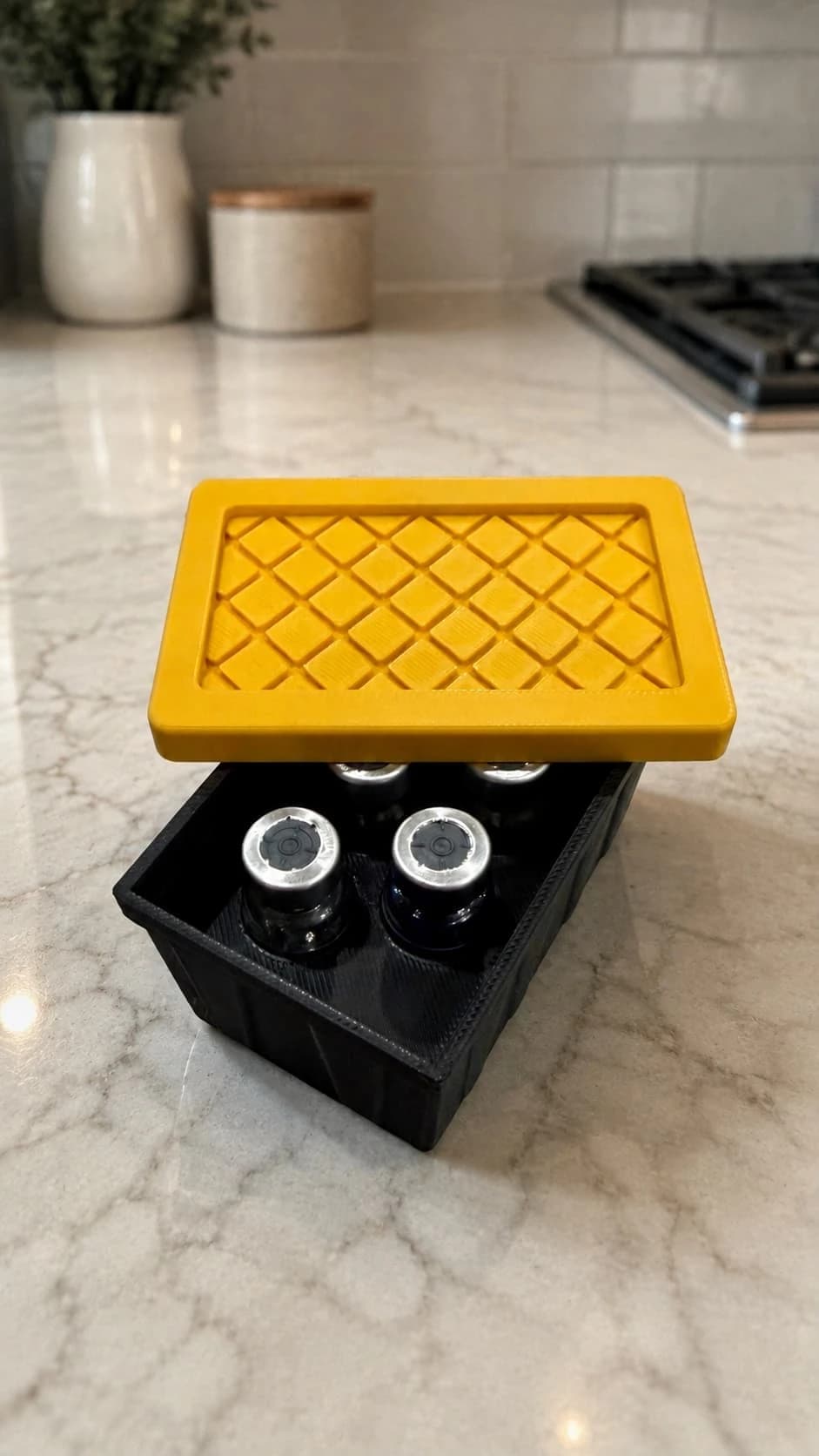
5-Vial Tote Case
At-Home Blood Test
Research Supplies
Disclosure: supply links may earn PDP a commission at no cost to you.
Peptide Vials
5 mg AOD-9604 vials. Each vial provides about 10 days of dosing at 500 mcg/day or about 16-17 days at 300 mcg/day after reconstitution.
| Cycle length | Planning note |
|---|---|
8 weeks 5 vials | Covers a 4-week 300 mcg lead-in plus a 4-week 500 mcg phase. |
12 weeks 8 vials | Covers a 4-week 300 mcg lead-in plus 8 weeks at 500 mcg. |
16 weeks 11 vials | Covers a 4-week 300 mcg lead-in plus 12 weeks at 500 mcg. |
8 weeks
5 vials
Covers a 4-week 300 mcg lead-in plus a 4-week 500 mcg phase.
12 weeks
8 vials
Covers a 4-week 300 mcg lead-in plus 8 weeks at 500 mcg.
16 weeks
11 vials
Covers a 4-week 300 mcg lead-in plus 12 weeks at 500 mcg.
Insulin Syringes (U-100)
Daily subcutaneous injections. 0.3 mL / 30-unit U-100 syringes are the most practical for typical 18-30 unit draws.
| Cycle length | Planning note |
|---|---|
8 weeks 56 syringes | 1 syringe per day across 8 weeks. |
12 weeks 84 syringes | 1 syringe per day across 12 weeks. |
16 weeks 112 syringes | 1 syringe per day across 16 weeks. |
8 weeks
56 syringes
1 syringe per day across 8 weeks.
12 weeks
84 syringes
1 syringe per day across 12 weeks.
16 weeks
112 syringes
1 syringe per day across 16 weeks.
Bacteriostatic Water
3.0 mL per 5 mg vial for reconstitution. 10 mL bottles are the common research-supply size.
| Cycle length | Planning note |
|---|---|
8 weeks 2 x 10 mL bottles | 5 vials use 15 mL total; second bottle covers margin and overdraw. |
12 weeks 3 x 10 mL bottles | 8 vials use 24 mL total; third bottle covers margin. |
16 weeks 4 x 10 mL bottles | 11 vials use 33 mL total; fourth bottle covers margin. |
8 weeks
2 x 10 mL bottles
5 vials use 15 mL total; second bottle covers margin and overdraw.
12 weeks
3 x 10 mL bottles
8 vials use 24 mL total; third bottle covers margin.
16 weeks
4 x 10 mL bottles
11 vials use 33 mL total; fourth bottle covers margin.
Round up for priming losses, dropped syringes, damaged swabs, and any protocol adjustments.
Companion Supplies & Routine Support
AOD-9604 Reconstitution Calculator

Powered by PepPal
AOD-9604 Reconstitution Calculator
Start with the protocol example, then customize every field.
Loaded reference
PDP 5 mg vial example
Your draw
18units
0.18 mL on a U-100 insulin syringe
- Concentration
- 1.667 mg/mL
- Target in mg
- 0.3 mg
- Math-only doses per vial
- 16.7
One free emailed save per person, checked by PepPal.
Educational calculation tool only. The loaded amount is a reference from this page, not a personal dose recommendation. Confirm the vial label, route, syringe type, and actual liquid added before relying on a result.
AOD-9604 Dosage Chart: 5 mg Vial and U-100 Units
The table below shows common educational calculations for a 5 mg vial. The syringe-unit amount changes based on how much bacteriostatic water is added to the vial.
Educational U-100 syringe calculations for a 5 mg AOD-9604 vial.
Daily research amount
300 mcg
5 mg + 1 mL BAC water
6 units
5 mg + 2 mL BAC water
12 units
5 mg + 3 mL BAC water
18 units
Daily research amount
500 mcg
5 mg + 1 mL BAC water
10 units
5 mg + 2 mL BAC water
20 units
5 mg + 3 mL BAC water
30 units
| Daily research amount | 5 mg + 1 mL BAC water | 5 mg + 2 mL BAC water | 5 mg + 3 mL BAC water |
|---|---|---|---|
| 300 mcg | 6 units | 12 units | 18 units |
| 500 mcg | 10 units | 20 units | 30 units |
U-100 syringes contain 100 units per milliliter. Always calculate from the actual vial amount and water volume rather than copying a syringe-unit number from another vial.
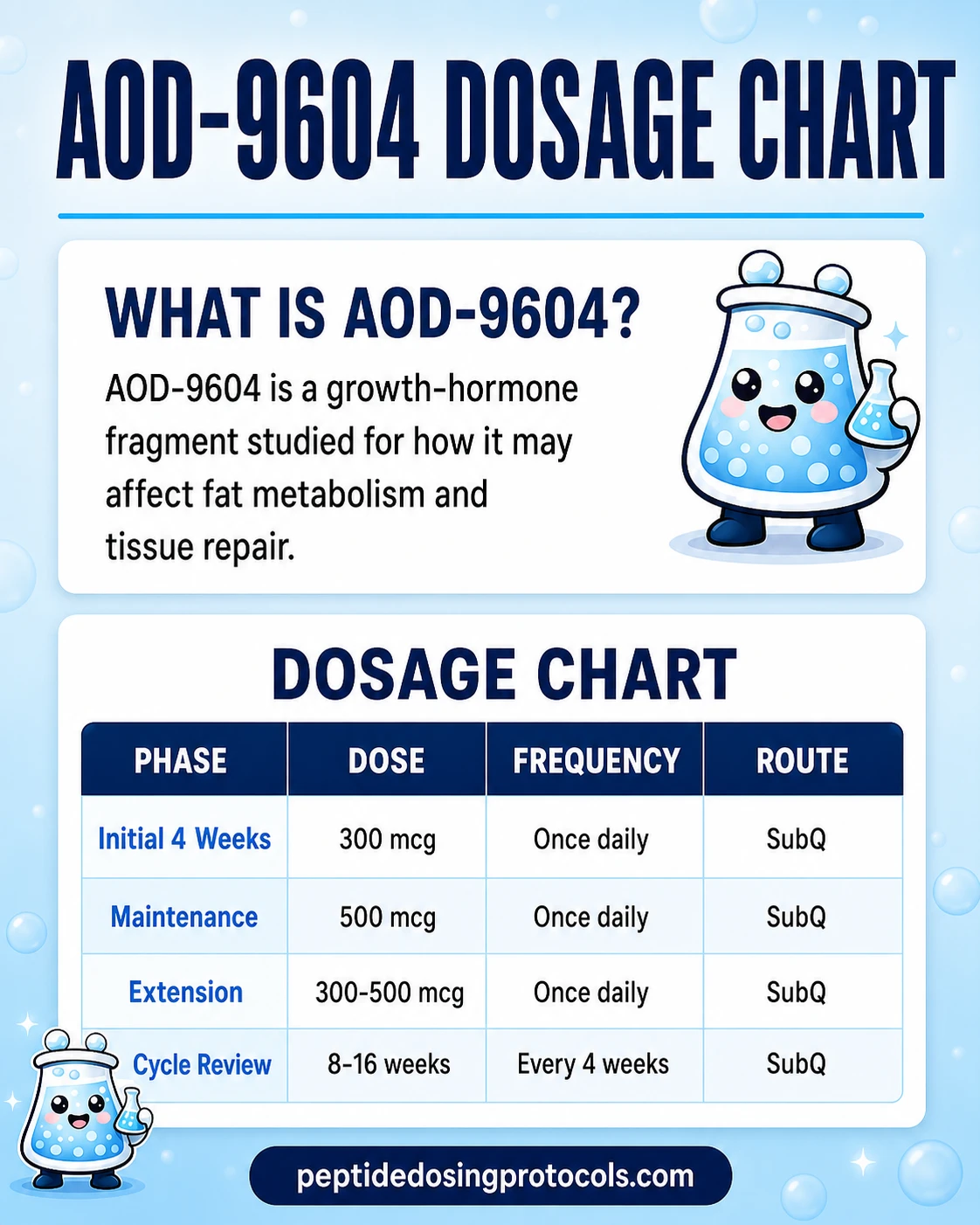
AOD-9604 Dosage Per Day
Community research plans often use 300 to 500 mcg once per day. This range is not based on an approved subcutaneous human protocol. Published studies used different routes, including oral and intravenous administration, so the amounts cannot be directly transferred between routes.
Research context
Community subcutaneous planning
Amount or duration
300–500 mcg per day
Evidence level
Anecdotal community standard
Research context
Published human trials
Amount or duration
Route and dose varied by study
Evidence level
Published research
Research context
Approved medical dosage
Amount or duration
None
Evidence level
AOD-9604 is not FDA-approved
| Research context | Amount or duration | Evidence level |
|---|---|---|
| Community subcutaneous planning | 300–500 mcg per day | Anecdotal community standard |
| Published human trials | Route and dose varied by study | Published research |
| Approved medical dosage | None | AOD-9604 is not FDA-approved |
AOD-9604 Reconstitution Guide: How to Mix a 5 mg Vial
A 5 mg AOD-9604 vial can be mixed with different amounts of bacteriostatic water. Adding more water lowers the concentration in each syringe unit but does not change the total amount in the vial. The best water volume for a calculation depends on the syringe-unit range being modeled.
5 mg vial calculation table
BAC water added
1 mL
Concentration
5,000 mcg/mL
300 mcg
6 units
500 mcg
10 units
BAC water added
2 mL
Concentration
2,500 mcg/mL
300 mcg
12 units
500 mcg
20 units
BAC water added
3 mL
Concentration
1,667 mcg/mL
300 mcg
18 units
500 mcg
30 units
| BAC water added | Concentration | 300 mcg | 500 mcg |
|---|---|---|---|
| 1 mL | 5,000 mcg/mL | 6 units | 10 units |
| 2 mL | 2,500 mcg/mL | 12 units | 20 units |
| 3 mL | 1,667 mcg/mL | 18 units | 30 units |
Syringe units = target amount ÷ concentration per unit
AOD-9604 Calculations for Other Vial Sizes
10 mg vial calculations
BAC water added
1 mL
300 mcg
3 units
500 mcg
5 units
BAC water added
2 mL
300 mcg
6 units
500 mcg
10 units
BAC water added
3 mL
300 mcg
9 units
500 mcg
15 units
| BAC water added | 300 mcg | 500 mcg |
|---|---|---|
| 1 mL | 3 units | 5 units |
| 2 mL | 6 units | 10 units |
| 3 mL | 9 units | 15 units |
2 mg vial calculations
BAC water added
1 mL
300 mcg
15 units
500 mcg
25 units
BAC water added
2 mL
300 mcg
30 units
500 mcg
50 units
BAC water added
3 mL
300 mcg
45 units
500 mcg
75 units
| BAC water added | 300 mcg | 500 mcg |
|---|---|---|
| 1 mL | 15 units | 25 units |
| 2 mL | 30 units | 50 units |
| 3 mL | 45 units | 75 units |
Do not reuse the syringe-unit amount from a 5 mg vial when the vial size or water amount is different.
AOD-9604 Dosage and Reconstitution Calculator
Enter the vial size, bacteriostatic water amount, and target research amount to calculate the matching U-100 syringe units.
Calculator presets covered by this guide
Vial size
2 mg
BAC water
1 mL
Target research amount
300 mcg
Vial size
5 mg
BAC water
2 mL
Target research amount
500 mcg
Vial size
10 mg
BAC water
3 mL
Target research amount
300 or 500 mcg
| Vial size | BAC water | Target research amount |
|---|---|---|
| 2 mg | 1 mL | 300 mcg |
| 5 mg | 2 mL | 500 mcg |
| 10 mg | 3 mL | 300 or 500 mcg |
- 01
Check the vial amount.
Confirm the labeled vial size before doing any concentration math.
- 02
Choose the BAC water volume.
Choose 1, 2, or 3 mL based on the concentration being modeled.
- 03
Add the water slowly along the vial wall.
In a controlled research setting, direct the water along the inside wall rather than onto the powder.
- 04
Let the solution dissolve without shaking.
Allow the material to dissolve gently. Shaking may damage or foam a peptide solution.
- 05
Calculate the amount per syringe unit.
A U-100 syringe has 100 units per mL. Divide the target amount by the concentration in each unit.
- 06
Label the vial with the concentration and date.
Record the vial amount, water volume, resulting concentration, and preparation date for the research log.
AOD-9604 Cycle Length: 8, 12 and 24 Weeks in Research
Published Phase 2 research lasted 12 or 24 weeks. Community research plans often use 8 to 16 weeks, but those shorter structures are anecdotal and are not controlled clinical protocols. Long-term evidence beyond 24 weeks is limited.
Cycle length
8 weeks
Where it comes from
Community research planning
How to label it
Anecdotal
Cycle length
12 weeks
Where it comes from
Published trial duration and community planning
How to label it
Published and community context
Cycle length
16 weeks
Where it comes from
Community research planning
How to label it
Anecdotal
Cycle length
24 weeks
Where it comes from
Published trial duration
How to label it
Published research
| Cycle length | Where it comes from | How to label it |
|---|---|---|
| 8 weeks | Community research planning | Anecdotal |
| 12 weeks | Published trial duration and community planning | Published and community context |
| 16 weeks | Community research planning | Anecdotal |
| 24 weeks | Published trial duration | Published research |
Read the full AOD-9604 cycle-length guide for a closer look at 8-, 12-, 16-, and 24-week timelines. You can also browse educational peptide cycle guides to compare other compounds and blends.
How AOD-9604 Works: Mechanism and Research Evidence
AOD-9604 was designed to copy the fat-metabolism end of human growth hormone without the rest of growth hormone's effects. In simple terms, growth hormone has a region near one end of its molecule that signals fat cells to release stored fat. AOD-9604 is a synthetic copy of that region, plus one extra amino acid for stability.
In animal research, AOD-9604 has done two main things. First, it stimulates lipolysis, which is the breakdown of stored fat into free fatty acids the body can use as fuel. Second, it appears to suppress lipogenesis, which is the storage of new fat. In Heffernan et al. 2001, AOD-9604 lost most of this fat-metabolism effect in mice that were genetically missing the beta-3 adrenergic receptor, suggesting that pathway carries part of the signal.
Importantly, AOD-9604 does not appear to bind to the growth hormone receptor itself in cell-binding studies. That is the proposed reason it does not raise IGF-1 levels or impair insulin sensitivity in animal work, in contrast to full-length growth hormone. The molecular target that AOD-9604 actually binds is still unidentified, which the FDA explicitly noted in its December 2024 evaluation.
Cartilage and joint research context
A separate animal line of work has investigated AOD-9604 in joint research. Kwon and Park 2015 reported that intra-articular AOD-9604 injections, especially when combined with hyaluronic acid, improved cartilage scores and reduced lameness in a rabbit collagenase-induced osteoarthritis model. This is a single rabbit study, not human evidence.
What is supported in animal models
Increased lipolysis, increased fat oxidation, decreased lipogenesis, no apparent effect on plasma glucose or insulin sensitivity, and signal that intact beta-3 adrenergic receptor activity matters for the fat-loss effect.
What is unknown
The actual molecular receptor that AOD-9604 binds. FDA's 2024 review states the mechanism of action is still unknown, which limits how confidently any specific physiological effect can be predicted in humans.
AOD-9604 Oral vs Injection: Routes and Evidence
AOD-9604 has been studied through more than one route, but doses cannot be directly converted between oral, intravenous, topical, nasal, and subcutaneous forms. Each route has different absorption and research limitations.
Subcutaneous AOD-9604
Community research plans often cite 300-500 mcg per day from a reconstituted vial. The FDA's 2024 review found no published human pharmacokinetic study that formally characterized the subcutaneous route, so these amounts are anecdotal rather than an approved clinical protocol.
Oral AOD-9604
Published trials used oral amounts from 0.25 mg to 30 mg per day. The largest Phase 2b trial used 0.25, 0.5, and 1 mg per day for 24 weeks, but it missed its main weight-loss endpoint. Oral bioavailability has not been clearly measured in humans.
Intravenous AOD-9604
Early human studies used single intravenous amounts of 25-400 mcg/kg. Those controlled study amounts describe a different route and cannot be converted into subcutaneous syringe units or oral amounts.
Topical and Nasal AOD-9604
Topical and nasal forms appear in marketing, but the FDA review found no published human exposure data for transdermal or intranasal AOD-9604. There is no supported dose conversion from these routes to oral, intravenous, or subcutaneous research models.
AOD-9604 Research Exclusions and Evidence Gaps
AOD-9604 is a research compound with no FDA-approved indication for any patient population. The published record does not establish a human-use protocol.
Groups with limited or no safety data
Published human trials with AOD-9604 enrolled adults with obesity (BMI 30-45 kg/m^2), generally aged 18-65. Outside of that group, published safety data is essentially absent. The following populations have no published exposure data and would generally be excluded from research-context use:
- People who are pregnant, trying to become pregnant, or breastfeeding. - Anyone under 18. - People with active or recent cancer history (the trial record contains a small number of cancers in the 12-week oral arm; investigators considered them unrelated, but no long-term oncology safety data exists). - People with significant liver disease (the 9-month monkey toxicology study showed dose-dependent periportal vacuolation in hepatocytes that the FDA flagged as a possible safety signal). - People with poorly controlled bone-turnover conditions, until the dose-dependent osteocalcin changes seen in the 26-week rat study are better understood.
Athletes and competition
AOD-9604 is on the World Anti-Doping Agency Prohibited List under category S2.2 (peptide hormones, growth factors, related substances, and mimetics). Athletes subject to WADA, USADA, NCAA, or any sport-governing-body testing should not use AOD-9604 in any form. Metabolites can be detected in urine.
Medication interactions
Specific drug-interaction studies with AOD-9604 have not been published. Any medication that affects glucose, lipid metabolism, growth hormone signaling, or beta-adrenergic activity could in theory interact, but evidence is absent. Discuss any active prescription with a qualified clinician before considering use.
AOD-9604 Side Effects and Research Limitations
AOD-9604 has one of the largest safety datasets of any research peptide in this category. Six controlled trials in approximately 900 participants are summarized in Stier et al. 2013, and FDA's December 2024 review lists the same trial set. The safety record is generally placebo-like, but several specific findings deserve attention.
Observed effects in human trials
Reported adverse events across the IV and oral trials included headache, fatigue, dizziness, nasopharyngitis, diarrhea, flatulence, increased appetite, nausea, and back pain. Most were mild or moderate. One report of severe chest tightness in the 50 mcg/kg IV arm was deemed possibly related. A small number of cancers (basal cell carcinoma, breast cancer, malignant melanoma, lipoma, squamous cell carcinoma) were reported during the 12-week oral METAOD005 trial; investigators considered them unrelated to study drug. Anti-AOD-9604 antibodies were not detected in tested participants.
Theoretical and route-specific risks
FDA's 2024 review specifically flagged that no published human exposure data exists for the subcutaneous, transdermal, or intranasal routes that compounding pharmacies have offered. Injectable routes carry a particular concern for immunogenicity from peptide aggregation and impurities, and FDA noted the available certificates of analysis for AOD-9604 bulk drug substances did not consistently control for impurities, aggregates, or microbial limits.
Animal toxicology signals
Two animal findings reviewed by FDA are worth tracking even if they did not surface clinically. In a 26-week rat oral toxicity study, AOD-9604 produced dose-dependent changes in serum osteocalcin (a bone-turnover marker) at week 13, with the direction reversing by week 26. In a 9-month monkey oral toxicity study, all female monkeys in the high-dose group showed minimal-to-slight periportal hepatocyte vacuolation. FDA flagged both as potentially clinically relevant signals that warrant caution.
Quality-control risk
Because there is no FDA-approved AOD-9604 product, all material in circulation comes from research-supply or compounding sources. FDA noted that reviewed CoAs from suppliers did not consistently include controls for impurities, aggregates, or bacterial endotoxins. That makes supplier transparency, third-party HPLC purity confirmation, and lot-specific certificates non-negotiable for any research-context sourcing.
AOD-9604 Timeline & What to Monitor
Setting realistic expectations is the most useful thing this section can do, because the published evidence is much more modest than typical clinic marketing.
What the trials measured and when
The METAOD005 oral trial measured weight at 12 weeks. Reported weekly weight-loss differences over placebo were small (in the range of -0.06 to -0.15 kg/week, depending on dose). The METAOD006 (OPTIONS) oral Phase 2b trial measured weight at 12 and 24 weeks; the difference between AOD-9604 arms and placebo was not statistically significant at either point, and development was terminated.
Markers reasonable to monitor
If a clinician is overseeing research-context use, baseline and periodic checks that have appeared in published AOD-9604 monitoring include:
- Weight, waist circumference, and body composition. - Fasting glucose and a basic lipid panel (AOD-9604 did not raise glucose or worsen lipids in trials, but baseline confirmation is useful). - IGF-1 (trial data suggests no meaningful change; documentation can support that). - Liver enzymes if any preexisting liver concern, given the monkey toxicology signal. - Injection-site inspection for redness, induration, or lipohypertrophy.
What cannot be promised
Specific weight-loss targets, body-composition changes, or joint outcomes cannot be promised based on current evidence. Phase 2b primary endpoints failed in the largest published trial. Anyone planning research-context use should treat outcome reports cautiously and weigh the FDA-approved alternatives discussed in the comparisons section.
AOD-9604 Blood Tests & Monitoring
AOD-9604 is usually discussed in a fat-loss and metabolic research context. Lab monitoring is mainly pathway-based because routine clinical monitoring standards are not established for this peptide.
Blood test markers to discuss with a clinician
Marker
Comprehensive metabolic panel (CMP)
Why it matters
Reviews liver enzymes, kidney markers, electrolytes, and glucose in one broad safety panel.
Timing
Baseline
Marker
A1c
Why it matters
Shows the longer-term blood sugar pattern that may matter during fat-loss or metabolic protocols.
Timing
Baseline
Marker
Fasting glucose
Why it matters
Gives a simple snapshot of current glucose control before interpreting appetite or weight changes.
Timing
Follow-up
Marker
Lipid panel
Why it matters
Tracks cholesterol and triglyceride changes that may shift during weight-loss phases.
Timing
Follow-up
Marker
TSH and free T4
Why it matters
Helps rule out thyroid-related reasons for unexpected weight, energy, or metabolic changes.
Timing
Optional
| Marker | Why it matters | Timing |
|---|---|---|
| Comprehensive metabolic panel (CMP) | Reviews liver enzymes, kidney markers, electrolytes, and glucose in one broad safety panel. | Baseline |
| A1c | Shows the longer-term blood sugar pattern that may matter during fat-loss or metabolic protocols. | Baseline |
| Fasting glucose | Gives a simple snapshot of current glucose control before interpreting appetite or weight changes. | Follow-up |
| Lipid panel | Tracks cholesterol and triglyceride changes that may shift during weight-loss phases. | Follow-up |
| TSH and free T4 | Helps rule out thyroid-related reasons for unexpected weight, energy, or metabolic changes. | Optional |
Monitoring guidance is pathway-based because compound-specific clinical monitoring standards for AOD-9604 are not established.
At-home blood test option
Easy at home option to monitor core metrics during research cycles.
Partner link: PDP may earn a commission at no cost to you.
Simple timing framework
Baseline
Discuss baseline labs before starting, especially if body weight, blood sugar, lipids, liver health, or kidney health are part of the research context.
Follow-up
Repeat metabolic markers after 8-12 weeks if the protocol is being continued or adjusted.
Longer term
For longer cycles, review weight, symptoms, and metabolic trends every 3-6 months with a clinician.
How to interpret the labs
- AOD-9604 does not have a clear lab-response marker like IGF-1 for GH-axis peptides.
- Use body composition, symptoms, nutrition, medications, and labs together instead of relying on one marker.
- Discuss diabetes medications or thyroid history before interpreting weight or glucose changes.
Do not wait for routine labs
Severe abdominal pain, fainting, allergic symptoms, or rapid swelling needs medical review instead of routine monitoring. Unexpected jaundice, dark urine, or persistent vomiting should be reviewed promptly.
AOD-9604 Clinical Evidence Context
AOD-9604 is unusual among research peptides because it actually completed real Phase 1 and Phase 2 clinical trials. Six trials totaling roughly 900 participants are summarized in Stier et al. 2013 and re-evaluated in FDA's 2024 PCAC briefing.
Strongest human evidence
The METAOD006 (OPTIONS) Phase 2b trial randomized 502 adults with obesity (BMI 30-45 kg/m^2) to oral AOD-9604 (0.25, 0.5, or 1 mg/day) or placebo for 24 weeks alongside a supervised diet and exercise program. The trial was powered to detect a 1.8 kg difference vs placebo. The primary endpoint was not met. Metabolic Pharmaceuticals terminated development for obesity in February 2007.
Earlier oral trial
METAOD005 randomized 300 adults with obesity to oral AOD-9604 (1, 5, 10, 20, or 30 mg/day) or placebo for 12 weeks. Authors reported small statistically significant differences in weekly weight loss at the 1 mg dose with a non-linear dose response, but the abstract data has not been published in full peer-reviewed form.
IV and short-duration oral trials
METAOD001-004 enrolled smaller groups of healthy or obese men with single doses or 1-week dosing across IV (25-400 mcg/kg) and oral (9-54 mg) routes. These established short-term safety and pharmacology context but were not designed to demonstrate weight loss efficacy.
Preclinical fat-loss evidence
Ng et al. 2000 in Hormone Research showed that 21-day oral AOD-9604 (500 mcg/kg/day) reduced body weight gain by roughly 50% in obese Zucker rats with no insulin sensitivity penalty. Heffernan et al. 2001 in Endocrinology showed reduced body weight gain with 14-day AOD-9604 in obese (ob/ob) mice and identified the beta-3 adrenergic receptor dependency.
Preclinical cartilage evidence
Kwon and Park 2015 in Annals of Clinical and Laboratory Science reported that intra-articular AOD-9604 plus hyaluronic acid in a rabbit knee osteoarthritis model improved cartilage histology and reduced lameness compared with hyaluronic acid alone. This is one rabbit study, not human evidence.
What is missing
There is no published human pharmacokinetic study of subcutaneous AOD-9604, no published human topical or intranasal exposure data, no Phase 3 efficacy trial, no long-term safety data beyond 24 weeks, and no published human cartilage or joint outcome data.
AOD-9604 Storage & Handling
Storage conditions for AOD-9604.
State
Lyophilized (powder)
Storage
-4F (-20C) long-term
Notes
Per supplier safety data sheets, the lyophilized peptide is stable for one year or more under freezer storage. Keep in a dry, dark, sealed container.
State
Lyophilized (short term)
Storage
35.6-46.4F (2-8C) for short windows
Notes
Acceptable for shipment or near-term storage; freeze for longer holding.
State
Reconstituted (liquid)
Storage
35.6-46.4F (2-8C)
Notes
Refrigerate. Most research-supply guidance keeps reconstituted vials usable for about 3-4 weeks.
State
Appearance
Storage
Clear after reconstitution
Notes
If the solution is cloudy, contains particles, or has changed color, do not use it.
| State | Storage | Notes |
|---|---|---|
| Lyophilized (powder) | -4F (-20C) long-term | Per supplier safety data sheets, the lyophilized peptide is stable for one year or more under freezer storage. Keep in a dry, dark, sealed container. |
| Lyophilized (short term) | 35.6-46.4F (2-8C) for short windows | Acceptable for shipment or near-term storage; freeze for longer holding. |
| Reconstituted (liquid) | 35.6-46.4F (2-8C) | Refrigerate. Most research-supply guidance keeps reconstituted vials usable for about 3-4 weeks. |
| Appearance | Clear after reconstitution | If the solution is cloudy, contains particles, or has changed color, do not use it. |
Always allow vials to come to room temperature before opening to reduce condensation, and avoid repeated freeze-thaw cycles.
AOD-9604 Protocol Mistakes & Troubleshooting
- 01
Missed dose
A missed point in a community research schedule should be recorded as a protocol deviation. No published research supports doubling the next modeled amount.
- 02
Cloudy vial after reconstitution
A cloudy or particle-containing vial should not be used. Cloudiness can indicate aggregation, contamination, or temperature damage. Discard and start a new vial.
- 03
Wrong BAC water volume
If you added the wrong volume, recalculate the new concentration before drawing. Use the PepPal calculator to update unit count for your usual research-context dose.
- 04
Injection-site reaction
Mild redness or swelling at the injection site is the most commonly reported AOD-9604 adverse event in trials. Site rotation (abdomen, thighs, upper arms) is the commonly reported approach to reduce this reaction. Persistent redness, warmth, or pain that lasts more than 48 hours warrants stopping and consulting a clinician.
- 05
Storage mistake
If a reconstituted vial was left at room temperature for more than a few hours, treat it as compromised. The peptide may still be partly active, but degradation cannot be ruled out without analytical testing.
- 06
Confusion between routes
Subcutaneous, oral, transdermal, and intranasal AOD-9604 use very different doses. Doses are not equivalent across routes, so published research treats each route's dosing separately. Evidence for non-injectable routes is limited at best.
- 07
Any serious or unexpected reaction
Stop use and seek qualified medical care. AOD-9604 is not FDA-approved, so a clinician will evaluate the reaction without label-based guidance.
AOD-9604 Regulatory Status
As of June 2026, AOD-9604 is not FDA-approved for any therapeutic use. It is not the active ingredient in any FDA-approved drug product, and there is no United States Pharmacopeia (USP) monograph for either AOD-9604 (free base) or AOD-9604 acetate.
FDA compounding review
On December 4, 2024, the FDA Pharmacy Compounding Advisory Committee (PCAC) reviewed AOD-9604 (free base) and AOD-9604 acetate against the 503A Bulks List. FDA's evaluation concluded that the criteria weighed against placement on the list, citing inadequate physicochemical characterization, immunogenicity concerns from impurities and aggregates, lack of clinical effectiveness data for any approved use, and absence of published human exposure data for the proposed subcutaneous and topical routes.
FDA Category 2 status
AOD-9604 was previously nominated for inclusion under FDA's Category 2 list (substances proposed for compounding under research/evaluation). As of June 2026, AOD-9604 is listed as Nominated but Withdrawn, meaning it is no longer actively under Category 2 nomination.
Sport and international status
AOD-9604 is on the World Anti-Doping Agency Prohibited List under section S2.2. The Australian Therapeutic Goods Administration added AOD-9604 to its Poisons Standard under performance and image-enhancing drugs (PIEDs), and possession without a legal prescription is restricted in Australia.
GRAS food ingredient note
AOD-9604 was self-affirmed as Generally Recognized As Safe (GRAS) by an industry expert panel for limited food-ingredient use based on the Phase 1 and Phase 2 safety data. This GRAS designation does not imply FDA approval for therapeutic, drug, or compounded use, and it is sometimes misrepresented in marketing copy.
AOD-9604 vs HGH vs GLP-1 Receptor Agonists
Search interest around AOD-9604 often surfaces alongside human growth hormone, HGH Fragment 176-191, and modern GLP-1 weight-management drugs. Each works through a different mechanism, and the evidence levels are very different.
How AOD-9604 compares with related compounds and approved drugs.
Compound
AOD-9604
Class
Synthetic hGH C-terminal fragment (16 aa)
FDA Status
Not FDA-approved
Evidence Strength
Phase 2b primary endpoint missed; preclinical fat-loss and rabbit cartilage signal
Compound
HGH Fragment 176-191
Class
Same molecule as AOD-9604 without the stabilizing tyrosine
FDA Status
Not FDA-approved
Evidence Strength
Same overall research base; AOD-9604 is the more-studied stabilized version
Compound
Human Growth Hormone (somatropin)
Class
Full-length recombinant hGH
FDA Status
FDA-approved for specific indications (GH deficiency, certain growth disorders, AIDS wasting)
Evidence Strength
Strong human evidence for approved indications; raises IGF-1 and carries glucose-tolerance risk
Compound
Semaglutide (Wegovy)
Class
GLP-1 receptor agonist
FDA Status
FDA-approved for chronic weight management
Evidence Strength
Phase 3 RCTs; consistent ~12-15% weight loss at 68 weeks
Compound
Tirzepatide (Zepbound)
Class
GIP/GLP-1 dual agonist
FDA Status
FDA-approved for chronic weight management
Evidence Strength
Phase 3 RCTs; ~20% weight loss at 72 weeks
| Compound | Class | FDA Status | Evidence Strength |
|---|---|---|---|
| AOD-9604 | Synthetic hGH C-terminal fragment (16 aa) | Not FDA-approved | Phase 2b primary endpoint missed; preclinical fat-loss and rabbit cartilage signal |
| HGH Fragment 176-191 | Same molecule as AOD-9604 without the stabilizing tyrosine | Not FDA-approved | Same overall research base; AOD-9604 is the more-studied stabilized version |
| Human Growth Hormone (somatropin) | Full-length recombinant hGH | FDA-approved for specific indications (GH deficiency, certain growth disorders, AIDS wasting) | Strong human evidence for approved indications; raises IGF-1 and carries glucose-tolerance risk |
| Semaglutide (Wegovy) | GLP-1 receptor agonist | FDA-approved for chronic weight management | Phase 3 RCTs; consistent ~12-15% weight loss at 68 weeks |
| Tirzepatide (Zepbound) | GIP/GLP-1 dual agonist | FDA-approved for chronic weight management | Phase 3 RCTs; ~20% weight loss at 72 weeks |
Approved drug entries reflect U.S. labels current as of June 2026.
The practical takeaway: AOD-9604 has a clean safety profile in trials but a failed Phase 2b efficacy endpoint. GLP-1 and GIP/GLP-1 drugs have strong Phase 3 efficacy and clear FDA-approved labels for weight management. They are not interchangeable, and the comparison is not symmetrical.
FAQ
Q1: What is the AOD-9604 dosage per day?
Community subcutaneous research plans often reference 300-500 mcg per day. This is an anecdotal community standard, not an approved or clinically proven protocol.
Q2: How much BAC water should be added to a 5 mg AOD-9604 vial?
Educational calculations commonly model a 5 mg vial with 1, 2, or 3 mL of bacteriostatic water. The water amount changes the concentration and syringe units, so it must be recorded with the vial size.
Q3: How many syringe units is 300 mcg of AOD-9604?
With a 5 mg vial mixed with 3 mL of bacteriostatic water, 300 mcg equals about 18 units on a U-100 syringe. A different vial size or water amount gives a different result.
Q4: How many syringe units is 500 mcg of AOD-9604?
With a 5 mg vial mixed with 3 mL of bacteriostatic water, 500 mcg equals about 30 units on a U-100 syringe. The answer changes when the vial size or water volume changes.
Q5: How long is an AOD-9604 cycle?
Published Phase 2 studies lasted 12 or 24 weeks. Community research plans often use 8-16 weeks, but those cycle structures are anecdotal and are not controlled clinical protocols.
Q6: Is AOD-9604 oral or injected?
Published studies included oral and intravenous routes, while community plans often discuss subcutaneous forms. Amounts cannot be directly converted between routes because absorption and evidence limits differ.
Q7: Can I use an AOD-9604 dosage calculator?
Yes. The AOD-9604 dosage and reconstitution calculator converts a vial size, BAC water amount, and target research amount into U-100 syringe units. The result depends on all three inputs.
Q8: Does AOD-9604 need acetic acid?
No strong source establishes acetic acid as a routine requirement for a 5 mg AOD-9604 vial. The FDA's 2024 review discussed free-base and acetate forms but did not set a standard acetic-acid mixing instruction; use only a verified laboratory method for the exact research material.
Q9: What is AOD-9604?
AOD-9604 is a synthetic fragment of human growth hormone that was studied as an investigational obesity drug. It is not FDA-approved, and this page covers research evidence rather than human-use guidance.
Q10: What is AOD-9604's half-life?
Published pharmacokinetic work describes a plasma half-life of only a few minutes after intravenous administration. That value cannot be assumed to describe oral or subcutaneous exposure.
Q11: How should reconstituted AOD-9604 be stored?
Research-supply guidance commonly calls for refrigerated storage at 2-8C after reconstitution, protected from light. Follow the verified stability method for the exact material and discard any solution that is cloudy, discolored, or contains particles.
Q12: What are the most commonly reported AOD-9604 side effects?
Published trials reported headache, fatigue, dizziness, mild stomach symptoms, and mild injection-site reactions. The FDA also noted major evidence gaps for subcutaneous, topical, and nasal exposure, so the trial record does not establish safety for those routes.
Q13: Is AOD-9604 FDA-approved?
No. AOD-9604 is not FDA-approved for any therapeutic use. The FDA's 2024 review weighed against adding the reviewed AOD-9604 substances to the 503A Bulks List.
Sources & Research
- 1. Mathew B, Amaechi C, Asante K, Albuquerque E, Benedict A, Kneeream E, Lopez L, et al. FDA Evaluation of AOD-9604-Related Bulk Drug Substances (AOD-9604 (free base) and AOD-9604 acetate). Pharmacy Compounding Advisory Committee Briefing Document. U.S. Food and Drug Administration (2024)
- 2. Stier H, Vos E, Kenley D. Safety and Tolerability of the Hexadecapeptide AOD9604 in Humans. Journal of Endocrinology and Metabolism (2013)
- 3. Heffernan M, Summers RJ, Thorburn A, Ogru E, Gianello R, Jiang WJ, Ng FM. The effects of human GH and its lipolytic fragment (AOD9604) on lipid metabolism following chronic treatment in obese mice and beta(3)-AR knock-out mice. Endocrinology (2001)
- 4. Ng FM, Sun J, Sharma L, Libinaka R, Jiang WJ, Gianello R. Metabolic studies of a synthetic lipolytic domain (AOD9604) of human growth hormone. Hormone Research (2000)
- 5. Kwon DR, Park GY. Effect of Intra-articular Injection of AOD9604 with or without Hyaluronic Acid in Rabbit Osteoarthritis Model. Annals of Clinical and Laboratory Science (2015)
- 6. Wilding JP. Treatment strategies for obesity (review including AOD-9604 clinical development). Obesity Reviews (2004)
- 7. Cox HD, Lopes F, Woldemariam GA, Becker JO, Parkin MC, Thomas A, Butch AW, Cowan DA, Thevis M, Bowers LD, Hoofnagle AN. Interlaboratory agreement of insulin-like growth factor 1 concentrations measured by mass spectrometry (with discussion of AOD-9604 doping detection). Clinical Chemistry (2014)
- 8. World Anti-Doping Agency. Prohibited List - Section S2: Peptide Hormones, Growth Factors, Related Substances, and Mimetics. World Anti-Doping Agency (2026)
- 9. Metabolic Pharmaceuticals Limited. OPTIONS Study Phase 2b results announcement (AOD-9604 development terminated). Australian Stock Exchange filing (2007)
- 10. More VG, Kenley DC. Safety evaluation of AOD9604, a synthetic peptide for use in obesity. International Journal of Toxicology (2014)
- 11. DrugBank. AOD9604 drug summary. DrugBank Online (2026)
Related Dosing Protocols

Written by Garret Grant
Founder & Lead Researcher · B.S. Civil Engineering, UCLA
Last updated: August 2026
Human-researched and AI-assisted with full editorial review. I verify sources, protocol interpretation, and final judgments personally. See methodology.
Share this page