How Long Is a CJC-1295 with DAC Cycle?
There is no established human cycle length in the sources reviewed. A cycle usually means a planned period of use followed by a break. A study can instead give one or a few injections, then watch what happens. Those are different timelines.
This guide gives the most weight to the original human papers and the FDA review of those studies. Supplier schedules and community reports cannot fill gaps in clinical evidence.
Keep timing and dose questions separate
This page covers study length, follow-up, and breaks. The CJC-1295 with DAC protocol covers dose-related background. Community schedules on a dosing page do not become proven cycles simply because they include a number of weeks.
Community Reports: Untested Cycle Lengths
Not clinically researched cycle guidance
These are examples from online discussions, not a proven treatment schedule. Human studies have not established these cycle lengths or breaks. We cannot verify what products people used, how they used them, other treatments, results, or side effects. Repetition or upvotes do not prove safety or benefit.
In the discussions reviewed, people proposed 8-week and 12-week courses of CJC-1295 with DAC. These are examples of plans people shared, not proof of a safe or effective cycle. The posts also discuss other compounds, which makes it harder to judge any one product.
A September 2026 discussion in r/Biohacking describes a proposed eight-week course. In a May 2026 comment in r/PeptidePathways, a user reported four weeks elapsed and a planned twelve weeks. Neither establishes a completed, controlled comparison of those lengths.
These threads specify DAC; No DAC and ipamorelin blends cannot be treated as the same product. The human trials below used one injection or only two or three injections during 28- or 49-day studies. Those study windows do not validate the longer community plans or establish a break before another course.
Community sources reviewed October 14, 2026. This is a small sample of discussions, not a survey or evidence of community consensus.
What Did the Human Studies Actually Do?
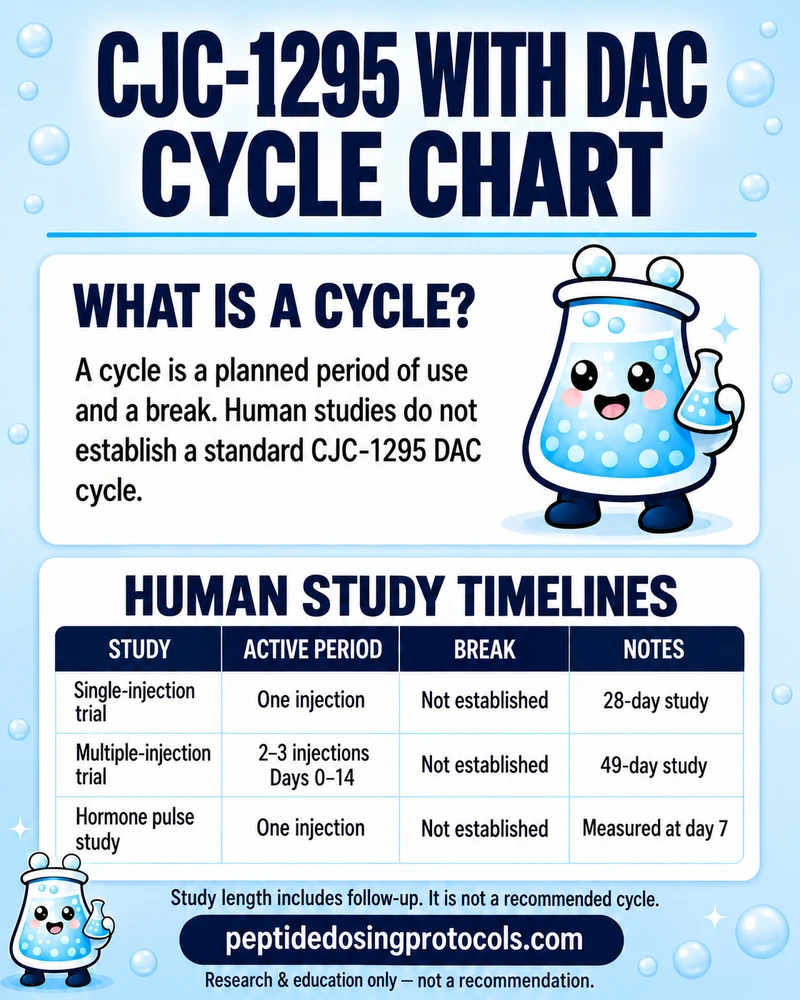
Teichman and colleagues reported two placebo-controlled trials in healthy adults. The table uses the FDA's detailed study review to separate injections from follow-up.
CJC-1295 with DAC: exposure versus study length
These are research designs, not instructions for use.
Study
Teichman: single-injection trial
Active period
One injection
Total study or measurement window
28-day study
Repeat-course break
Not established
Study
Teichman: multiple-injection trial
Active period
Days 0 and 14, or days 0, 7 and 14
Total study or measurement window
49-day study
Repeat-course break
Not established
Study
Ionescu and Frohman: hormone pulse study
Active period
One injection
Total study or measurement window
Measurements before and one week after injection
Repeat-course break
Not established
| Study | Active period | Total study or measurement window | Repeat-course break |
|---|---|---|---|
| Teichman: single-injection trial | One injection | 28-day study | Not established |
| Teichman: multiple-injection trial | Days 0 and 14, or days 0, 7 and 14 | 49-day study | Not established |
| Ionescu and Frohman: hormone pulse study | One injection | Measurements before and one week after injection | Not established |
Days 0–14 is a first-to-last injection window. It does not mean an injection every day for two weeks.
The hormone pulse study used overnight sampling before treatment and one week later. It found that growth hormone still rose in pulses. It did not test months of use or compare breaks between repeat courses.
CJC-1295 with DAC Cycle Supplies Needed
There is no validated human CJC-1295 with DAC cycle from which to calculate a required vial count. This section identifies the product and supply limits without turning a community report into a shopping or injection plan. The case, blood-test kit, and Amazon links below are optional shopping resources. A clinician should choose which blood tests, if any, are appropriate; a commercial panel cannot prove that an untested cycle is safe. Check device compatibility and product-specific storage needs. A case or mini fridge does not by itself meet a medicine’s temperature requirements.
Research Supplies
Choose your region
Use discount code SAVE10 at Peptira checkout. See why we love Peptira.
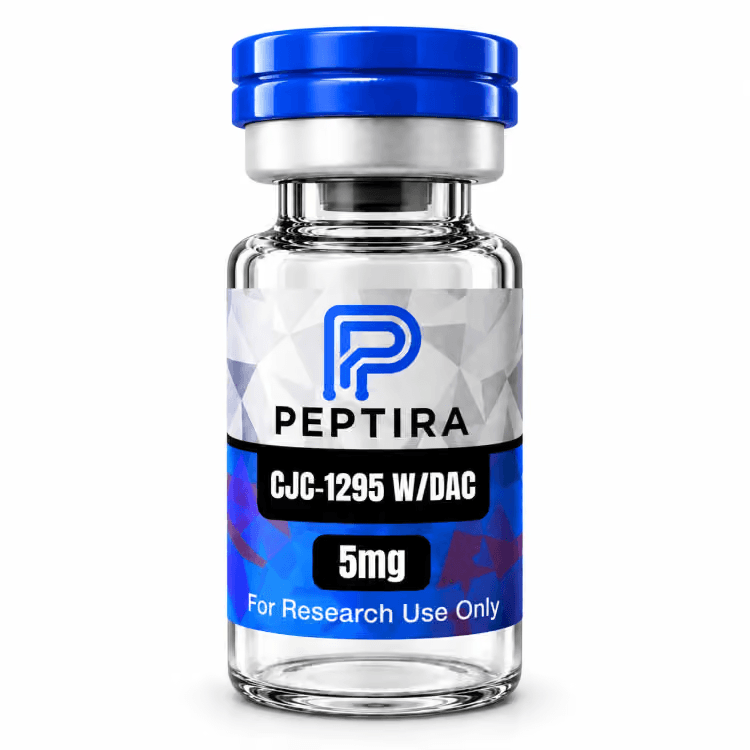
CJC-1295 DAC
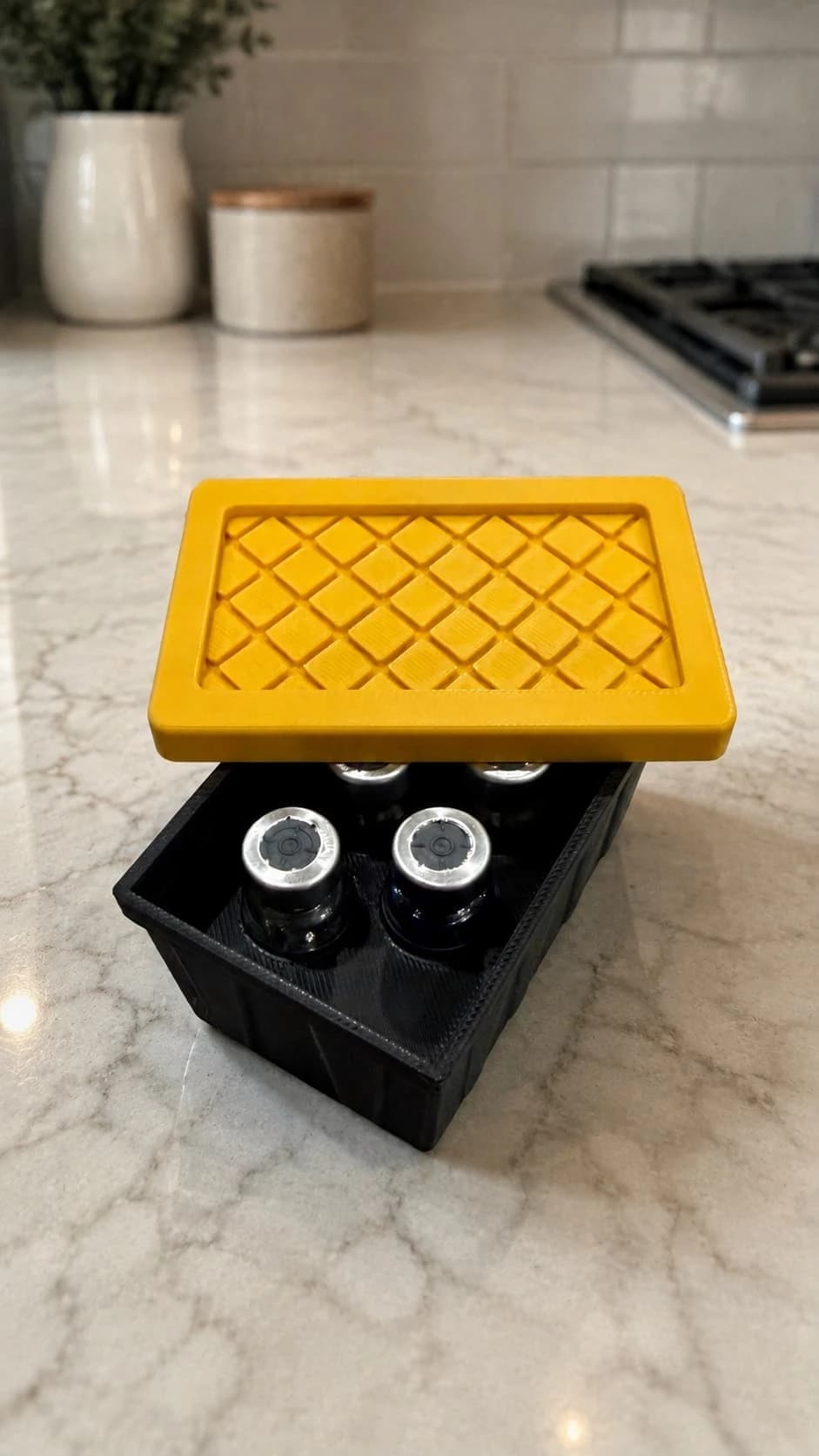
5-Vial Tote Case
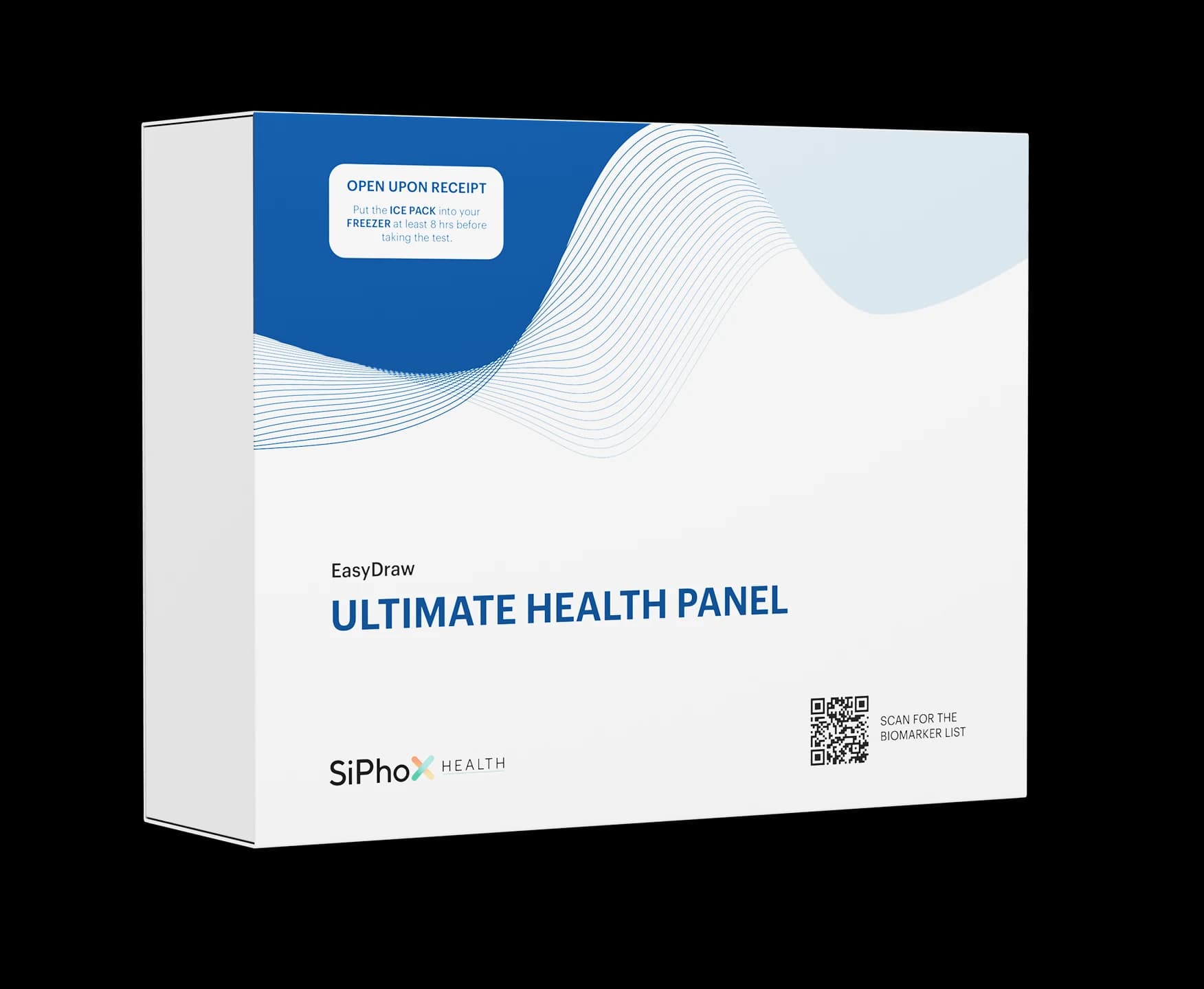
At-Home Blood Test
Research Supplies
Disclosure: supply links may earn PDP a commission at no cost to you.
Compound and formulation
| Supply check | What to verify |
|---|---|
Identity check Exact product required | Confirm CJC-1295 with DAC, not No DAC or an ipamorelin blend. A matching name does not establish equivalence to the material used in a clinical study. |
Identity check
Exact product required
Confirm CJC-1295 with DAC, not No DAC or an ipamorelin blend. A matching name does not establish equivalence to the material used in a clinical study.
Vials and preparation materials
| Supply check | What to verify |
|---|---|
Human cycle quantity Not established | A seller’s vial strength does not establish a human dose, course length, diluent amount, or syringe count. Those quantities are not estimated from anecdotes here. |
Human cycle quantity
Not established
A seller’s vial strength does not establish a human dose, course length, diluent amount, or syringe count. Those quantities are not estimated from anecdotes here.
Storage and handling information
| Supply check | What to verify |
|---|---|
Research product documentation Product-specific | Check the actual product documentation, batch information, and storage requirements. Product testing or supplies do not establish safety or suitability for human use. |
Research product documentation
Product-specific
Check the actual product documentation, batch information, and storage requirements. Product testing or supplies do not establish safety or suitability for human use.
Research-only products are not approved human medicines. No supply quantity on this page establishes a safe cycle, break, or restart interval.
Companion Supplies & Routine Support
Four Timelines That Often Get Mixed Up
A week count is only useful when we know what it describes. A paper may track people for several weeks even though they received the compound once. It may also measure a blood marker long after the final injection. Read each number with its label attached.
How to read a cycle claim
Term
Dosing window
Plain-English meaning
The time from the first injection to the last
What it cannot tell you alone
Whether injections happened daily or only on selected days
Term
Study duration
Plain-English meaning
The full time researchers followed the study plan
What it cannot tell you alone
How many days included treatment
Term
Measured effect
Plain-English meaning
How long a reported change was seen
What it cannot tell you alone
How long every person will notice a benefit
Term
Repeat-course break
Plain-English meaning
A gap before another course begins
What it cannot tell you alone
Whether restarting has been tested or is safe
| Term | Plain-English meaning | What it cannot tell you alone |
|---|---|---|
| Dosing window | The time from the first injection to the last | Whether injections happened daily or only on selected days |
| Study duration | The full time researchers followed the study plan | How many days included treatment |
| Measured effect | How long a reported change was seen | How long every person will notice a benefit |
| Repeat-course break | A gap before another course begins | Whether restarting has been tested or is safe |
For example, a follow-up visit on day 28 is a check on the participant. It does not mean treatment continued until that day or that another course should begin then.
Why Half-Life Is Not Cycle Length
Half-life is the time it takes for the amount of a drug in the body to fall by about half. Teichman reported an estimated half-life of 5.8–8.1 days. That helps explain the long exposure after an injection. It does not set a safe length of use or a safe restart date.
The studies measured growth hormone and IGF-1, a hormone that carries many growth hormone signals. Changes in these blood markers do not by themselves show better recovery, fat loss, or long-term health.
What does the day-28 finding mean?
FDA's review reports that average IGF-1 stayed above the starting level through study day 28. The last injections were on day 14, so this was 14 days after the final injection. The finding does not establish a four-week break.
What Can These Study Designs Tell Us?
The Teichman trials studied healthy adults ages 21–61. Participants received CJC-1295 or a placebo, a comparison treatment without the active drug. Treatment assignments were hidden during the study. This helps separate drug effects from expectations.
The trials measured drug levels, hormone changes, and short-term safety. They did not compare eight weeks with twelve weeks, or one break length with another.
Population matters
Results in healthy adults may not apply to people with hormone disorders, other illnesses, or several medicines.
Comparison matters
The trials did not compare full on-and-off courses.
Follow-up matters
Short studies may miss harms from longer or repeated use.
Higher Hormone Levels Are Not the Same as Proven Benefits
A blood marker is a measurement, such as a hormone level. A health benefit is a change in how someone feels or functions. Higher GH or IGF-1 does not by itself prove better strength, sleep, or injury recovery.
A higher hormone level does not show that longer use will help more. A return to the starting level also cannot prove that another course is safe.
How Long Should a Break Last?
The reviewed studies do not give an evidence-based answer. A gap between injections within a study is not the same as a break between full courses. Neither tells us when repeated long-term use becomes safe.
- The 28-day and 49-day studies did not test an 8–12-week course.
- A 4–6-week break is not established by the drug's half-life.
- The sources do not compare breaks or show that a break restores the body’s response.
- Preserved hormone pulses at one week do not rule out problems after months of use.
Continuous Use and Repeat Courses Are Different Questions
Continuous use means using a product without a planned break. Repeat courses mean stopping, then starting again. These studies did not compare the long-term benefits or harms of those approaches.
To study repeat use, researchers would need to test a stated course length, break, and number of courses, then follow people long enough to look for harms.
Tolerance means a response weakens with repeated use. The one-week hormone-pulse finding did not test whether this happens after months, or whether a break reverses it.
Does This Apply to CJC-1295 No DAC?
No. DAC is a chemical feature that helps the studied peptide attach to albumin, a protein in the blood. That changes how long it stays in the body. The FDA review treats DAC and non-DAC forms as distinct substances; their timing cannot be treated as interchangeable.
The older human studies tested the long-acting compound. They did not clearly report its salt form, a chemical detail of the product. Their results do not apply to every vial sold as CJC-1295. See the No DAC background page for that separate topic.
Why a Blend Needs Its Own Evidence
CJC-1295 is often discussed alongside ipamorelin or other compounds. Adding another active ingredient changes the research question. A study of CJC-1295 alone cannot tell us the best duration, break, or safety profile of a combined product. The presence of one familiar name does not make the whole blend studied.
Keep three distinctions clear when comparing pages or product labels: DAC versus No DAC, a single compound versus a blend, and the studied material versus a seller's vial. A similar product name is a starting point for checking identity, not proof that study results transfer to it.
A catalog match is not a clinical match
The research shopping card on this page uses the directory's exact CJC-1295 with DAC category. It does not substitute a No DAC product or an ipamorelin blend. That helps prevent a labeling mix-up; it does not show that a commercial vial matches a clinical study or is safe for human use.
Safety and Evidence Limits
CJC-1295 is not an FDA-approved drug. FDA's review says long-term human safety is unknown. Short trials cannot establish the safety of repeated courses over months or years.
FDA safety concerns
FDA flags limited human data and serious reactions linked to CJC-1295, including a faster heart rate and a body-wide blood-vessel widening reaction. It also raises concerns about immune reactions and peptide impurities.
These concerns are not solved by adding an off-period. Animal findings also cannot set a human cycle. Questions about hormone symptoms, treatment, or a reaction to a product belong with a licensed clinician.
A Simple Checklist for Checking Cycle Claims
Use this checklist when a page, post, or product listing presents a precise on-and-off schedule. It helps separate what a source actually found from the extra advice someone attached to it.
- Find the original source. A link to another dosing page is not the same as a link to a human study.
- Check the compound. Look for DAC status and whether the study used a single compound or a combination.
- Check the timeline. Separate injection days from the final follow-up visit and from any measured effect.
- Check the comparison. Was the claimed cycle or break actually tested against another schedule?
- Check the outcome. Was the result a blood marker, a reported symptom, or a health outcome?
- Read the limits and harms. Look for missing long-term data as well as the results that sound promising.
If the source cannot answer one of these questions, keep that gap visible. Precise-looking week counts can still rest on guesswork. 'Not established' is often the most useful answer because it prevents a research observation from turning into an unsupported instruction.
CJC-1295 with DAC Cycle FAQs
Q1: What does a CJC-1295 cycle mean?
The term usually describes a planned period of use and a break. It is not a standardized treatment course for CJC-1295 with DAC. When someone gives a cycle length, ask whether it comes from a human study, a community report, or a seller's schedule.
Q2: Is 8 or 12 weeks a proven CJC-1295 DAC cycle?
No. The human sources reviewed do not validate either length. Common community schedules should not be presented as tested treatment cycles.
Q3: Was the 49-day trial a seven-week cycle?
No. It included two or three injections, with the final injection on day 14, followed by observation. The total study length includes follow-up.
Q4: Does CJC-1295 with DAC need a four-week break?
The reviewed evidence does not establish a four-week break or another restart interval. Half-life and hormone changes are not proof that repeating use is safe.
Q5: Can I use this timeline for No DAC or an ipamorelin blend?
No. These studies do not establish a cycle for No DAC or a combined product. Different compounds and combinations need their own evidence.
Q6: Were participants given injections every day through day 14?
No. The repeat-injection trial used two injections on days 0 and 14, or three on days 0, 7 and 14. The chart's day 0–14 window shows when those selected injections occurred. It does not describe daily treatment.
Q7: Does a six-to-eight-day half-life mean the effect ends after a week?
No. Half-life is a measure of how quickly the amount of drug falls, not a countdown to when every effect ends. Drug levels, blood markers, and symptoms can follow different timelines. None of these measures alone establishes a safe restart date.
Q8: Does preserved growth hormone pulsing mean breaks are unnecessary?
No. The pulse study examined a specific response one week after a single injection. It did not compare repeated courses with continuous use or test whether taking breaks prevents harm. A finding about hormone pulses cannot answer all of those separate questions.
Q9: Can blood tests prove that another cycle is safe?
A blood result can help a clinician assess a specific health question. It cannot prove the safety of an untested repeat-course schedule. A value returning toward its starting level is not the same as evidence that all effects have ended or that another exposure is safe.
Q10: Why include FDA concerns when early studies reported no serious reactions?
The early report describes what happened in those particular trials. FDA's review considers a broader safety record and gaps in the evidence. A small, short study without a serious reaction cannot rule out uncommon harms or harms from longer exposure.
Q11: Can an animal study fill the gaps in human cycle research?
Animal studies can help researchers ask questions about a compound. Their timelines cannot simply be copied into a human cycle. The animal, condition, amount used, and results may all differ. Human duration and repeat-use claims need relevant human evidence.
Q12: Does a supplier's batch test validate the cycle?
No. A batch report addresses the tests performed on a sample. It does not test a human treatment schedule, long-term safety, or health benefits. Product-quality information and clinical evidence answer different questions, so both should be described without treating one as a substitute for the other.
Sources & Research
- 1. Teichman SL, Neale A, Lawrence B, et al. CJC-1295 human study: prolonged GH and IGF-I stimulation Journal of Clinical Endocrinology & Metabolism (2006)
- 2. Ionescu M, Frohman LA. CJC-1295 human study: persistence of pulsatile GH secretion Journal of Clinical Endocrinology & Metabolism (2006)
- 3. U.S. Food and Drug Administration December 4, 2024 Pharmacy Compounding Advisory Committee: CJC-1295 review FDA briefing document (2024)
- 4. U.S. Food and Drug Administration Compounding substances with potential significant safety risks: CJC-1295 entry FDA
Related Dosing Protocols
Educational use only
Peptide Dosing Protocols is an independent educational reference. Nothing here is medical advice or a recommendation for human use. Consult a licensed healthcare provider about treatment decisions.
Keep the evidence in context
Read the related compound background alongside these cycle evidence limits.

Written by Garret Grant
Founder & Lead Researcher · B.S. Civil Engineering, UCLA
Last updated: October 2026
Human-researched and AI-assisted with full editorial review. I verify sources, protocol interpretation, and final judgments personally. See methodology.
Share this page