
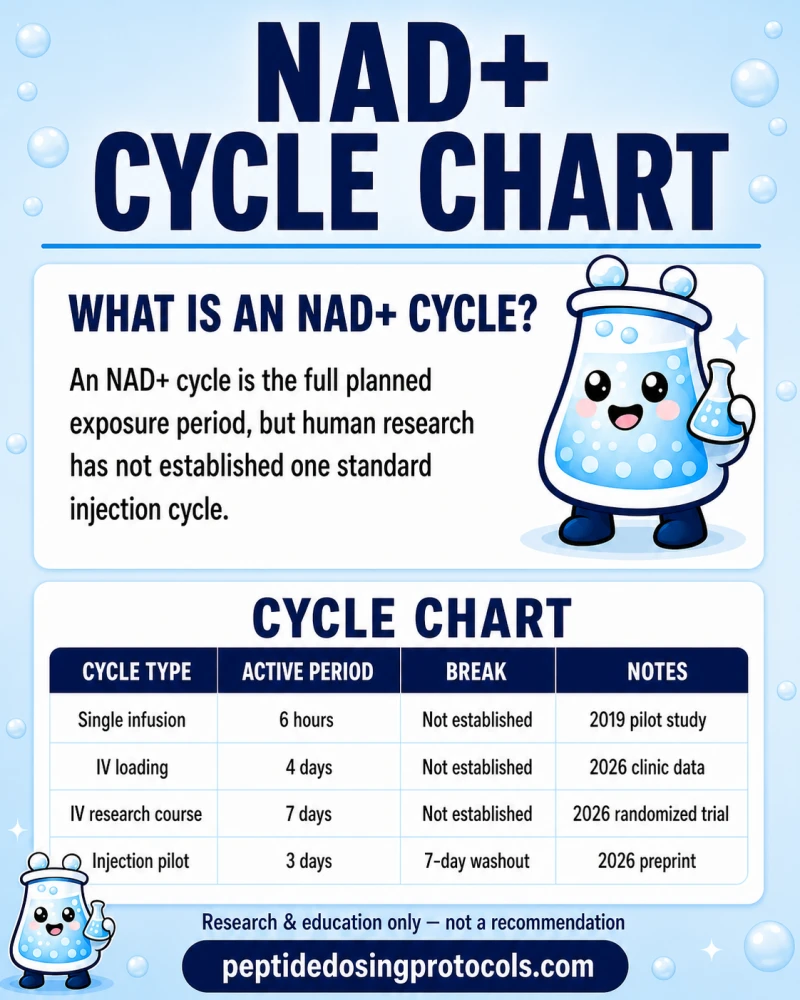
How Long Is an NAD+ Cycle?
There is no clinically established NAD+ cycle length for injectable NAD+. Human studies have used short and very different schedules, so the evidence does not support one standard 4-, 8-, or 12-week cycle.
The best way to answer "how long is an NAD+ cycle?" is to separate three things: schedules used in published human research, schedules used in clinics, and schedules shared in peptide communities. Those are not the same level of evidence.
Direct answer
Published human NAD+ research does not define a standard multi-week injection cycle. Short studies have used a single infusion, three consecutive injection days, four consecutive IV days, or seven daily IV infusions. Longer 4-12 week cycles seen online are not validated as a standard NAD+ cycle.
Do not turn a study schedule into a general protocol
A schedule used for one research question, route, or patient group does not prove that the same schedule should be used in another setting. This page compares study designs for education only.
Is NAD+ a Peptide?
No. NAD+ is not a peptide. Nicotinamide adenine dinucleotide is a dinucleotide coenzyme involved in redox reactions and cellular metabolism. Peptides are chains of amino acids.
Searches such as "NAD peptide cycle" and "NAD+ peptide cycle length" are common, so this guide answers that wording. The chemistry is still different. Calling NAD+ a peptide can also lead people to copy cycle rules from peptide compounds that do not apply to NAD+.
NAD+ Cycle Lengths Used in Human Research
Human NAD+ studies do not converge on one cycle length. The schedules below were designed for different research questions and should be read as study designs, not interchangeable protocols.
Human NAD+ schedules reported in published or registered research
Routes, populations, amounts, and study goals differ. These rows do not create a recommended NAD+ cycle.
Study
Grant et al., 2019 pilot
Route
IV infusion
Schedule
One 6-hour infusion; 750 mg total
What it tells us
Acute NAD+ metabolism during one infusion. It did not test a multi-week cycle.
Study
Yu et al., 2026 randomized trial
Route
IV infusion
Schedule
10 mg once daily for 7 consecutive days
What it tells us
A 7-day disease-specific research course in adults with ischemic cardiomyopathy. It does not establish a general wellness cycle.
Study
Reyna et al., 2026 retrospective pilot
Route
IV infusion
Schedule
500 mg daily for 4 consecutive days
What it tells us
A commercial four-day loading pattern with 30-day follow-up. The authors said longer-term dosage and effectiveness still need study.
Study
Nkrumah-Elie et al., 2026 preprint, Trial 1
Route
SC, IM, or IV bolus
Schedule
Three consecutive administration days, then a 7-day washout
What it tells us
Short-term injection tolerability across routes. This was an acute pilot, not proof of a repeating cycle.
| Study | Route | Schedule | What it tells us |
|---|---|---|---|
| Grant et al., 2019 pilot | IV infusion | One 6-hour infusion; 750 mg total | Acute NAD+ metabolism during one infusion. It did not test a multi-week cycle. |
| Yu et al., 2026 randomized trial | IV infusion | 10 mg once daily for 7 consecutive days | A 7-day disease-specific research course in adults with ischemic cardiomyopathy. It does not establish a general wellness cycle. |
| Reyna et al., 2026 retrospective pilot | IV infusion | 500 mg daily for 4 consecutive days | A commercial four-day loading pattern with 30-day follow-up. The authors said longer-term dosage and effectiveness still need study. |
| Nkrumah-Elie et al., 2026 preprint, Trial 1 | SC, IM, or IV bolus | Three consecutive administration days, then a 7-day washout | Short-term injection tolerability across routes. This was an acute pilot, not proof of a repeating cycle. |
The 2026 injection pilot is a preprint and had not completed peer review when this page was updated.
Single-exposure evidence exists
The 2019 pilot measured plasma and urine NAD+ metabolites during and after one six-hour IV infusion. It helps explain acute handling of infused NAD+, not cycle duration.
Short-course evidence exists
Recent human research includes three-, four-, and seven-day schedules. Each was tied to a specific study design rather than a universal NAD+ cycle.
Long injectable cycles remain poorly defined
The available direct NAD+ injection evidence does not establish an eight-week, twelve-week, or indefinite schedule as the standard.
What the Human Research Does Not Establish
- It does not establish one best NAD+ injection cycle length.
- It does not prove that a 4-week, 8-week, or 12-week cycle is required.
- It does not establish a standard break or washout between repeating cycles.
- It does not show that a schedule studied by IV infusion can be copied to subcutaneous or intramuscular injections.
- It does not establish that a commercial loading phase must be followed by a maintenance phase.
- It does not establish long-term continuous injectable NAD+ as a validated schedule.
This distinction matters because online NAD+ cycle pages often combine short clinical studies, clinic protocols, and community routines into one chart. That can make a common practice look more proven than it is.
NAD+ Injection Cycle Length
For the specific search "NAD+ injection cycle length," the evidence-based answer is still that no standard duration has been validated. Direct injection research is newer and much thinner than the broader research on oral NAD+ precursors.
One 2026 pilot exposed participants to NAD+, nicotinamide riboside, or placebo by subcutaneous, intramuscular, or intravenous routes on three consecutive days, followed by a seven-day washout. That design can inform short-term tolerability research, but it does not prove that three days on and seven days off is an NAD+ cycle protocol.
Route matters
A subcutaneous NAD+ injection, an IV bolus, and a slow IV infusion create different exposure patterns. Cycle length should not be copied across routes just because the compound name is the same.
What About 4-, 8-, and 12-Week NAD+ Cycles?
Four-, eight-, and twelve-week NAD+ cycles appear often in clinic and community content. They are useful search terms, but they should not be presented as if human trials established those durations.
How to interpret common multi-week NAD+ cycle lengths
Cycle length
4 weeks
Evidence status
Not an established injectable standard
How to interpret it
Longer than the direct NAD+ administration periods in the human studies summarized above. Treat four-week schedules as clinic or community practice unless a specific study is cited.
Cycle length
8 weeks
Evidence status
Not an established injectable standard
How to interpret it
A common online cycle length, but direct human NAD+ injection trials do not validate eight weeks as the preferred duration.
Cycle length
12 weeks
Evidence status
Not an established injectable standard
How to interpret it
Sometimes used as an extended cycle in community material. Direct long-term injectable NAD+ evidence is not strong enough to call twelve weeks a standard.
Cycle length
Continuous use
Evidence status
Not established for injectable NAD+
How to interpret it
Current direct injection studies are too short to define an evidence-based indefinite schedule.
| Cycle length | Evidence status | How to interpret it |
|---|---|---|
| 4 weeks | Not an established injectable standard | Longer than the direct NAD+ administration periods in the human studies summarized above. Treat four-week schedules as clinic or community practice unless a specific study is cited. |
| 8 weeks | Not an established injectable standard | A common online cycle length, but direct human NAD+ injection trials do not validate eight weeks as the preferred duration. |
| 12 weeks | Not an established injectable standard | Sometimes used as an extended cycle in community material. Direct long-term injectable NAD+ evidence is not strong enough to call twelve weeks a standard. |
| Continuous use | Not established for injectable NAD+ | Current direct injection studies are too short to define an evidence-based indefinite schedule. |
Common does not mean clinically validated. A community or clinic schedule should be labeled as such.
This is also why the answer to "how long should you cycle NAD+?" cannot be reduced to one number. The duration depends on what kind of evidence is being discussed, and current human injection data do not provide a universal endpoint.
NAD+ Cycle Supplies Needed
Plan supplies from the exact route, study schedule, product format, and concentration. The short human studies on this page do not establish a standard vial count or personal supply plan.
Recommended U.S. and Canada Supply
Choose your region
Use discount code PEPPAL at Peptide Partners checkout. See why we love Peptide Partners.
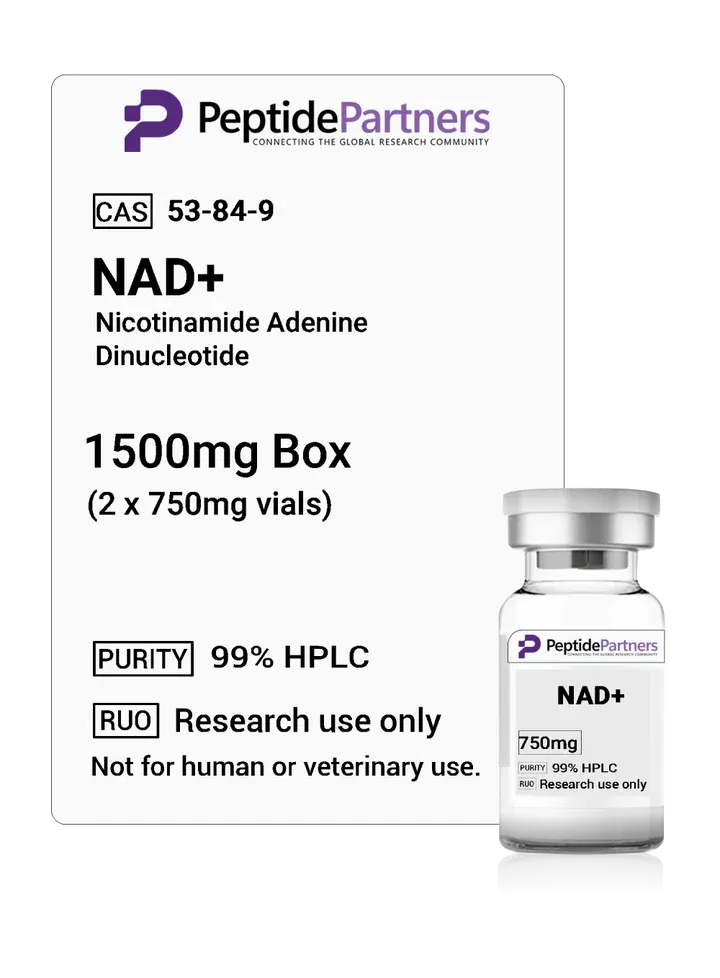
NAD+ Buffered Research Supply
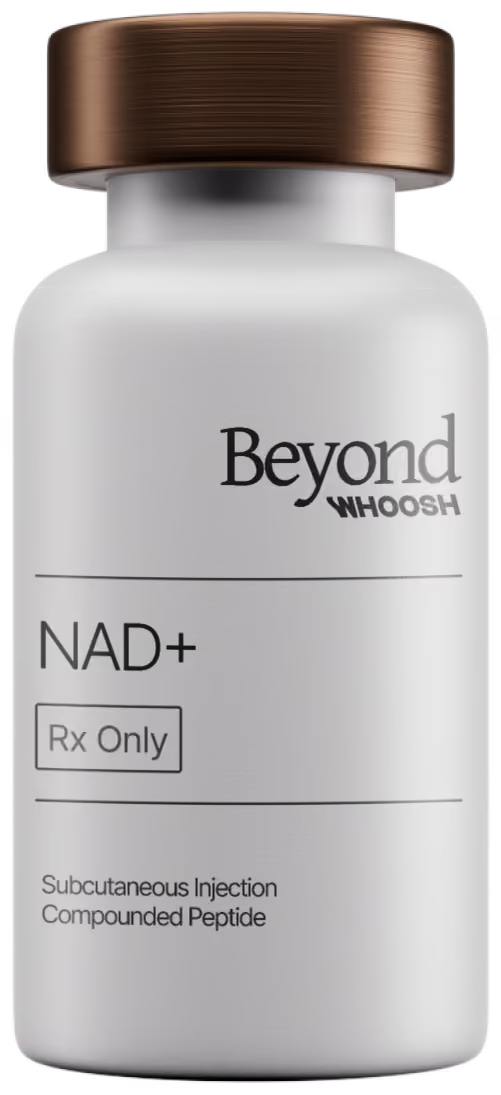
Pharmacy Grade NAD+
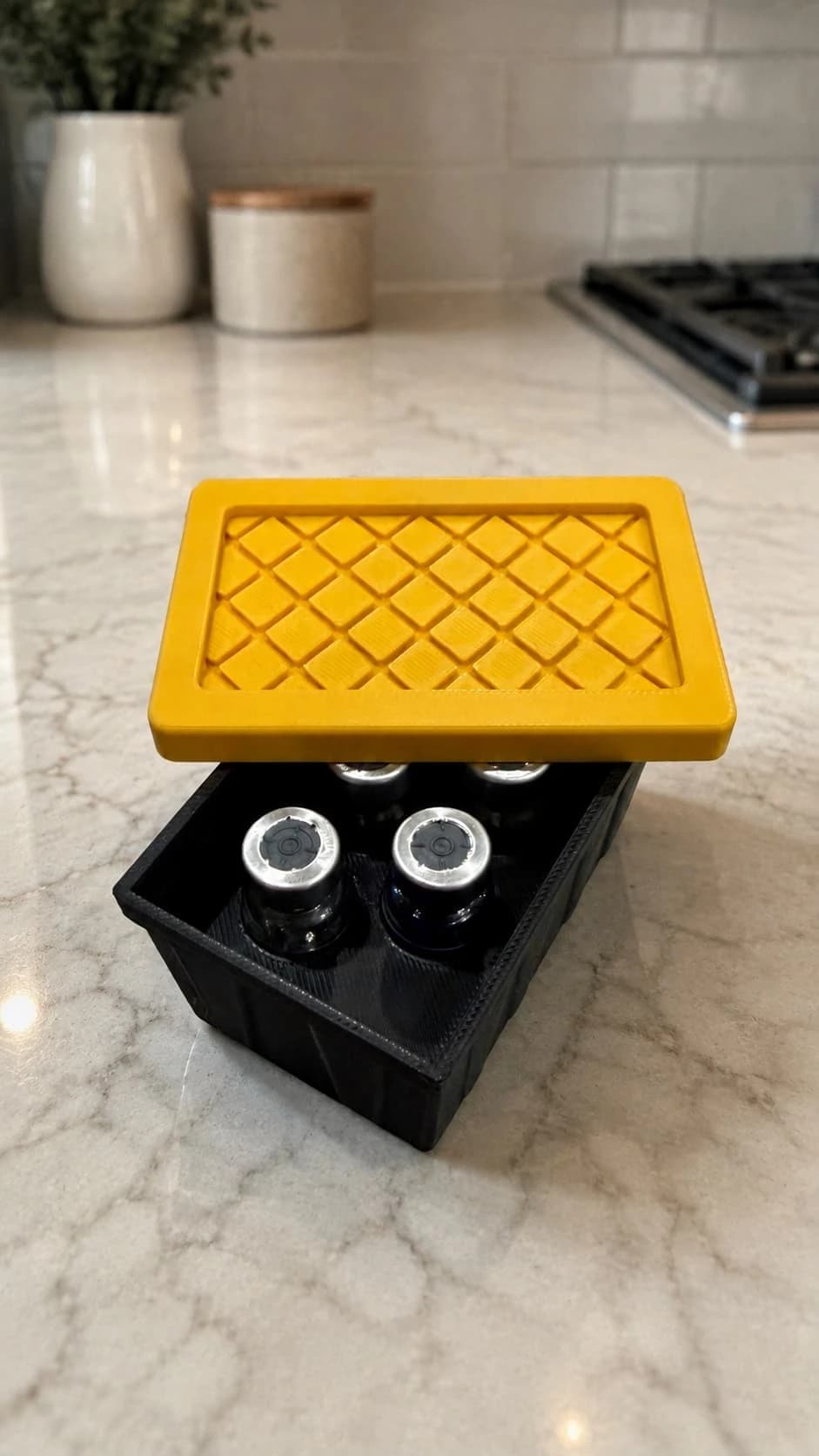
5-Vial Tote Case
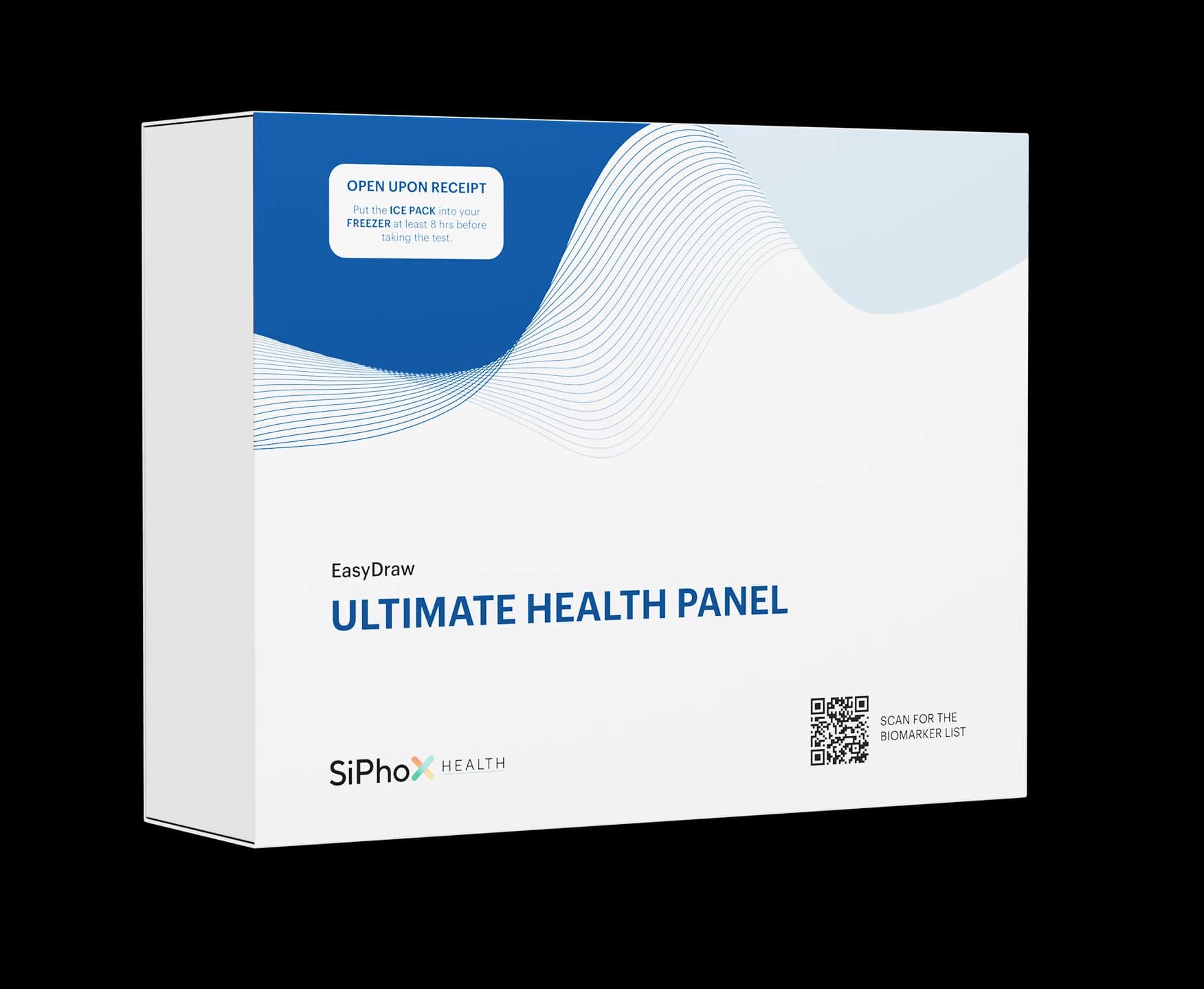
At-Home Blood Test
Research Supplies
Disclosure: supply links may earn PDP a commission at no cost to you.
Human Research Schedules
Each study used its own route, setting, and materials. The timelines do not create one reusable NAD+ supply list.
| Research context | Evidence note |
|---|---|
Single 6-hour infusion Study-site materials | The 2019 pilot measured acute IV metabolism. It did not test a repeating cycle. |
3-day injection pilot Route-specific materials | SC, IM, and IV bolus routes were studied, followed by a seven-day washout. |
4-day IV loading period Clinic-managed materials | The retrospective study documented a commercial loading pattern, not a standard home supply plan. |
7-day IV research course Trial-managed materials | This disease-specific schedule does not establish a general NAD+ cycle. |
Single 6-hour infusion
Study-site materials
The 2019 pilot measured acute IV metabolism. It did not test a repeating cycle.
3-day injection pilot
Route-specific materials
SC, IM, and IV bolus routes were studied, followed by a seven-day washout.
4-day IV loading period
Clinic-managed materials
The retrospective study documented a commercial loading pattern, not a standard home supply plan.
7-day IV research course
Trial-managed materials
This disease-specific schedule does not establish a general NAD+ cycle.
Planning and Record-Keeping
Keep active exposure, follow-up, washout, and calculation records separate.
| Research context | Evidence note |
|---|---|
4-, 8-, or 12-week claim Do not infer vial count | These multi-week durations are clinic or community claims, not validated injection standards. |
Route and concentration Use the NAD+ protocol | The protocol page covers vial sizes, concentration, reconstitution, and syringe-unit math. |
Exposure log One record per session | Record the route, study source, active day, and observation period without treating follow-up as treatment. |
Washout or break Track separately | A study washout is not proof of the ideal break between repeating cycles. |
4-, 8-, or 12-week claim
Do not infer vial count
These multi-week durations are clinic or community claims, not validated injection standards.
Route and concentration
Use the NAD+ protocol
The protocol page covers vial sizes, concentration, reconstitution, and syringe-unit math.
Exposure log
One record per session
Record the route, study source, active day, and observation period without treating follow-up as treatment.
Washout or break
Track separately
A study washout is not proof of the ideal break between repeating cycles.
These rows organize research supplies and records. They do not recommend NAD+ use or turn a study schedule into a personal cycle.
Companion Supplies & Routine Support
NAD+ Loading Phase vs Full Cycle
A loading phase is a short period of higher-frequency exposure at the beginning of a schedule. A cycle usually means the full period from the first planned exposure through the end of that block. The terms are often mixed together online.
The 2026 retrospective Frontiers study is useful here. Clients received 500 mg IV on four consecutive days. The paper described this as a typical commercial "loading dose" recommended by the compounding pharmacy, then followed the clients for 30 days. The study did not test a standardized maintenance phase after those four days.
What that four-day study means
It documents a real commercial loading pattern that researchers observed. It does not prove that every NAD+ cycle should start with four daily infusions or that a specific maintenance schedule should follow.
Should NAD+ Be Cycled?
Human research has not shown that injectable NAD+ must be cycled on and off. There is also not enough long-term injectable research to say that continuous use is an established alternative.
That leaves an evidence gap. A planned cycle, a maintenance schedule, and continuous exposure are different research models. None should be called the proven standard for injectable NAD+ based on the current literature.
No proven cycling rule
Claims that NAD+ must be stopped after a set number of weeks, or that it never needs a break, go beyond the direct human injection evidence available today.
How Long Should an NAD+ Break Be?
There is no established evidence-based break length between NAD+ injection cycles. A seven-day washout appears in a recent injection pilot, but that was part of the study design and safety follow-up. It was not validated as the ideal break between repeating NAD+ cycles.
Online schedules may describe one, two, or several weeks off after a cycle. Those gaps should be labeled as clinic or community practice unless the exact schedule is supported by a human study using the same compound, route, and research goal.
Washout in a study
A washout can help researchers separate exposure periods or observe what happens after treatment stops.
Break in a community cycle
A planned off-period may be part of a community schedule, but its length is not automatically evidence-based.
Follow-up is not the same as a break
A study may follow participants for weeks or months without giving more NAD+. That does not mean the follow-up period is a recommended cycle break.
IV, Subcutaneous, and IM NAD+ Cycles Are Not Interchangeable
Route is one of the biggest reasons NAD+ cycle charts can be misleading. A slow IV infusion can last hours, while a subcutaneous or intramuscular injection is a bolus exposure. The amount delivered, peak concentration, tolerability, and study setting can all differ.
Why route-specific NAD+ schedules should stay separate
Route
Slow IV infusion
Human evidence example
750 mg over 6 hours in the 2019 metabolic pilot
Cycle interpretation
Useful for acute infusion metabolism; not a subcutaneous cycle template.
Route
IV infusion
Human evidence example
500 mg on four consecutive days in the 2026 retrospective study
Cycle interpretation
Documents a commercial loading pattern, not a universal cycle.
Route
IV infusion
Human evidence example
10 mg daily for 7 days in a heart-failure trial
Cycle interpretation
Disease-specific clinical research; not a general cycle standard.
Route
SC / IM / IV bolus
Human evidence example
Three consecutive days in the 2026 injection pilot
Cycle interpretation
Short-term route comparison and tolerability research.
| Route | Human evidence example | Cycle interpretation |
|---|---|---|
| Slow IV infusion | 750 mg over 6 hours in the 2019 metabolic pilot | Useful for acute infusion metabolism; not a subcutaneous cycle template. |
| IV infusion | 500 mg on four consecutive days in the 2026 retrospective study | Documents a commercial loading pattern, not a universal cycle. |
| IV infusion | 10 mg daily for 7 days in a heart-failure trial | Disease-specific clinical research; not a general cycle standard. |
| SC / IM / IV bolus | Three consecutive days in the 2026 injection pilot | Short-term route comparison and tolerability research. |
For dose-by-dose information, concentration math, vial sizes, and reconstitution, use the NAD+ protocol guide. This cycle page stays focused on duration, scheduling evidence, and how to interpret cycle claims.
Do Not Use NR or NMN Studies as NAD+ Injection Cycles
Nicotinamide riboside (NR) and nicotinamide mononucleotide (NMN) are NAD+ precursors. They are related to NAD+ metabolism, but they are not the same intervention as injecting NAD+ itself.
This matters for cycle length. A 2026 injectable NR study includes a much longer at-home phase, with subcutaneous NR given three times per week from day 10 through day 100. That longer schedule is NR evidence, not proof that direct NAD+ injections should follow a roughly 90-day cycle.
Keep the compound attached to the schedule
When reading an NAD+ cycle claim, check whether the source studied NAD+, NR, NMN, or another precursor. A schedule cannot be transferred just because all of them affect the NAD+ pathway.
How to Read an NAD+ Cycle Protocol
A useful NAD+ cycle chart should tell you where each schedule came from. Before treating a duration as evidence-based, check the details below.
- 01
Check the compound
Confirm the source actually studied NAD+ and not NR, NMN, niacin, or another NAD+ precursor.
- 02
Check the route
Keep IV infusion, IV bolus, subcutaneous injection, intramuscular injection, and oral studies separate.
- 03
Check the full schedule
Look for the number of administration days, frequency, follow-up period, and any washout. Do not treat follow-up time as active treatment time.
- 04
Check the population
A schedule tested in a specific disease group does not automatically become a general NAD+ cycle.
- 05
Check the evidence level
Peer-reviewed trials, retrospective clinic data, preprints, clinic protocols, and community reports should not be presented as equal evidence.
Published Research vs Community NAD+ Cycles
Evidence levels behind common NAD+ cycle discussions
Source type
Randomized human trial
What it can show
What happened under a defined schedule in a specific study population
What it cannot prove
That the same schedule is best for other populations, routes, or goals
Source type
Pilot human study
What it can show
Early pharmacokinetic, route, or tolerability data
What it cannot prove
A mature long-term cycle standard
Source type
Retrospective clinic data
What it can show
How a real commercial protocol was used and what was observed
What it cannot prove
That the protocol is superior or clinically established
Source type
Clinic protocol
What it can show
How one practice structures care
What it cannot prove
That the schedule has been validated in controlled research
Source type
Community-reported cycle
What it can show
What people say they commonly run
What it cannot prove
Safety, effectiveness, or an evidence-based cycle length
| Source type | What it can show | What it cannot prove |
|---|---|---|
| Randomized human trial | What happened under a defined schedule in a specific study population | That the same schedule is best for other populations, routes, or goals |
| Pilot human study | Early pharmacokinetic, route, or tolerability data | A mature long-term cycle standard |
| Retrospective clinic data | How a real commercial protocol was used and what was observed | That the protocol is superior or clinically established |
| Clinic protocol | How one practice structures care | That the schedule has been validated in controlled research |
| Community-reported cycle | What people say they commonly run | Safety, effectiveness, or an evidence-based cycle length |
This page uses published human evidence when possible and labels preprint or commercial practice separately. Community cycle lengths can explain why certain numbers appear in search results, but they do not replace clinical evidence.
What We Know About Longer NAD+ Cycles
Direct long-term injectable NAD+ research remains limited. The 2026 Frontiers retrospective study followed clients for 30 days after a four-day IV loading period and concluded that more research is needed on dosage and effectiveness beyond 30 days.
That gap is important for 8-week, 12-week, and continuous-cycle searches. A longer calendar duration does not become evidence-based just because short studies show that NAD+ can be administered by injection or infusion.
Bottom line on long cycles
Current direct NAD+ injection research is much better at describing short exposures than long repeating cycles. Eight-week, twelve-week, and continuous schedules should be treated as unvalidated unless future human trials directly study them.
Injectable NAD+ Regulatory Context
Compounded drugs are not FDA-approved, and FDA has specifically warned compounders about the use of unsuitable food-grade NAD+ ingredients in sterile products. In 2026, FDA also cited an outsourcing facility for compounding NAD+ with a bulk drug substance that was not eligible for the section 503B exemptions described in that warning letter.
This regulatory context does not determine a cycle length, but it is another reason not to treat an online NAD+ injection schedule as an approved dosing standard.
NAD+ Cycle Length vs NAD+ Dosage Protocol
Cycle length and dosage answer different questions. Cycle length is the total duration or structure of a research schedule. Dosage covers the amount per administration, frequency, concentration, vial math, and route-specific details.
Use this page for cycle questions
Cycle duration, breaks, loading phases, 4-12 week claims, and how human study schedules differ.
Use the NAD+ protocol for dosage questions
Dose charts, frequency, vial size, reconstitution, concentration, and syringe-unit calculations.
Keeping these topics separate helps avoid turning this cycle guide into a duplicate of the main NAD+ dosage and protocol page.
NAD+ Cycle Length FAQ
Q1: How long is an NAD+ cycle?
There is no clinically established NAD+ injection cycle length. Human studies have used schedules ranging from one infusion to three, four, or seven consecutive administration days. Longer multi-week cycles are commonly discussed online but are not validated as one standard duration.
Q2: How long should you cycle NAD+ injections?
Human research does not provide one evidence-based number of weeks for an NAD+ injection cycle. The published and emerging studies use short, route-specific schedules, so a 4-, 8-, or 12-week duration should not be presented as a proven standard.
Q3: Should you cycle NAD+ injections?
There is no human evidence showing that injectable NAD+ must be cycled on and off. There is also not enough long-term injectable research to define continuous use as a validated standard.
Q4: What is a typical NAD+ injection cycle length?
Clinic and community sources often describe multi-week schedules, but direct human NAD+ studies have mostly tested much shorter exposure periods. For that reason, there is no evidence-based typical injection cycle length yet.
Q5: Is an 8-week NAD+ cycle evidence-based?
Not as a general injectable NAD+ standard. Eight weeks is a common online cycle length, but current direct human NAD+ injection research does not establish eight weeks as the preferred or required duration.
Q6: Is a 12-week NAD+ cycle standard?
No established human injection standard requires a 12-week NAD+ cycle. A 12-week schedule should be labeled as clinic or community practice unless it is tied to a specific study using the same route and research goal.
Q7: How long should you take off between NAD+ cycles?
No evidence-based off-cycle length has been established. A seven-day washout was used in a recent injection pilot, but that was a study-design choice and not proof of an ideal break between repeating NAD+ cycles.
Q8: Do you need to cycle off NAD+?
Current human research does not show that a planned off-period is required for injectable NAD+. It also does not establish indefinite continuous injections as a standard, so both claims should be treated cautiously.
Q9: Can NAD+ be used continuously instead of in cycles?
Long-term continuous injectable NAD+ has not been established by strong human trials. Current direct studies are mostly short, so they cannot define an evidence-based continuous schedule.
Q10: What is an NAD+ loading cycle?
A loading phase is a short period of higher-frequency administration at the start of a schedule. One 2026 retrospective study documented four consecutive days of 500 mg IV NAD+ as a commercial loading pattern, but it did not establish that approach as a universal standard.
Q11: Does the 7-day NAD+ study mean a 7-day cycle is best?
No. The seven-day schedule came from a randomized trial in adults with ischemic cardiomyopathy. A disease-specific study schedule should not be turned into a general NAD+ cycle recommendation.
Q12: Are subcutaneous and IV NAD+ cycle lengths the same?
They should not be assumed to be the same. IV infusion, IV bolus, subcutaneous injection, and intramuscular injection produce different exposure patterns, and current studies do not validate one shared cycle length across routes.
Q13: Is NAD+ a peptide?
No. NAD+ is nicotinamide adenine dinucleotide, a dinucleotide coenzyme. The phrase 'NAD+ peptide cycle' is common in search, but NAD+ is chemically different from a peptide.
Q14: Can NR or NMN studies be used to set an NAD+ cycle?
No. NR and NMN are NAD+ precursors, not direct NAD+. Their study schedules can help researchers understand the broader NAD+ pathway, but they should not be copied as direct NAD+ injection cycles.
Q15: Where can I find NAD+ dosage and reconstitution information?
See the NAD+ protocol page for dose charts, frequency, vial sizes, reconstitution, concentration, and syringe-unit math. This page is limited to cycle length and schedule evidence.
References
- 1. Grant R, Berg J, Mestayer R, et al. A Pilot Study Investigating Changes in the Human Plasma and Urine NAD+ Metabolome During a 6 Hour Intravenous Infusion of NAD+ Frontiers in Aging Neuroscience (2019)
- 2. Yu X, Xu J, Cao J, et al. Effect of Nicotinamide Adenine Dinucleotide on Heart Failure Caused by Ischemic Cardiomyopathy: A Randomized, Placebo-Controlled Trial American Journal of Cardiovascular Drugs (2026)
- 3. Reyna K, Heinzen G, Patel N, et al. Intravenous infusion of nicotinamide adenine dinucleotide (NAD+) versus nicotinamide riboside (NR): a retrospective tolerability pilot study in a real-world setting Frontiers in Aging (2026)
- 4. Nkrumah-Elie Y, Kwon J, Simpson S, et al. Preliminary Safety Analysis of Two Pilot Clinical Trials Involving Injections of Niagen®, Nicotinamide Riboside Chloride medRxiv preprint (2026)
- 5. Absorption and Tolerability of Injectable Administration of Niagen®+, as Compared to NAD+ (NCT06919328) ClinicalTrials.gov (2025)
- 6. Randomized, Open-label, Safety Study of Subcutaneous and Intramuscular Injections of Niagen® Plus (NCT07251608) ClinicalTrials.gov (2025)
- 7. FDA reminds compounders to use ingredients suitable for sterile compounding U.S. Food and Drug Administration (2024)
- 8. GenoGenix LLC - Warning Letter 718739 U.S. Food and Drug Administration (2026)
Related Dosing Protocols
Educational use only
Peptide Dosing Protocols is an independent educational reference. Nothing here is medical advice or a recommendation for human use. Consult a licensed healthcare provider before considering any compound.
Need NAD+ dosage and vial math?
Use the NAD+ protocol page for route-specific dose tables, concentration, reconstitution, and syringe-unit calculations. Keep this cycle guide for duration and schedule evidence.

Written by Garret Grant
Founder & Lead Researcher · B.S. Civil Engineering, UCLA
Last updated: August 2026
Human-researched and AI-assisted with full editorial review. I verify sources, protocol interpretation, and final judgments personally. See methodology.
Share this page