
How Long Is a Tesamorelin Cycle?
There is no standard on-and-off tesamorelin cycle established by the trials reviewed here. The better-supported question is how long treatment was studied, whether its effects continued, and what changed when people stopped. These questions matter more than choosing a week count from an online chart.
A cycle usually means a planned course followed by time off, often with an intended restart. A clinical trial can run for six months without testing that pattern. It might compare a drug with a placebo, a look-alike treatment without the active drug. Or it might switch some people to placebo to see what happens after treatment stops.
Use the right page for the question
This guide explains duration and evidence. The tesamorelin protocol background explains the compound and its different product versions. Neither page replaces the instructions for a prescribed product or a clinician's treatment plan.
Who Was Studied, and What Is Approved?
The EGRIFTA WR label covers excess abdominal fat in adults with HIV and lipodystrophy. Lipodystrophy means an abnormal pattern of body fat. This approval is not for general weight management.
That distinction changes how to read the research. Evidence in people with a specific condition does not automatically support cosmetic use in otherwise healthy adults. The treatment goal, other medicines, health risks, and starting body-fat pattern may differ. A shared concern about belly size does not make two groups medically alike.
A product may have an approved use while claims made about that product remain unproven. Approval does not cover every length of use, combination, or product sold under the same ingredient name. Keep the exact medicine, the patient group, and the intended outcome together when checking a claim.
Community Reports: Untested Cycle Lengths
Not clinically researched cycle guidance
These examples come from people describing their own use online. Clinical studies have not established the cycle lengths or breaks below. We cannot confirm what products they used, how they took them, or what else they took. We also cannot check their results or side effects. Repeated claims and upvotes do not prove that a schedule works or is safe.
Community posts sometimes describe planned twelve-week courses, while other users discuss longer use or different breaks. These self-reports do not validate cycling or establish treatment guidance for EGRIFTA.
An April 2026 r/BodyHackGuide report describes ten weeks elapsed in a planned twelve-week course, alongside retatrutide. A July 2026 discussion contains conflicting proposed durations. The other compound may affect the results. These writers chose to post their stories, and we cannot confirm their exact products. That prevents a reliable comparison.
The approved-treatment evidence below concerns adults with HIV-associated lipodystrophy, including a 26-week treatment phase and extension. It does not establish a recreational cycle for general fat loss. EGRIFTA versions have different instructions. A research vial cannot replace them. Continuation or stopping is a prescribing decision; a claim that a break restores the drug’s effect is not a tested reason to cycle.
Community sources reviewed October 14, 2026. These are a few discussions, not a survey. They do not show that the wider community agrees on a schedule.
What Did the Main Trials Actually Do?
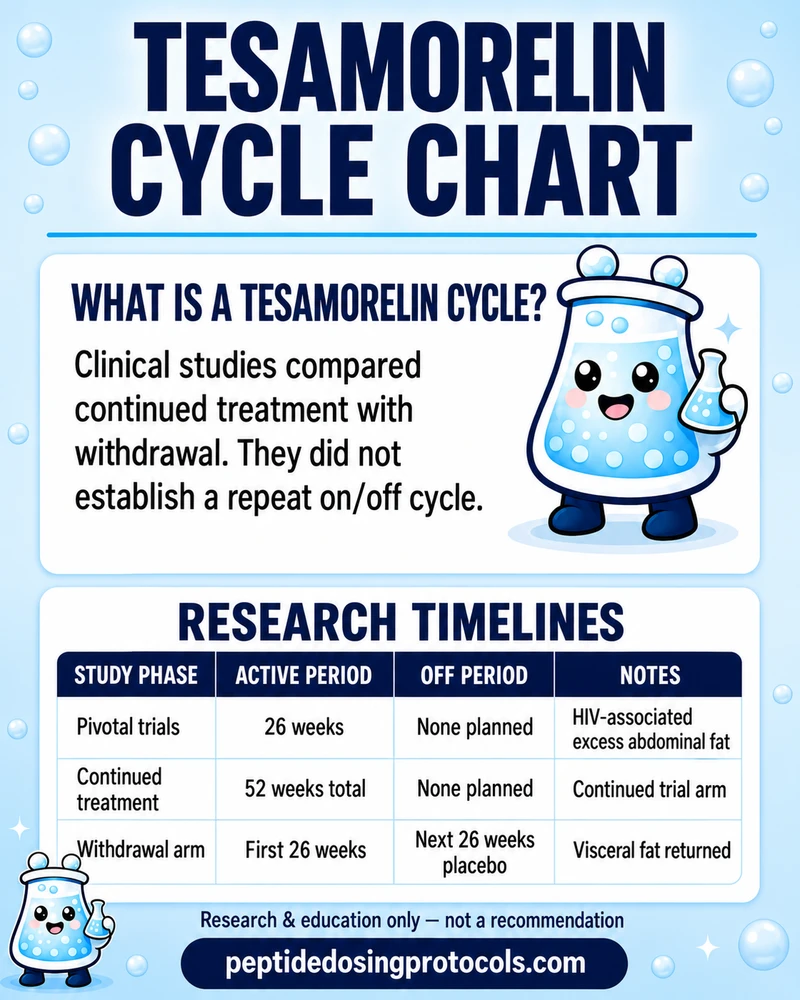
The combined report from two large trials describes two studies with comparison groups and their longer follow-up phases. Initial treatment lasted 26 weeks. At that point, eligible participants already receiving tesamorelin were assigned again to continue it or switch to placebo for another 26 weeks.
Tesamorelin: time on treatment versus later checks
Study designs, not personal treatment schedules.
Group or phase
Initial comparison
Active treatment
Daily tesamorelin for 26 weeks
What happened next
Compared with placebo during the same period
Group or phase
Continued-treatment group
Active treatment
Daily tesamorelin through week 52
What happened next
Another 26 weeks of active treatment
Group or phase
Withdrawal group
Active treatment
Daily tesamorelin during weeks 0–26
What happened next
Placebo during weeks 26–52
Group or phase
Delayed-start group
Active treatment
Placebo during weeks 0–26
What happened next
Tesamorelin during weeks 26–52
| Group or phase | Active treatment | What happened next |
|---|---|---|
| Initial comparison | Daily tesamorelin for 26 weeks | Compared with placebo during the same period |
| Continued-treatment group | Daily tesamorelin through week 52 | Another 26 weeks of active treatment |
| Withdrawal group | Daily tesamorelin during weeks 0–26 | Placebo during weeks 26–52 |
| Delayed-start group | Placebo during weeks 0–26 | Tesamorelin during weeks 26–52 |
A 52-week study does not mean every participant received 52 weeks of tesamorelin. The assigned group tells us how long each person received the drug.
The delayed-start group also matters. Starting treatment after placebo is not the same as restarting after a prior course. A chart that labels both simply as a second cycle would hide an important difference in what the trial tested.
Tesamorelin Cycle Supplies Needed
Supplies depend on the prescribed tesamorelin product and its own instructions. The research-catalog card is separate from prescription treatment. It is not an approved medicine or a substitute for a pharmacy-dispensed product. The case, blood-test kit, and Amazon links below are optional shopping resources. A clinician should choose which blood tests, if any, are appropriate; a commercial panel cannot prove that an untested cycle is safe. Check device compatibility and product-specific storage needs. A case or mini fridge does not by itself meet a medicine’s temperature requirements.
Research Supplies
Choose your region
Use discount code PEPPAL at Peptide Partners checkout. See why we love Peptide Partners.
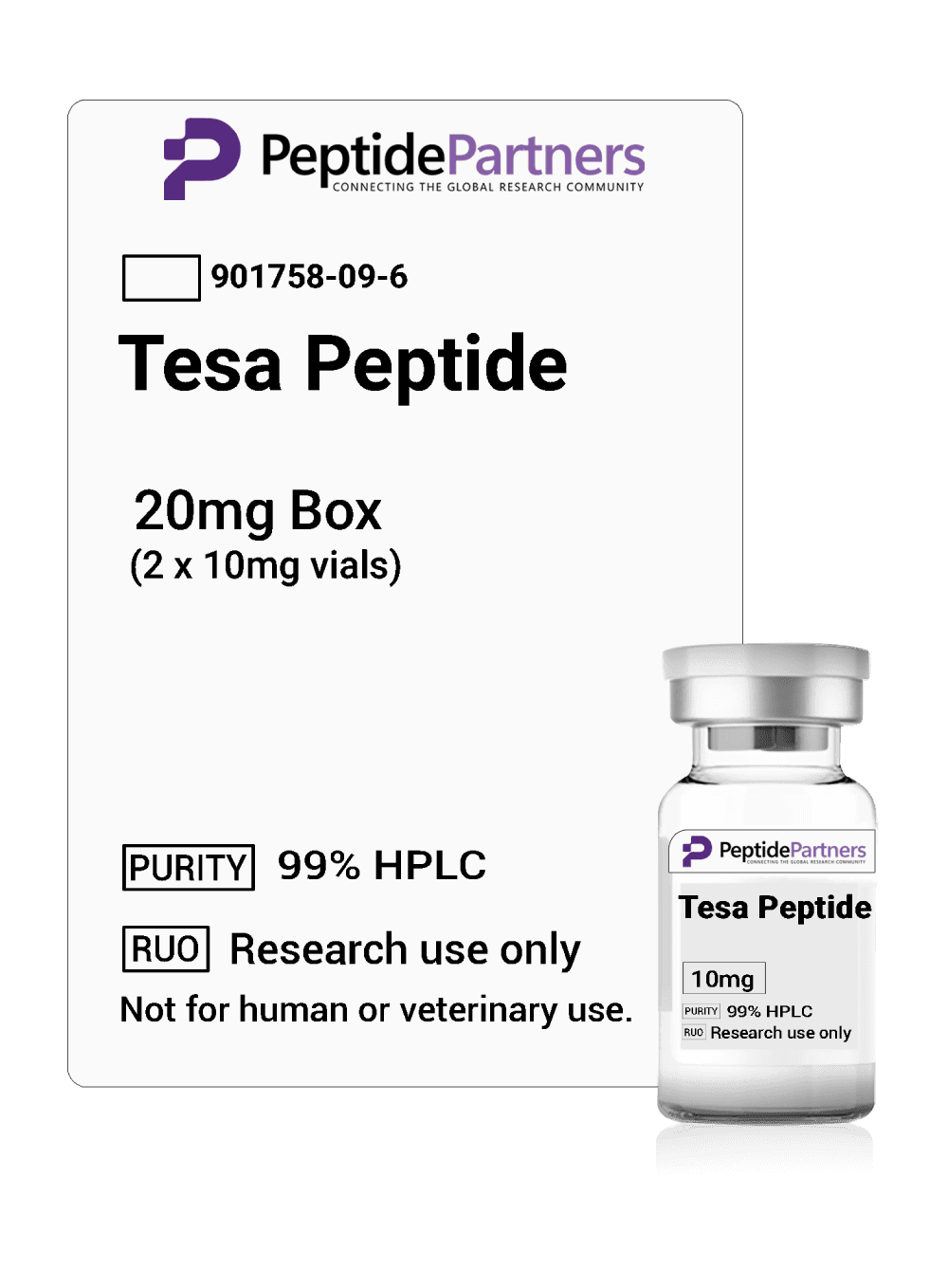
Tesamorelin (10mg vials)
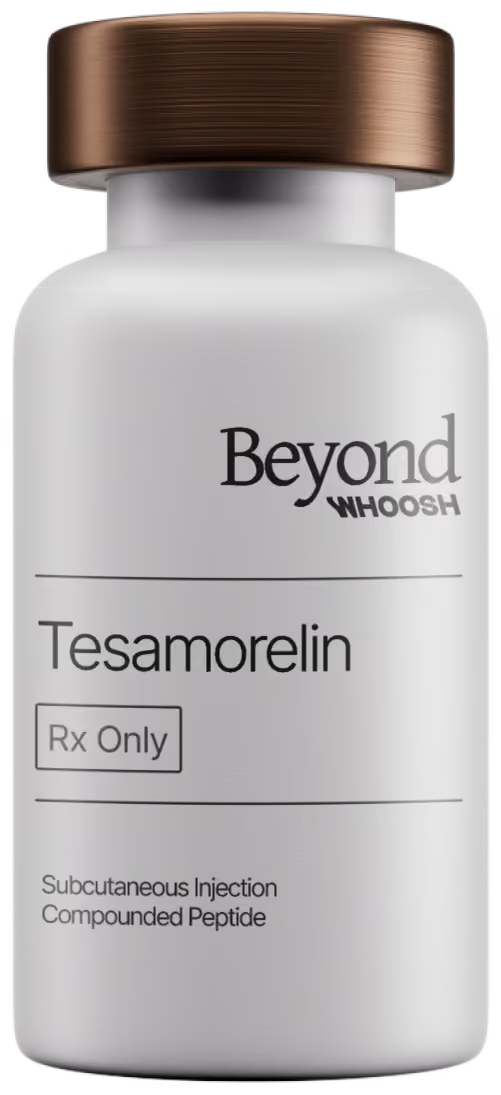
Pharmacy Grade Tesamorelin
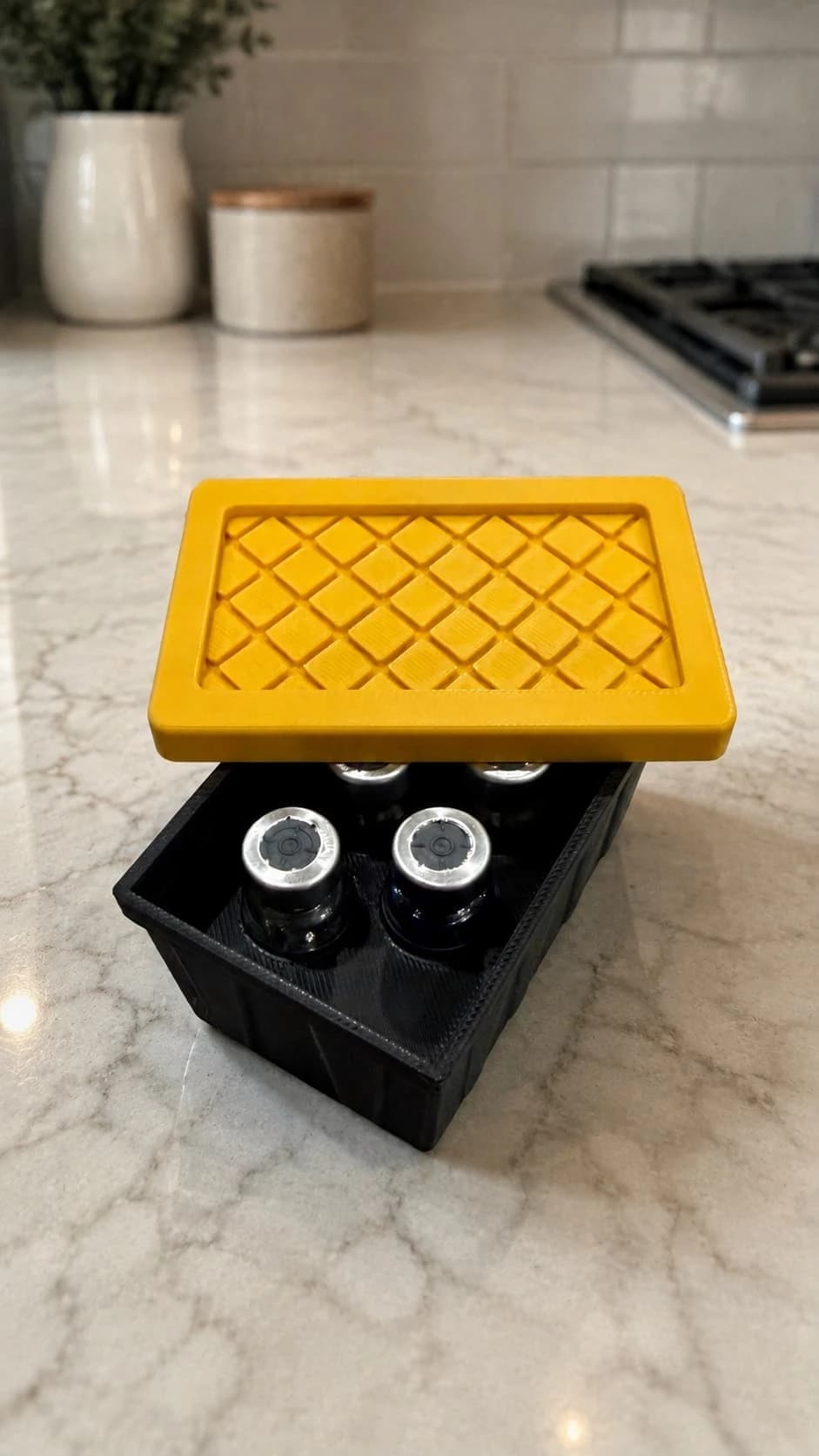
5-Vial Tote Case

At-Home Blood Test
Research Supplies
Disclosure: supply links may earn PDP a commission at no cost to you.
Prescribed product and device
| Supply check | What to verify |
|---|---|
Product and strength As prescribed | Confirm the exact brand, formulation, device, and refill quantity with the dispensing pharmacy. Do not calculate a prescription supply from the research vial shown here. |
Product and strength
As prescribed
Confirm the exact brand, formulation, device, and refill quantity with the dispensing pharmacy. Do not calculate a prescription supply from the research vial shown here.
Preparation and storage
| Supply check | What to verify |
|---|---|
Product instructions Formulation-specific | EGRIFTA WR and other tesamorelin formulations have different preparation, storage, and use instructions. Use the supplied materials specified for the prescribed product; do not substitute a generic BAC-water calculation. |
Product instructions
Formulation-specific
EGRIFTA WR and other tesamorelin formulations have different preparation, storage, and use instructions. Use the supplied materials specified for the prescribed product; do not substitute a generic BAC-water calculation.
A clinician and pharmacist should confirm treatment supplies. Trial duration and community reports do not determine a personal refill quantity or a restart plan.
Companion Supplies & Routine Support
What Does the 26-Week Result Measure?
The 2007 trial enrolled 412 adults with HIV and excess abdominal fat. Its main outcome was visceral fat measured by a CT scan. Visceral fat sits inside the abdomen around organs. It is different from the fat just under the skin and from total body weight.
This explains why a headline about a percentage reduction in visceral fat should not become a promise of the same percentage of weight loss. The number describes a particular measurement in a particular group. It does not describe a matching change in scale weight, clothing size, or visible muscle definition.
A measurement at week 26 also does not prove that nothing happened before then. It tells us when the main comparison was made. Without suitable earlier measurements, we cannot turn that endpoint into an exact date for first results. Averages describe a group and cannot predict one person's response.
Do All Participants Respond the Same Way?
No. A later analysis of the main trials counted someone as a responder if their visceral fat fell by at least 8%. At 26 weeks, 69% of the tesamorelin group met that mark, compared with 33% of the placebo group. This was a per-protocol analysis: it counted people who took more than 80% of their assigned injections, had no major breaks from the study rules, and had at least one belly CT scan after treatment began. It did not count everyone who started the trial. These results cannot guarantee how a new patient will respond.
A cutoff like 8% helps group the results; it does not draw a perfect line between meaningful benefit and no benefit for every patient. It also refers to fat around the organs, not an 8% reduction in body weight. Read the definition before using a responder percentage to compare treatments.
This is why extending treatment simply to finish a planned cycle can miss the real decision. The question is whether the intended benefit is present and worthwhile for the person. A research average cannot replace that assessment, and a disappointing early result does not supply an evidence-based restart plan.
What Happened When Participants Stopped?
The 52-week extension report found that visceral-fat reductions lasted in people who continued treatment. Visceral fat built up again in people switched to placebo. This shows that the benefit did not reliably last after treatment stopped.
That finding does not mean every person regained the same amount on the same date. It also does not show that stopping caused a new disease, or that a planned break helped later treatment work better. Those would be separate claims requiring separate evidence.
Withdrawal is not a reset
The placebo phase asked what happens when treatment is removed. It did not establish a useful reset period or a repeat-course plan. Calling the whole design a six-month-on, six-month-off cycle would change its meaning.
For prescribed treatment, an ongoing benefit has to be weighed against risks, side effects, burden, and the person's goals. Evidence that an effect may fade after stopping is part of that discussion. It is not an instruction to continue without review.
Does 26 or 52 Weeks Set a Stop Date?
No. Trial length sets the period researchers planned to observe. A study ending at week 52 cannot, by itself, show that treatment should always end at week 52. It also cannot prove safety for unlimited use afterward. Both claims go beyond the time the study tracked.
There are three separate decisions: whether to begin treatment, whether it is helping enough to continue, and whether a new problem changes the plan. One calendar rule cannot answer all three. A person with little benefit needs a different discussion from someone with benefit but troubling side effects.
What the calendar can tell you
It can show when treatment happened and results were checked. It cannot replace a review of benefit and harm, or supply a restart rule the researchers did not test.
What About Six-Month and Longer Liver-Fat Studies?
A separate 2014 trial assigned 50 adults by chance to treatment groups. They had HIV and excess belly fat, and the study lasted six months. It measured visceral fat and liver fat. These findings tell us about fat in those parts of the body; they do not establish a general fat-loss cycle for people without HIV.
A 2019 trial enrolled 61 people with HIV and fatty liver disease. It had 12 months of tesamorelin-versus-placebo treatment, followed by a six-month open-label phase in which everyone received tesamorelin. Open-label means participants and researchers knew the treatment.
The last six months were therefore additional treatment, not an off-drug follow-up. People who started with placebo received fewer months of tesamorelin than people who started with the drug. The main published comparison concerned the initial 12 months. Longer research in a selected group does not expand the drug’s approved use.
When comparing papers, check both the target condition and the measured tissue. Liver fat, visceral fat, and total weight are different outcomes. A duration that answers one research question cannot simply be copied to another.
Does the Research Include Newer HIV Medicines?
The main trials took place before a newer group of HIV medicines, called integrase inhibitors, was widely used. A 2024 analysis addressed that gap using the 12-month liver-fat trial. It examined 38 participants taking an integrase inhibitor at the start; 31 completed the year. Tesamorelin was associated with reductions in visceral and liver fat compared with placebo.
This adds relevant evidence for that treatment setting. It is still a small subgroup from an existing trial, rather than a new large study of repeated cycles. It does not show that anyone should change HIV medicines or that all weight gain during HIV care has the same cause.
The practical lesson is to read older evidence alongside newer data without counting the same participants twice. A later publication can answer a new question using an earlier trial; its publication date does not mean it added more years of treatment.
Are 8–12 Weeks or Weekend Breaks Evidence-Based?
An eight- or twelve-week course, a five-days-on/two-days-off plan, and repeated short courses are different schedules. None is established by the daily-treatment and withdrawal studies summarized here. A precise schedule can look scientific even when its supporting paper studied something else.
- A shorter course is not proven safer simply because it involves fewer weeks.
- A weekend gap is not the same question as stopping after six months.
- A claim that breaks help the body respond again needs a study that tests those breaks.
- A community report may describe an experience, but it cannot separate the drug's effect from other changes.
The fair conclusion is a limit on the evidence, not a claim that every untested pattern has been proven ineffective. Missing evidence should stay visible. It should not be filled with a schedule chosen because it is popular or easy to remember.
Why EGRIFTA Formulations and Research Vials Differ
Older studies used an earlier version of EGRIFTA. Current prescription versions have product-specific instructions. The EGRIFTA SV label describes a daily injection. EGRIFTA WR also uses daily injections; its weekly preparation does not mean a weekly injection.
SV and WR cannot be swapped for one another. Their preparation, dose, and storage instructions differ. A number printed on a vial may describe its total contents rather than the amount given at one time. These distinctions matter even when the ingredient name is the same.
A research listing is a separate category
The supplier card identifies a single-compound research listing. It is not a source of prescription EGRIFTA and does not prove that the seller's material matches a clinical trial. A batch test cannot establish a treatment duration, medical benefit, or long-term safety.
Why Hormone Effects Do Not Set a Break Length
Tesamorelin acts through the growth-hormone system. IGF-1 is a hormone linked to growth hormone. Clinicians can measure it in blood to help check this system. A change in a hormone level, a change in body fat, and the amount of drug still present are different measurements. They do not need to rise or fall on the same timetable.
Half-life is the time it takes for the measured drug level to fall by half. It does not tell us when a treatment benefit disappears, whether all risks have ended, or whether a restart is safe. Likewise, a blood marker returning toward its starting value does not prove that an untested cycle has become safe to repeat.
To test a break strategy, researchers would need to compare the actual breaks, follow repeated exposure, and measure both useful outcomes and harms. A study of ongoing treatment cannot answer that by calculation alone.
What Safety Issues Matter During Longer Treatment?
The SV prescribing information warns about high IGF-1 levels, swelling from fluid buildup, joint symptoms, trouble controlling blood sugar or diabetes, and allergic reactions. It calls for blood-sugar checks before and during treatment, along with IGF-1 checks. A short course or planned break does not remove these concerns.
The label says not to use it during pregnancy, with active cancer, or with a known allergy to tesamorelin or another ingredient. It also must not be used with certain problems in the brain’s hormone-control system involving the hypothalamus and pituitary gland. These include damage from a tumor, surgery, head radiation, or head injury. The medical term for these reasons not to use a drug is contraindications. A past cancer also needs careful review by the treating clinician. A familiar week count cannot make treatment suitable for someone with these risks.
Monitoring is useful when it answers a defined question and has a plan for responding to the result. It is not a certificate that any dose, combination, or repeated course is safe. Tell the prescriber about new symptoms and other medicines instead of waiting for a planned course to finish.
Know when to seek care
Trouble breathing, facial swelling, or a severe allergic reaction needs urgent medical care. Decisions about ongoing symptoms, blood-test changes, stopping, or restarting belong with the treating clinician.
What Remains Uncertain?
The WR label says its long-term safety for the heart and blood vessels has not been established. A reduction in one fat measurement is not proof of fewer heart attacks, longer life, or a better overall health outcome.
The same caution applies to combinations. Adding ipamorelin, another hormone-active compound, or a weight-loss drug changes the question. The single-drug trials do not establish the duration or safety of that combination. A second ingredient cannot inherit evidence from the first.
Useful future work would compare repeat courses directly, describe who benefits, and follow important health outcomes. Until then, the most honest summary separates demonstrated effects during treatment from unanswered questions about use beyond the studied setting.
Tesamorelin Cycle FAQs
Q1: Is six months the recommended tesamorelin cycle?
Six months is close to the 26-week initial trial period. It is not a universal prescription to stop, take a break, and restart. A study endpoint and a personal treatment decision are different things.
Q2: Does the 52-week evidence mean a full year without breaks?
That describes the group that continued treatment. Other participants received active treatment for only part of the year. Keep the assigned group attached to the duration instead of assuming everyone took the drug for the full study.
Q3: Will results last after stopping?
The extension study found that visceral fat returned after treatment stopped. It does not predict an exact amount or timing for every person. A plan for prescribed treatment should include how benefit will be reviewed if treatment changes.
Q4: Is a four-week break enough to reset sensitivity?
The reviewed trials do not establish a four-week reset or another restart interval. A claim about restored sensitivity needs evidence from that specific pattern of stopping and restarting.
Q5: Does WR mean I only inject once a week?
No. EGRIFTA WR's preparation interval should not be confused with its daily injection schedule. Follow the exact prescribed product's instructions; do not copy instructions between product versions.
Q6: Can I use the same timeline for a tesamorelin and ipamorelin blend?
The single-compound studies do not validate a blend. Adding another ingredient creates different questions about benefit, interaction, duration, and safety. A matching word in a product name is not a clinical match.
Q7: Is scale weight enough to judge the research result?
No. The main outcome was visceral fat, which surrounds organs inside the belly. Scale weight cannot tell you how much of that fat changed. Nor does a smaller waist alone replace the scans used in a trial.
Q8: Does the liver-fat study establish an 18-month cycle?
No. It used a 12-month controlled phase and a six-month active-treatment extension. That design answers research questions in a selected group of people; it does not prescribe an 18-month course for general use.
Q9: What should I ask a clinician about treatment duration?
Ask what condition is being treated, which outcome will show benefit, when it will be reviewed, and what would lead to a change. Also confirm the exact product version and who to contact if symptoms or access problems interrupt treatment.
Sources & Research
- 1. Theratechnologies Inc. EGRIFTA WR prescribing information DailyMed
- 2. Theratechnologies Inc. EGRIFTA SV prescribing information DailyMed
- 3. Falutz J, Allas S, Blot K, et al. Metabolic effects of a growth hormone-releasing factor in patients with HIV New England Journal of Medicine (2007)
- 4. Falutz J, Allas S, Mamputu JC, et al. Long-term safety and effects of tesamorelin in HIV patients with abdominal fat accumulation AIDS (2008)
- 5. Falutz J, Mamputu JC, Potvin D, et al. Tesamorelin phase 3 trials: pooled efficacy and safety extension analysis Journal of Clinical Endocrinology & Metabolism (2010)
- 6. Stanley TL, Feldpausch MN, Oh J, et al. Effect of tesamorelin on visceral fat and liver fat in HIV JAMA (2014)
- 7. Stanley TL, Fourman LT, Feldpausch MN, et al. Effects of tesamorelin on non-alcoholic fatty liver disease in HIV Lancet HIV (2019)
- 8. Reduction in visceral adiposity and metabolic profile in tesamorelin-treated patients Clinical Infectious Diseases (2012)
- 9. Russo SC, Ockene MW, Arpante AK, et al. Efficacy and safety of tesamorelin in people with HIV on integrase inhibitors AIDS (2024)
Related Dosing Protocols
Educational use only
Peptide Dosing Protocols is an independent educational reference. This page is not medical advice or a recommendation to use research products. Consult a licensed healthcare provider about starting, changing, stopping, or restarting prescribed treatment.
Read about the product versions
Keep product identity and treatment evidence together when comparing tesamorelin information.

Written by Garret Grant
Founder & Lead Researcher · B.S. Civil Engineering, UCLA
Last updated: October 2026
Human-researched and AI-assisted with full editorial review. I verify sources, protocol interpretation, and final judgments personally. See methodology.
Share this page