

Selank Quick Start
Selank is a Russian-developed peptide that is studied for anxiety relief and mild focus support. It is also called TP-7. The full chemical name is L-threonyl-L-lysyl-L-prolyl-L-arginyl-L-prolylglycyl-L-proline.
Selank is approved in Russia for anxiety disorders and neurasthenia, where it is sold as a nasal spray. It is not FDA-approved in the United States. This page is an educational research reference and not medical advice.
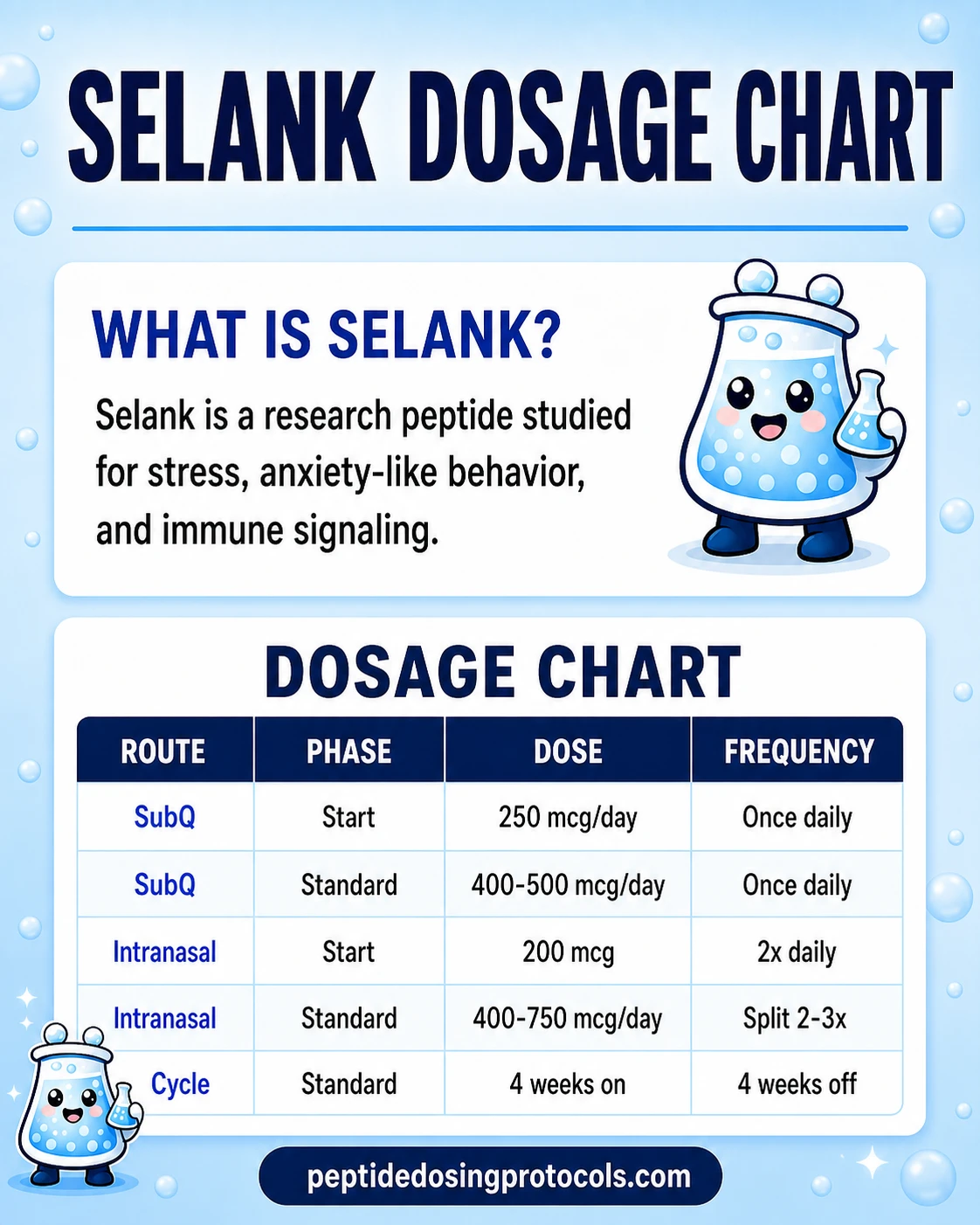
Most research-use protocols use one of two routes. The first is subcutaneous injection (SubQ) at 250-500 mcg per day. The second is intranasal dosing at 600-2,700 mcg per day, split into 2 or 3 sprays.
Route
Subcutaneous injection (SubQ) or intranasal nasal spray. Pick one route per cycle.
Schedule
SubQ: once daily for 4 weeks, then 4 weeks off. Intranasal: 14-21 days on, 1-3 weeks off.
Measure
Use a U-100 insulin syringe for SubQ. Match the vial size and BAC water volume to the math table below.
Supplies
Vial, bacteriostatic water, U-100 insulin syringes, alcohol swabs, and a sharps container.
Research status
Russian clinical use since the 1990s. Not FDA-approved. Not for unsupervised human use.
Disclaimer
This page is an educational research reference and is not medical advice. Selank is not FDA-approved. Talk with a qualified clinician before considering any peptide protocol.
Selank Dosing Protocol & Schedule
Selank protocols come in two main shapes. The SubQ schedule is what most research users follow at home. The intranasal schedule matches Russian clinical practice, where Selank is sold as a nasal spray. Pick one route per cycle to keep the math simple.
Selank Protocol Formats
Choose the route you are researching. Each tab shows the dosing pattern, cycle length, and titration plan for that format.
Once-daily injection at 250-500 mcg. Most common research-use route.
SubQ Schedule
The standard research-use SubQ schedule is 4 weeks on at 250-500 mcg per day, followed by 4 weeks off. Some users follow a 5-on / 2-off weekly pattern instead.
SubQ Selank Cycle Outline
Phase
Initiation
Duration
Weeks 1-2
Daily Dose
250-300 mcg
Notes
Once daily. Baseline tolerance check.
Phase
Maintenance
Duration
Weeks 3-4
Daily Dose
400-500 mcg
Notes
Step up only if the lower dose felt safe and stable.
Phase
Cycle off
Duration
Weeks 5-8
Daily Dose
0 mcg
Notes
Four-week rest used in community protocols.
Phase
Repeat
Duration
Weeks 9-12
Daily Dose
300-500 mcg
Notes
Resume at the dose that worked best.
| Phase | Duration | Daily Dose | Notes |
|---|---|---|---|
| Initiation | Weeks 1-2 | 250-300 mcg | Once daily. Baseline tolerance check. |
| Maintenance | Weeks 3-4 | 400-500 mcg | Step up only if the lower dose felt safe and stable. |
| Cycle off | Weeks 5-8 | 0 mcg | Four-week rest used in community protocols. |
| Repeat | Weeks 9-12 | 300-500 mcg | Resume at the dose that worked best. |
Dr. William Seeds has documented injectable Selank doses of 100-300 mcg per day as appropriate and well tolerated for most subjects.
Nasal spray at 600-2,700 mcg per day, split into 2-3 doses. Mirrors Russian clinical use.
Selank Nasal Spray Dosage and Intranasal Protocol
Published Russian clinical references summarized on this page describe intranasal Selank totals of 600–2,700 mcg per day across a 14–21 day course. That evidence is separate from the community-reported SubQ schedules shown in the other protocol tab. For spray math, use the product's labeled mcg-per-spray value rather than assuming every bottle delivers the same amount.
Intranasal Selank Cycle Outline
Phase
Standard course
Duration
14-21 days
Daily Dose
600-2,700 mcg
Notes
Split into 2-3 daily sprays per Russian clinical practice.
Phase
Washout
Duration
1-3 weeks
Daily Dose
0 mcg
Notes
Rest period before repeating the course.
| Phase | Duration | Daily Dose | Notes |
|---|---|---|---|
| Standard course | 14-21 days | 600-2,700 mcg | Split into 2-3 daily sprays per Russian clinical practice. |
| Washout | 1-3 weeks | 0 mcg | Rest period before repeating the course. |
Russian clinical reference protocols are the source. Always check the spray's stated mcg-per-puff before splitting a daily total.
Why Titration Matters
Selank has a mild safety profile, but lower starting doses help find the dose where the calming effect shows up without extra side effects. Some users feel best at 250-300 mcg. Others need 500 mcg before they notice anxiolytic relief.
Community protocols typically return to the next scheduled dose after a miss rather than doubling up. Selank's effects build across days of regular use, so one missed dose rarely matters. This describes protocol convention, not a personal recommendation.
Cycling rationale
The 4-on / 4-off pattern is a community precaution against possible GABAergic desensitization. Russian trials used 14-21 day continuous courses followed by washout.
Selank Dosage Chart
This Selank dosage chart keeps the two routes separate. The SubQ range on this page comes mainly from community-reported research practice, while the intranasal range comes from published Russian clinical references. These are different evidence levels and should not be treated as interchangeable dosing standards.
Selank dosage chart by route and evidence level
Route
Subcutaneous (SubQ)
Reference amount
250–500 mcg
Frequency
Once daily in the community schedules summarized on this page
Duration
Common community schedule on this page: 4 weeks
Evidence level
Community-reported research practice; not a validated clinical dose
Route
Intranasal
Reference amount
600–2,700 mcg per day
Frequency
Divided across 2–3 daily doses
Duration
14–21 days
Evidence level
Published Russian clinical reference summarized on this page
| Route | Reference amount | Frequency | Duration | Evidence level |
|---|---|---|---|---|
| Subcutaneous (SubQ) | 250–500 mcg | Once daily in the community schedules summarized on this page | Common community schedule on this page: 4 weeks | Community-reported research practice; not a validated clinical dose |
| Intranasal | 600–2,700 mcg per day | Divided across 2–3 daily doses | 14–21 days | Published Russian clinical reference summarized on this page |
The two routes come from different evidence levels. This table is an educational reference and is not a recommendation for human use.
Selank Supplies Needed
Plan supplies based on the SubQ schedule above: one daily injection at 250-500 mcg from a 30 mg vial. Round up so a dropped syringe or a damaged swab does not stop the cycle.
Recommended Supply
Choose your region
Use discount code SAVE10 at Orbitrex Peptides checkout. See why we love Orbitrex Peptides.
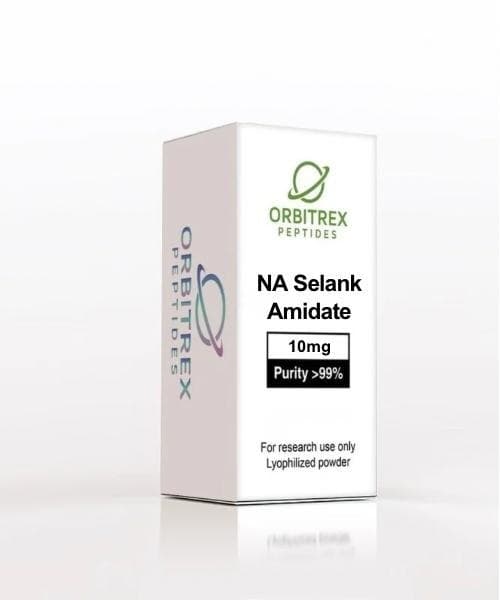
N-Acetyl Selank Amidate
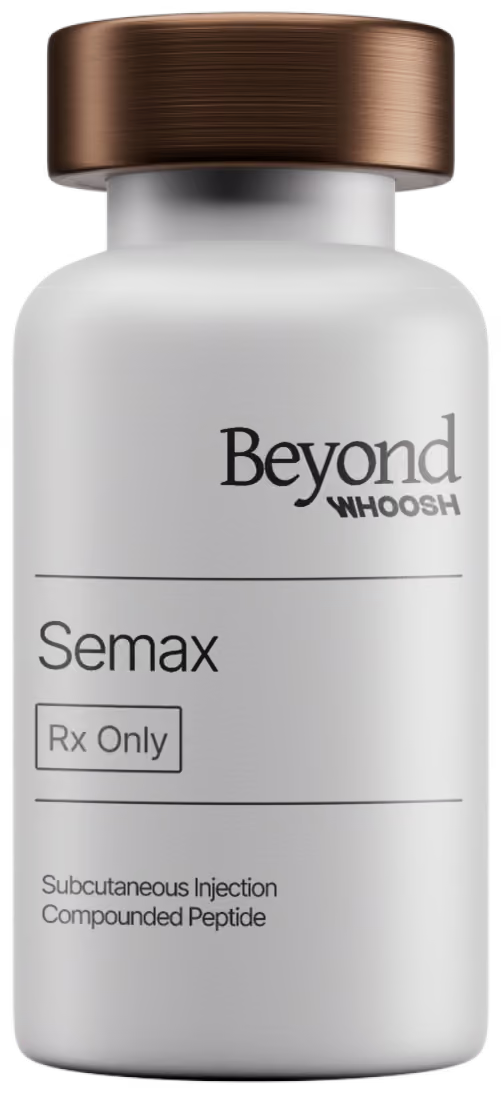
Pharmacy Grade Semax / Selank
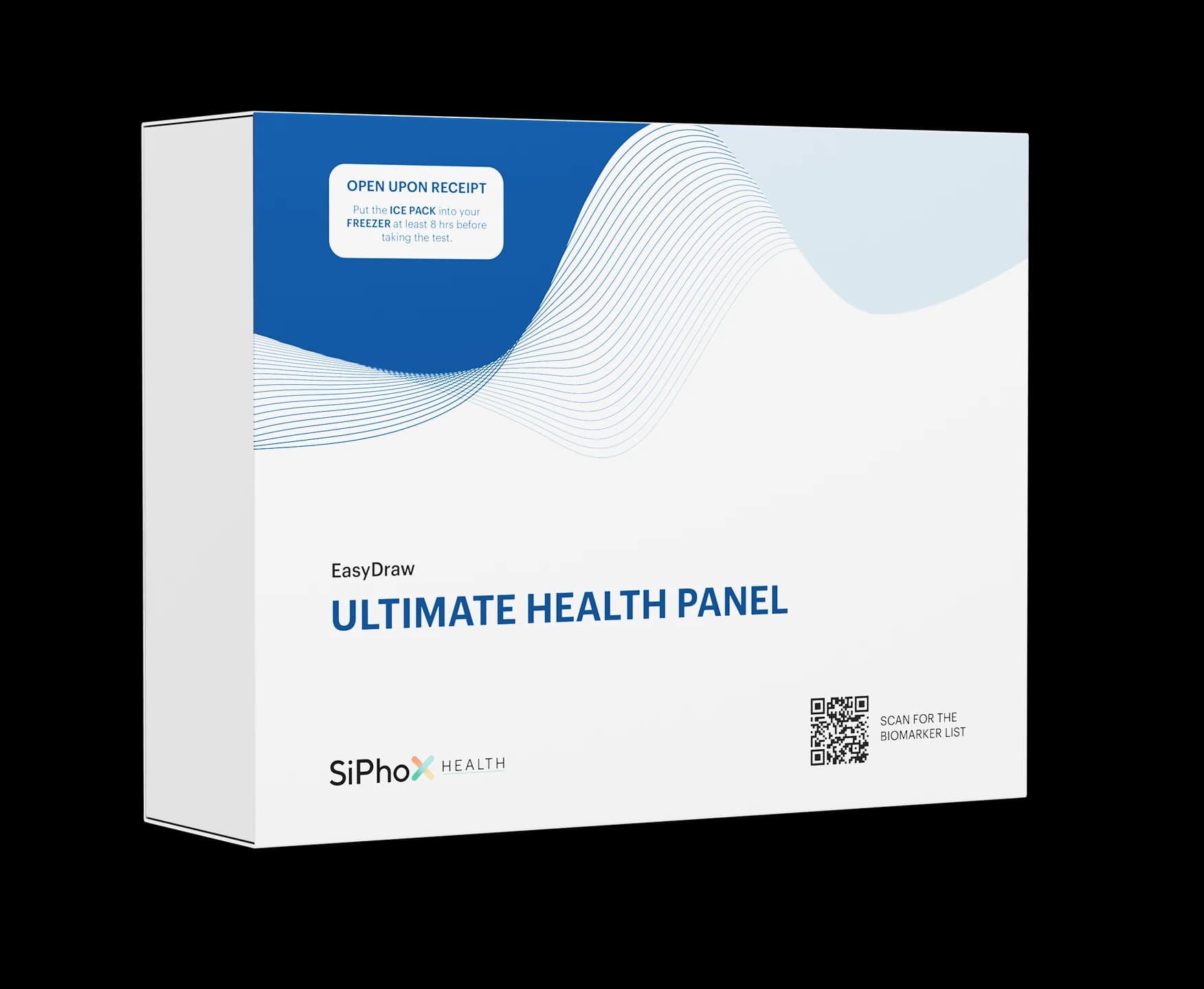
At-Home Blood Test
Research Supplies
Disclosure: supply links may earn PDP a commission at no cost to you.
Peptide Vials (SubQ)
30 mg lyophilized vial. One vial covers most 4-week and 8-week SubQ planning ranges with margin; longer or higher-dose cycles may require a second vial.
| Cycle length | Planning note |
|---|---|
4-8 weeks 1 x 30 mg vial | 4 weeks: 28 doses need 7-14 mg total at 250-500 mcg per day, so one 30 mg vial covers a full 4-week cycle with margin.; 8 weeks: 56 doses need 14-28 mg total at 250-500 mcg per day, so one 30 mg vial covers the range with limited margin at the high end. |
12 weeks 1-2 x 30 mg vials | 84 doses need 21 mg total at 250 mcg per day or 42 mg total at 500 mcg per day. Use a second vial for higher-dose 12-week planning. |
4-8 weeks
1 x 30 mg vial
4 weeks: 28 doses need 7-14 mg total at 250-500 mcg per day, so one 30 mg vial covers a full 4-week cycle with margin.; 8 weeks: 56 doses need 14-28 mg total at 250-500 mcg per day, so one 30 mg vial covers the range with limited margin at the high end.
12 weeks
1-2 x 30 mg vials
84 doses need 21 mg total at 250 mcg per day or 42 mg total at 500 mcg per day. Use a second vial for higher-dose 12-week planning.
Insulin Syringes (U-100, SubQ)
Match syringe size to the SubQ draw volume. Most 250-500 mcg doses fit in a 0.3 mL syringe.
| Cycle length | Planning note |
|---|---|
4 weeks 28 syringes | 1 syringe per daily injection. |
8 weeks 56 syringes | Recommend ordering a full 100-count box. |
12 weeks 84 syringes | One 100-count box covers the full cycle. |
4 weeks
28 syringes
1 syringe per daily injection.
8 weeks
56 syringes
Recommend ordering a full 100-count box.
12 weeks
84 syringes
One 100-count box covers the full cycle.
Bacteriostatic Water (SubQ)
Use 3 mL, 6 mL, or 10 mL per 30 mg vial for reconstitution. A 10 mL bottle covers one 30 mg vial at the dilution options below.
| Cycle length | Planning note |
|---|---|
4-8 weeks 1 x 10 mL bottle | 4 weeks: Covers one 30 mg vial whether you use 3 mL, 6 mL, or 10 mL.; 8 weeks: One bottle covers one 30 mg vial; choose 6 mL or 10 mL if you want easier low-dose syringe-unit math. |
12 weeks 1-2 x 10 mL bottles | Use a second BAC water bottle if the plan requires a second 30 mg vial. |
4-8 weeks
1 x 10 mL bottle
4 weeks: Covers one 30 mg vial whether you use 3 mL, 6 mL, or 10 mL.; 8 weeks: One bottle covers one 30 mg vial; choose 6 mL or 10 mL if you want easier low-dose syringe-unit math.
12 weeks
1-2 x 10 mL bottles
Use a second BAC water bottle if the plan requires a second 30 mg vial.
Alcohol Swabs (SubQ)
Use one swab for the vial stopper and one for the injection site each day.
| Cycle length | Planning note |
|---|---|
4 weeks 56 swabs | 2 per injection; 1 x 100-count box covers the cycle with margin. |
8 weeks 112 swabs | Order 2 x 100-count boxes. |
12 weeks 168 swabs | 2 x 100-count boxes still covers the full cycle. |
4 weeks
56 swabs
2 per injection; 1 x 100-count box covers the cycle with margin.
8 weeks
112 swabs
Order 2 x 100-count boxes.
12 weeks
168 swabs
2 x 100-count boxes still covers the full cycle.
Round up for priming losses, dropped syringes, damaged swabs, and any protocol adjustments. If you switch to the intranasal route, supplies are simpler: a metered nasal spray bottle and the labeled mcg-per-puff strength.
Companion Supplies & Routine Support
Selank Reconstitution Calculator

Powered by PepPal
Selank Reconstitution Calculator
Start with the protocol example, then customize every field.
Loaded reference
PDP 10 mg vial example
This calculator does not apply to Selank nasal sprays.
Your draw
5units
0.05 mL on a U-100 insulin syringe
- Concentration
- 5 mg/mL
- Target in mg
- 0.25 mg
- Math-only doses per vial
- 40
One free emailed save per person, checked by PepPal.
By submitting your email, you’re signing up for Peptide Dosing Protocols and PepPal updates, supplier deals, and promotional emails. Unsubscribe anytime. Privacy Policy.
Educational calculation tool only. The loaded amount is a reference from this page, not a personal dose recommendation. Confirm the vial label, route, syringe type, and actual liquid added before relying on a result.
Selank Reconstitution Guide
Reconstitution means adding a measured liquid volume to a lyophilized vial so the concentration can be calculated. The amount of BAC water changes how many micrograms are in each milliliter and each U-100 syringe unit. The tables below show 10 mg and 30 mg calculation examples.
Selank 10 mg Reconstitution Math
A 10 mg vial does not have one required BAC water volume. The amount of water changes the concentration and syringe math. The examples below are calculation-only setups. They do not choose a dose or recommend human use.
10 mg Selank reconstitution calculation examples
10 mg = 10,000 mcg. U-100 syringe math uses 100 units = 1 mL.
Vial size
10 mg
BAC water
1 mL
Concentration
10,000 mcg/mL
250 mcg
0.025 mL (2.5 units)
300 mcg
0.03 mL (3 units)
500 mcg
0.05 mL (5 units)
Vial size
10 mg
BAC water
2 mL
Concentration
5,000 mcg/mL
250 mcg
0.05 mL (5 units)
300 mcg
0.06 mL (6 units)
500 mcg
0.10 mL (10 units)
| Vial size | BAC water | Concentration | 250 mcg | 300 mcg | 500 mcg |
|---|---|---|---|---|---|
| 10 mg | 1 mL | 10,000 mcg/mL | 0.025 mL (2.5 units) | 0.03 mL (3 units) | 0.05 mL (5 units) |
| 10 mg | 2 mL | 5,000 mcg/mL | 0.05 mL (5 units) | 0.06 mL (6 units) | 0.10 mL (10 units) |
These rows show concentration and U-100 syringe conversions only. They are not dosing recommendations. Confirm the actual vial can hold the selected liquid volume before doing any calculation.
Selank Reconstitution Math
Vial Size
30 mg
BAC Water
3 mL
Concentration
10,000 mcg/mL
250 mcg dose
0.025 mL (2.5 units)
300 mcg dose
0.03 mL (3 units)
500 mcg dose
0.05 mL (5 units)
Vial Size
30 mg
BAC Water
6 mL
Concentration
5,000 mcg/mL
250 mcg dose
0.05 mL (5 units)
300 mcg dose
0.06 mL (6 units)
500 mcg dose
0.10 mL (10 units)
Vial Size
30 mg
BAC Water
10 mL
Concentration
3,000 mcg/mL
250 mcg dose
0.083 mL (8.3 units)
300 mcg dose
0.10 mL (10 units)
500 mcg dose
0.167 mL (16.7 units)
| Vial Size | BAC Water | Concentration | 250 mcg dose | 300 mcg dose | 500 mcg dose |
|---|---|---|---|---|---|
| 30 mg | 3 mL | 10,000 mcg/mL | 0.025 mL (2.5 units) | 0.03 mL (3 units) | 0.05 mL (5 units) |
| 30 mg | 6 mL | 5,000 mcg/mL | 0.05 mL (5 units) | 0.06 mL (6 units) | 0.10 mL (10 units) |
| 30 mg | 10 mL | 3,000 mcg/mL | 0.083 mL (8.3 units) | 0.10 mL (10 units) | 0.167 mL (16.7 units) |
Units are U-100 insulin syringe units. 100 units = 1.0 mL.
Reconstitution Steps
- 01
Gather supplies
Lyophilized Selank vial, bacteriostatic water, sterile U-100 insulin syringe, alcohol swabs, and a sharps container.
- 02
Clean both vial stoppers
Wipe the Selank vial and the BAC water vial with separate alcohol swabs. Let them air dry.
- 03
Draw the BAC water
Pull 3 mL, 6 mL, or 10 mL of BAC water into a sterile syringe based on the table above.
- 04
Add water slowly to the Selank vial
Aim the stream along the inside of the vial wall. Do not blast the powder directly.
- 05
Let it sit for 1-2 minutes
The powder will start to dissolve on its own.
- 06
Roll, do not shake
Gently roll the vial between your palms until the liquid is clear. Shaking can damage the peptide.
- 07
Label and refrigerate
Write the date and concentration on the vial. Store at 35.6-46.4F (2-8C).
Need exact units?
Use the PepPal reconstitution calculator for any vial size or BAC water volume.
Selank Benefits and How It Works
Human studies cited on this page mainly examine anxiety-related outcomes. Other findings, including BDNF changes and memory-related effects, come from animal or mechanistic research. Keep those evidence levels separate: an animal or laboratory finding does not prove the same result in people.
GABA System
GABA is the brain's main slow-down signal. Cell and animal studies suggest Selank changes gene activity tied to GABA signaling. This mechanism may help explain the anxiety-related results in human studies, but it does not prove the same effect on its own.
Serotonin and Dopamine
Animal and mechanistic research has examined how Selank affects serotonin, dopamine, and norepinephrine signaling. These findings may help explain its studied effects, but they do not establish mood, focus, or learning benefits in people.
BDNF (Brain Growth Signal)
BDNF is a protein involved in how brain cells grow and connect. Animal studies found changes in BDNF expression after intranasal Selank. This does not prove a memory benefit in people.
Enkephalin Stabilization
Enkephalins are natural signaling molecules related to endorphins. Laboratory research using human serum found that Selank slowed enzymes that break enkephalins down. That finding describes a mechanism, not a proven clinical benefit.
Immune Signaling
Selank is built from tuftsin, an immune-related molecule the body makes. One Russian human study reported shifts in IL-6 and the Th1/Th2 balance during a 14-day course. This finding does not prove a broader immune benefit.
Who Selank Is For and Who Should Avoid It
Selank is studied as an anxiolytic and mild nootropic in the research-use peptide market. It is not approved in the United States, so it is not appropriate for unsupervised personal use.
Selank is most relevant in research contexts when:
- Anxiety reduction is the main research interest.
- A non-sedating anxiolytic is preferred over a benzodiazepine model.
- Mild focus and stress-tolerance support is also a research goal.
Researchers and clinicians commonly avoid Selank when:
- The subject is pregnant, breastfeeding, or trying to conceive — there is no human safety data for these groups.
- There is an unmanaged psychiatric condition that needs supervised, FDA-approved care.
- There is an active or recent allergic reaction to peptide products.
- The subject is already on prescription anxiolytics, antidepressants, or sedatives without clinician oversight, since combination effects have not been formally studied.
- The subject has an immune system disorder that should not be modulated without medical supervision.
Educational reference only
Selank is not a substitute for licensed mental-health care. Treat any anxiolytic protocol as a research reference, not a treatment plan.
Selank Side Effects & Safety
Selank has a notably mild side-effect profile in the published Russian trial record. Compared head-to-head against benzodiazepines, Selank produced similar anxiety relief without sedation, dependence, memory problems, tolerance, or withdrawal.
Reported Side Effects
- Injection-site redness or irritation (SubQ). Mild and short-lived. Rotating sites between abdomen, thighs, and upper arms helps.
- Nasal stinging or dryness (intranasal). Some users feel mild stinging or dryness. Switching nostrils each dose can help.
- Mild headache. Usually shows up in the first few days and often goes away with continued use or a small dose drop.
Theoretical Risks
- Immunogenicity. The FDA has flagged a theoretical immunogenicity risk for compounded Selank in some contexts, based on limited FDA-regulated safety data — not on a documented Russian clinical signal.
- Drug interactions. Combination effects with prescription anxiolytics, antidepressants, and sedatives have not been formally studied.
- Long-term unknowns. Most published evidence covers 14-21 day courses. Long-term safety data is limited.
Quality and Sourcing Risks
Research-use Selank is not FDA-regulated, so purity and identity depend on supplier testing. Stick to suppliers that publish recent third-party testing and lot-matched COAs.
Evidence-quality note
Most safety data comes from Russian clinical studies. Large Western trials with FDA-standard long-term safety reporting are still missing.
Selank Timeline & What to Monitor
Selank's calming effect builds over a few days, not minutes. Russian trial reports describe meaningful anxiolytic shifts across 14-day courses. Community users typically describe a noticeable shift in 3-7 days.
What to Watch Across a Selank Cycle
Phase
Day 1-3
What May Shift
Mild calm. Possible first-dose headache.
What to Track
Sleep quality, headache, injection-site reaction.
Phase
Day 4-7
What May Shift
Anxiolytic effect more consistent.
What to Track
Daily anxiety self-rating (0-10 scale), focus, mood.
Phase
Day 8-14
What May Shift
Stable response in most users in the published record.
What to Track
Anxiety, sleep, energy, side effects.
Phase
End of cycle
What May Shift
Russian trials report effect carryover for about a week after stopping.
What to Track
Note any rebound, sleep changes, or mood dip.
| Phase | What May Shift | What to Track |
|---|---|---|
| Day 1-3 | Mild calm. Possible first-dose headache. | Sleep quality, headache, injection-site reaction. |
| Day 4-7 | Anxiolytic effect more consistent. | Daily anxiety self-rating (0-10 scale), focus, mood. |
| Day 8-14 | Stable response in most users in the published record. | Anxiety, sleep, energy, side effects. |
| End of cycle | Russian trials report effect carryover for about a week after stopping. | Note any rebound, sleep changes, or mood dip. |
These are observation points, not promises. Individual responses vary.
Stop and re-evaluate if anxiety spikes, mood drops sharply, sleep gets worse for several days, or any new physical symptom appears that does not match the side effects above.
Selank Clinical Evidence Context
Selank has been studied in multiple Russian human trials across generalized anxiety disorder, neurasthenia, phobic-anxiety disorders, and somatoform disorders. Because it was developed in Russia, results were published in Russian journals rather than NEJM or Lancet.
Human evidence — anxiety disorders
Zozulia et al. (2008) compared Selank against medazepam in 62 patients with generalized anxiety disorder and neurasthenia across a 14-day course. Anxiolytic effects were similar. Selank also showed anti-asthenic and mild stimulant-like effects that medazepam did not.
Human evidence — phobic and somatoform anxiety
Seredenin et al. (2014) studied 60 patients with phobic-anxiety and somatoform disorders. Selank produced clear anxiolytic and mild nootropic effects, with anxiolytic carryover for about a week after the last dose.
Human evidence — combination with phenazepam
Seredenin et al. (2015) reported that adding Selank to phenazepam in 70 patients led to earlier response and fewer phenazepam-related side effects compared to phenazepam alone.
Human evidence — immune markers
Uchakina et al. (2008) measured immune markers in patients with anxiety-asthenic disorders during a 14-day Selank course. They reported shifts in Th1/Th2 cytokine balance and IL-6 changes.
Human imaging — fMRI
Bakhmet et al. (2020) ran an fMRI study comparing Selank, Semax, and placebo in healthy volunteers. Selank produced specific connectivity changes between the right amygdala and the temporal cortex at 5 and 20 minutes post-injection.
Preclinical evidence
Animal studies show BDNF elevation in the hippocampus after intranasal dosing, antidepressant-like effects in rodent models, and protection against ethanol-induced memory loss in rats. Preclinical data does not prove human outcomes.
Evidence gap
As of June 2026, no ClinicalTrials.gov-registered, FDA-style Phase 1-3 development program exists for Selank. The lack of Western validation is the main limit on evidence strength.
Selank Storage & Handling
Selank Storage
State
Lyophilized (powder)
Storage
-4F (-20C) long-term; 35.6-46.4F (2-8C) short-term
Notes
Powder is stable for several months to 2+ years frozen.
State
Reconstituted (liquid)
Storage
35.6-46.4F (2-8C)
Notes
About 3-4 weeks. Do not freeze the liquid.
| State | Storage | Notes |
|---|---|---|
| Lyophilized (powder) | -4F (-20C) long-term; 35.6-46.4F (2-8C) short-term | Powder is stable for several months to 2+ years frozen. |
| Reconstituted (liquid) | 35.6-46.4F (2-8C) | About 3-4 weeks. Do not freeze the liquid. |
Avoid repeated freeze-thaw cycles. Protect vials from light. Let a vial briefly return to room temperature before opening to reduce moisture uptake.
Selank Protocol Mistakes & Troubleshooting
- 01
Cloudy or off-color vial
Properly mixed Selank should be clear. If the liquid is cloudy or has particles, do not use it. Mark the lot and contact the supplier.
- 02
Wrong BAC water volume
If you added more or less water than planned, recalculate the new concentration with the PepPal calculator. Do not just guess at units.
- 03
Missed dose
Community protocols typically skip a missed dose and return to the next scheduled dose rather than doubling up. Selank's effects build across days, so one missed dose rarely matters.
- 04
Side effects feel too strong
Community reports describe returning to the last tolerated dose or pausing for 1-2 days, but this is not a personal dosing recommendation. Persistent or severe symptoms warrant stopping and seeking qualified medical care.
- 05
Injection-site reaction
Reported practice rotates sites between the abdomen, thighs, and upper arms and uses a fresh swab and syringe each time. Persistent redness, swelling, or pain that does not fade within 24-48 hours should be evaluated.
- 06
Nasal irritation
Community protocols commonly alternate nostrils and describe a short saline rinse before spraying. Continued irritation warrants clinician review before any change to the daily total or cycle.
- 07
Storage mistake
If a reconstituted vial sat at room temperature for more than a few hours, treat the contents as compromised. Do not use a vial that has been frozen and thawed after reconstitution.
Selank Regulatory Status
Selank is approved in Russia for generalized anxiety disorder and neurasthenia, where it has been used clinically since the 1990s. The Russian product is sold as a nasal spray.
Selank is not FDA-approved in the United States as of June 2026. There is no ClinicalTrials.gov-registered FDA-style Phase 1-3 program in progress.
In most countries, Selank is unscheduled and is sold as a research-use chemical. Local rules differ. Always check your local laws before sourcing peptides for any purpose.
Not medical advice
Research-use status means Selank has not been evaluated by the FDA for safety or efficacy in humans. This site does not endorse personal use of any non-approved compound.
Selank vs Semax vs Diazepam
Selank, Semax, and benzodiazepines all work on anxiety or focus, but through different pathways. They are not interchangeable.
Selank vs Semax vs Diazepam (Benzodiazepine Reference)
Feature
Class
Selank
Tuftsin analogue heptapeptide
Semax
ACTH(4-10) analogue heptapeptide
Diazepam
Benzodiazepine (small molecule)
Feature
Primary mechanism
Selank
GABA modulation, serotonin shifts, enkephalin stabilization
Semax
BDNF/NGF upregulation, dopamine and serotonin modulation
Diazepam
GABA-A positive allosteric modulator
Feature
Half-life
Selank
~2-10 min plasma; 12-24 hr functional duration
Semax
~3-5 min plasma; 20-24 hr functional duration
Diazepam
20-100 hours
Feature
Primary use
Selank
Anxiolytic / nootropic
Semax
Nootropic / neuroprotective
Diazepam
Anxiolytic / sedative / anticonvulsant
Feature
Daily dose
Selank
250-500 mcg SubQ
Semax
300-800 mcg SubQ
Diazepam
2-10 mg oral
Feature
FDA status
Selank
Not approved
Semax
Not approved
Diazepam
FDA-approved
Feature
Dependence risk
Selank
None reported in published Russian trials
Semax
None reported in published Russian trials
Diazepam
Significant (Schedule IV)
Feature
Cognitive effects
Selank
Mild nootropic (memory, attention)
Semax
Stronger nootropic (memory, learning, focus)
Diazepam
Impairs memory and cognition
| Feature | Selank | Semax | Diazepam |
|---|---|---|---|
| Class | Tuftsin analogue heptapeptide | ACTH(4-10) analogue heptapeptide | Benzodiazepine (small molecule) |
| Primary mechanism | GABA modulation, serotonin shifts, enkephalin stabilization | BDNF/NGF upregulation, dopamine and serotonin modulation | GABA-A positive allosteric modulator |
| Half-life | ~2-10 min plasma; 12-24 hr functional duration | ~3-5 min plasma; 20-24 hr functional duration | 20-100 hours |
| Primary use | Anxiolytic / nootropic | Nootropic / neuroprotective | Anxiolytic / sedative / anticonvulsant |
| Daily dose | 250-500 mcg SubQ | 300-800 mcg SubQ | 2-10 mg oral |
| FDA status | Not approved | Not approved | FDA-approved |
| Dependence risk | None reported in published Russian trials | None reported in published Russian trials | Significant (Schedule IV) |
| Cognitive effects | Mild nootropic (memory, attention) | Stronger nootropic (memory, learning, focus) | Impairs memory and cognition |
Diazepam is included as a benzodiazepine reference, not as a recommendation.
Which one fits which research goal?
Selank fits when
Anxiety reduction is the main goal and a non-sedating profile matters. Mild focus support is a bonus.
Semax fits when
Cognitive performance, learning, and neuroprotection are the main goals. Anxiety is a secondary concern.
A benzodiazepine fits when
Fast, FDA-approved anxiety relief through the conventional medical system is needed, with a clinician managing the dependence risk.
Selank and Semax are often paired together. The combo is called the Russian Nootropic Stack. See the dedicated Russian Nootropic Stack page for stack-specific dosing and reconstitution math.
Looking for a Semax and Selank dosage chart? See the Russian Nootropic Stack for combination-specific dosing and reconstitution math. Keep the single-compound Selank protocol on this page.
Selank Blood Tests & Monitoring
Selank is usually discussed in anxiety, stress, and nootropic research. Routine labs do not measure cognitive or anxiolytic response, so monitoring focuses on broad health and medication context.
Blood test markers to discuss with a clinician
Marker
CBC with differential
Why it matters
Screens broad blood-cell patterns that can affect fatigue and general health interpretation.
Timing
Baseline
Marker
Comprehensive metabolic panel (CMP)
Why it matters
Reviews liver, kidney, electrolyte, and glucose context before interpreting mood or energy changes.
Timing
Baseline
Marker
TSH and free T4
Why it matters
Thyroid imbalance can affect anxiety, mood, sleep, and energy.
Timing
Optional
Marker
A1c
Why it matters
Glucose patterns can affect energy, mood, and sleep quality.
Timing
Optional
| Marker | Why it matters | Timing |
|---|---|---|
| CBC with differential | Screens broad blood-cell patterns that can affect fatigue and general health interpretation. | Baseline |
| Comprehensive metabolic panel (CMP) | Reviews liver, kidney, electrolyte, and glucose context before interpreting mood or energy changes. | Baseline |
| TSH and free T4 | Thyroid imbalance can affect anxiety, mood, sleep, and energy. | Optional |
| A1c | Glucose patterns can affect energy, mood, and sleep quality. | Optional |
Monitoring guidance is neurologic and medication-context based because Selank lacks established routine clinical lab-monitoring standards.
At-home blood test option
Easy at home option to monitor core metrics during research cycles.
Beyond Whoosh
Pharmacy Grade Semax / Selank
Prescription-grade peptide care through Beyond Whoosh. Whoosh prescribes after a clinician reviews your eligibility.
Partner link: PDP may earn a commission at no cost to you.
Simple timing framework
Baseline
Discuss baseline review before starting, especially with psychiatric history, sedating medications, stimulant use, liver disease, or kidney disease.
Follow-up
Repeat broad labs after 8-12 weeks if symptoms change or the protocol continues.
Longer term
For recurring protocols, review mood, sleep, medication changes, and broad health context periodically.
How to interpret the labs
- Routine labs do not directly measure anxiety, cognition, or stress resilience.
- Psychiatric medications, stimulants, alcohol, sleep, and life stress can strongly affect interpretation.
- Mood changes should be monitored clinically, not treated as a lab-only issue.
Do not wait for routine labs
Worsening depression, panic, mania symptoms, confusion, or suicidal thoughts need urgent clinical support.
FAQ
Q1: What is Selank?
Selank is a Russian-developed peptide studied for anxiety relief and mild focus support. It is also called TP-7 and is a synthetic analogue of tuftsin, an immune-related molecule the body makes naturally. Selank is approved in Russia for anxiety disorders and neurasthenia but is not FDA-approved.
Q2: What does the Selank dosage chart show?
The chart keeps SubQ and intranasal references separate. The SubQ range summarized on this page is 250–500 mcg per day and comes mainly from community-reported research practice. Published Russian intranasal references on this page use 600–2,700 mcg per day over 14–21 days. These are different evidence levels, not interchangeable dosing standards.
Q3: What is Selank's half-life?
The plasma half-life is short — about 2-10 minutes — but the calming and focus-related effects last 12-24 hours. The lasting effect comes from changes in brain chemistry that continue after the molecule itself is cleared. When Selank breaks down, one of its byproducts is tuftsin, which still has biological activity.
Q4: How do you calculate Selank reconstitution for a 10 mg vial?
Start with 10 mg = 10,000 mcg. With 1 mL of liquid, the concentration is 10,000 mcg/mL. With 2 mL, it is 5,000 mcg/mL. On a U-100 syringe, 100 units = 1 mL. These are calculation examples only, not dosing advice.
Q5: What is the Selank nasal spray dosage in published research?
The Russian clinical references summarized on this page used intranasal totals of 600–2,700 mcg per day over 14–21 days. The amount delivered by each spray depends on the product's labeled mcg-per-spray value. Do not assume that every nasal bottle has the same concentration.
Q6: Is Selank SubQ dosing the same as nasal dosing?
No. The routes use different reference ranges and come from different evidence levels. Keep published intranasal references separate from community-reported SubQ schedules rather than converting one route directly into the other.
Q7: Is Selank FDA-approved?
No. Selank is not FDA-approved as of June 2026. It has not completed an FDA-style Phase 1-3 development program. It is approved in Russia and has been in clinical use there since the 1990s.
Q8: What are the most common Selank side effects?
Russian trial reports describe a mild safety profile — no sedation, dependence, tolerance, or withdrawal reported. The most common side effects are mild injection-site irritation (SubQ), mild nasal stinging or dryness (intranasal), and occasional mild headache during the first few days.
Q9: How does Selank compare to Semax?
Selank is anxiety-first. It works mainly through GABA and serotonin pathways. Semax is focus-first. It works mainly through BDNF and dopamine pathways. They are often paired together as the Russian Nootropic Stack because their profiles complement each other. See the Semax protocol page for full details.
Q10: Can Selank and Semax be used together?
Yes — the combination is called the Russian Nootropic Stack and is one of the most common community pairings. Community protocols typically start at 250 mcg Selank plus 300 mcg Semax per day and titrate each compound independently. There are no published combination clinical trials. See the Russian Nootropic Stack page for stack-specific dosing.
Q11: What vial sizes does Selank come in?
The supply examples use a 30 mg lyophilized Selank vial. One 30 mg vial covers most 4-week and 8-week SubQ planning ranges, while higher-dose 12-week planning may require a second vial.
Q12: How is reconstituted Selank stored?
Store the reconstituted liquid at 35.6-46.4F (2-8C) and protect it from light. Typical stability is about 3-4 weeks. Do not freeze the liquid. Lyophilized (powder) Selank is stored at -4F (-20C) long-term or at 35.6-46.4F (2-8C) short-term.
Q13: What is the maximum studied Selank dose?
Russian intranasal clinical protocols have used up to 2,700 mcg per day, split across 2-3 sprays for up to 21 days. Community subcutaneous protocols typically cap around 500 mcg per day, though some sources discuss up to 1,000 mcg per day. Higher doses are not better and have not been validated in registered trials.
Q14: Where can I calculate Selank reconstitution and syringe units?
Use the PepPal calculator for exact dose-to-unit conversions. Plug in the vial size, BAC water volume, and target dose, and it returns the syringe units for any U-100 syringe.
Q15: Is this page medical advice?
No. This page is an educational research reference. It is not medical advice and is not a treatment plan. Selank is not FDA-approved and is not intended for unsupervised human use. Always work with a qualified clinician before considering any peptide protocol.
Sources & Research
- 1. Zozulia AA, Neznamov GG, Siuniakov TS, et al. Efficacy and possible mechanisms of action of a new peptide anxiolytic selank in the therapy of generalized anxiety disorders and neurasthenia. Zh Nevrol Psikhiatr Im S S Korsakova (2008)
- 2. Seredenin SB, et al. A comparison of the anxiolytic effect and tolerability of selank and phenazepam in the treatment of anxiety disorders. Zh Nevrol Psikhiatr Im S S Korsakova (2014)
- 3. Seredenin SB, et al. Optimization of the treatment of anxiety disorders with selank. Zh Nevrol Psikhiatr Im S S Korsakova (2015)
- 4. Uchakina ON, Uchakin PN, Miasoedov NF, et al. Immunomodulatory effects of selank in patients with anxiety-asthenic disorders. Bulletin of Experimental Biology and Medicine (2008)
- 5. Volkova A, Bondarenko E, Wei H, et al. Selank Administration Affects the Expression of Some Genes Involved in GABAergic Neurotransmission. Frontiers in Pharmacology (2016)
- 6. Filatova E, et al. GABA, Selank, and Olanzapine Affect the Expression of Genes Involved in GABAergic Neurotransmission in IMR-32 Cells. Frontiers in Pharmacology (2017)
- 7. Kasian A, et al. Peptide Selank Enhances the Effect of Diazepam in Reducing Anxiety in Unpredictable Chronic Mild Stress Conditions in Rats. BioMed Research International (2017)
- 8. Bakhmet AA, et al. Functional Connectomic Approach to Studying Selank and Semax Effects. Bulletin of Experimental Biology and Medicine (2020)
- 9. Inozemtseva LS, Karpenko EA, Dolotov OV, et al. Intranasal administration of the peptide Selank regulates BDNF expression in the rat hippocampus in vivo. Doklady Biological Sciences (2008)
- 10. Kost NV, Sokolov OI, Gabaeva MV, et al. Semax and selank inhibit the enkephalin-degrading enzymes from human serum. Bioorganicheskaia Khimiia (2001)
- 11. Kolik LG, et al. Selank, peptide analogue of tuftsin, protects against ethanol-induced memory impairment by regulating of BDNF content in the hippocampus and prefrontal cortex in rats. Bulletin of Experimental Biology and Medicine (2019)
- 12. Wikipedia contributors Selank. Wikipedia (2026)
Related Dosing Protocols

Written by Garret Grant
Founder & Lead Researcher · B.S. Civil Engineering, UCLA
Last updated: October 2026
Human-researched and AI-assisted with full editorial review. I verify sources, protocol interpretation, and final judgments personally. See methodology.
Share this page
See our research first on Google
Add us as a preferred source for Top Stories.