
How Long Is a TB-500 Cycle?
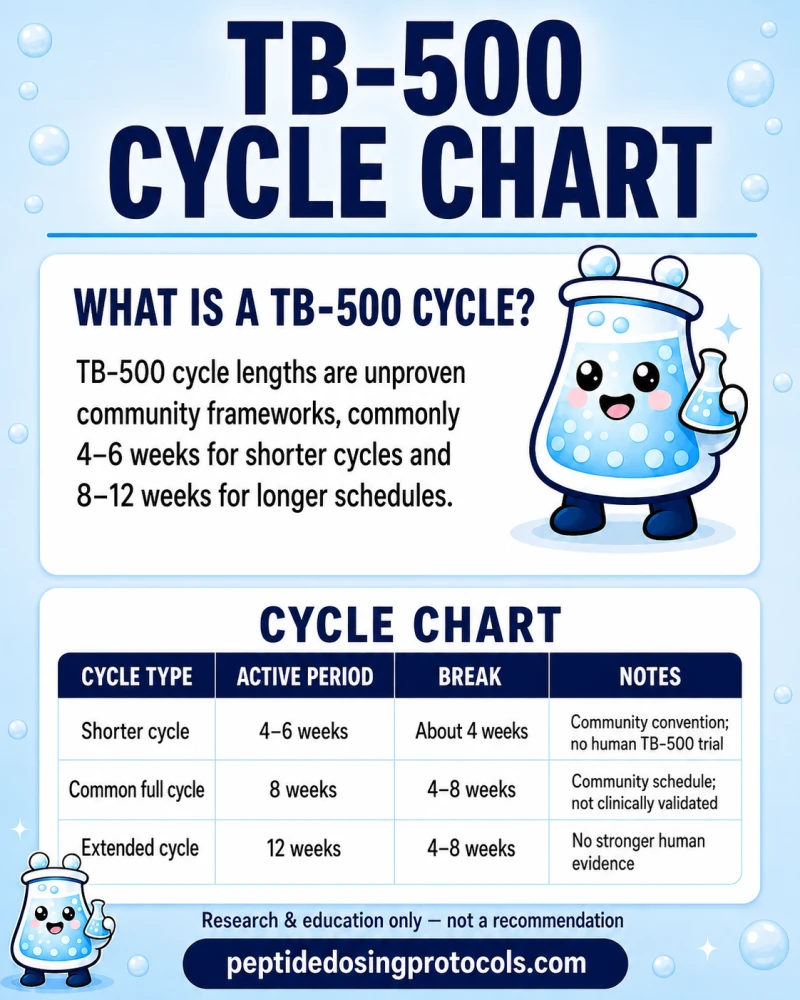
There is no clinically established TB-500 cycle length. Community research references commonly describe 4–6 weeks as a shorter active period and 8–12 weeks as a longer or more complete cycle. Those ranges are community conventions, not schedules proven in controlled human trials.
The key evidence gap is specific to the molecule. TB-500 is commonly identified as the short LKKTETQ-related fragment of thymosin beta-4. Human thymosin beta-4 research has used full-length Tβ4 in other formulations, but those studies do not validate an injectable TB-500 cycle.
Research and education only
PDP is documenting how TB-500 cycle lengths are discussed and how those timelines compare with published research. This page does not recommend a cycle for human use.
For dose amounts, frequency, reconstitution, vial math, and U-100 syringe calculations, use the TB-500 protocol. This page stays focused on duration, breaks, and evidence.
TB-500 Cycle Length Chart
The table below compares the TB-500 cycle lengths most often used as community research labels. It does not add a dose or claim that one duration is better than another.
Common TB-500 cycle-length frameworks
Community context only. No controlled human trial has validated these injectable TB-500 cycle lengths.
Cycle length
4 weeks
How it is commonly described
Short active period or front-loading-only framework
Evidence status
Community convention
Main evidence limit
No human TB-500 trial established a 4-week injectable cycle
Cycle length
6 weeks
How it is commonly described
Short full cycle in community research references
Evidence status
Community convention
Main evidence limit
No controlled trial shows 6 weeks is an ideal stopping point
Cycle length
8 weeks
How it is commonly described
Common full-cycle framework with an early and later phase
Evidence status
Community convention
Main evidence limit
No human TB-500 study compared 8 weeks with shorter or longer cycles
Cycle length
12 weeks
How it is commonly described
Extended community cycle or longer maintenance framework
Evidence status
Community convention
Main evidence limit
Longer exposure is not supported by stronger TB-500 human evidence
Cycle length
Up to 84 days
How it is commonly described
Published full-length thymosin beta-4 topical research duration
Evidence status
Human research on a different molecule/formulation context
Main evidence limit
Does not establish a 12-week injectable TB-500 cycle
| Cycle length | How it is commonly described | Evidence status | Main evidence limit |
|---|---|---|---|
| 4 weeks | Short active period or front-loading-only framework | Community convention | No human TB-500 trial established a 4-week injectable cycle |
| 6 weeks | Short full cycle in community research references | Community convention | No controlled trial shows 6 weeks is an ideal stopping point |
| 8 weeks | Common full-cycle framework with an early and later phase | Community convention | No human TB-500 study compared 8 weeks with shorter or longer cycles |
| 12 weeks | Extended community cycle or longer maintenance framework | Community convention | Longer exposure is not supported by stronger TB-500 human evidence |
| Up to 84 days | Published full-length thymosin beta-4 topical research duration | Human research on a different molecule/formulation context | Does not establish a 12-week injectable TB-500 cycle |
A study duration can describe how long researchers observed or treated a study population. It should not be converted directly into a different molecule, route, formulation, or community cycle.
The practical distinction
Four, six, eight, and 12 weeks are useful labels for comparing community TB-500 cycle discussions. They are not evidence-based human treatment durations.
Where Do TB-500 Cycle Lengths Come From?
TB-500 cycle lengths come mainly from research-community protocols, older peptide guides, and schedules built around an early higher-frequency phase followed by a lower-frequency continuation phase. They do not come from a trial that assigned people to different injectable TB-500 cycle lengths.
Community protocol structure
Shorter 4–6 week active periods and longer 8–12 week schedules appear repeatedly in peptide research references.
Loading and maintenance language
Some community plans divide the active period into an early phase and a later continuation phase. Those labels describe schedule structure, not clinically proven phases.
Thymosin beta-4 research
Published human studies of full-length thymosin beta-4 create useful research context, but they used different molecules, routes, and formulations.
Anecdotal carryover
Repeated online use can make a cycle length look standardized even when no controlled trial has tested that exact schedule.
Why this matters
A community schedule can be common without becoming a clinical standard. PDP keeps those two evidence levels separate.
The Main Evidence Boundary: TB-500 Is Not Full-Length Thymosin Beta-4
This distinction is central to any TB-500 cycle page. FDA describes TB-500 as a thymosin beta-4 fragment and states that it has not identified human exposure data for drug products containing the thymosin beta-4 fragment known as TB-500. FDA's safety-risk page also notes important gaps in the safety information available for the fragment.
Full-length thymosin beta-4 has been studied in humans. Examples include ophthalmic RGN-259 trials lasting 28 days and a topical RGN-137 venous-stasis-ulcer study that allowed treatment for up to 84 days. Those studies establish that researchers have studied full-length Tβ4 over multi-week periods. They do not establish an injectable TB-500 cycle.
TB-500 community cycles vs published full-length thymosin beta-4 research
Source or context
TB-500 community references
Duration
4–6 weeks
What was studied
Injectable TB-500 community schedule
What it means for TB-500 cycles
Common research convention; not a controlled human trial
Source or context
TB-500 community references
Duration
8–12 weeks
What was studied
Longer injectable TB-500 community schedule
What it means for TB-500 cycles
Common research convention; not clinically validated
Source or context
RGN-259 dry-eye Phase II study
Duration
28 days
What was studied
Full-length thymosin beta-4 ophthalmic solution
What it means for TB-500 cycles
Human duration evidence for a different formulation and route
Source or context
ARISE dry-eye studies
Duration
28 days
What was studied
Full-length thymosin beta-4 ophthalmic solution
What it means for TB-500 cycles
Does not validate injectable TB-500 duration
Source or context
RGN-137 venous-stasis-ulcer study
Duration
Up to 84 days
What was studied
Full-length thymosin beta-4 topical gel
What it means for TB-500 cycles
Shows longer full-length Tβ4 research exposure, not a 12-week TB-500 cycle
| Source or context | Duration | What was studied | What it means for TB-500 cycles |
|---|---|---|---|
| TB-500 community references | 4–6 weeks | Injectable TB-500 community schedule | Common research convention; not a controlled human trial |
| TB-500 community references | 8–12 weeks | Longer injectable TB-500 community schedule | Common research convention; not clinically validated |
| RGN-259 dry-eye Phase II study | 28 days | Full-length thymosin beta-4 ophthalmic solution | Human duration evidence for a different formulation and route |
| ARISE dry-eye studies | 28 days | Full-length thymosin beta-4 ophthalmic solution | Does not validate injectable TB-500 duration |
| RGN-137 venous-stasis-ulcer study | Up to 84 days | Full-length thymosin beta-4 topical gel | Shows longer full-length Tβ4 research exposure, not a 12-week TB-500 cycle |
Route, formulation, molecule length, concentration, population, and research question all matter. Duration cannot be transferred by itself.
4-Week TB-500 Cycle: What the Term Means
A 4-week TB-500 cycle usually means a short active research period. In some community schedules it represents the early portion of a longer cycle, while other references treat four weeks as a complete short cycle.
What it does not mean is equally important. No controlled human trial has shown that four weeks is an optimal TB-500 endpoint, and FDA says it has not identified human exposure data for drug products containing the TB-500 fragment.
Community use
Four weeks appears as a short-cycle label and as part of front-loaded community schedules.
Human TB-500 evidence
No human trial has established a four-week injectable TB-500 cycle.
Best interpretation
Treat four weeks as a community duration label, not a clinically proven minimum or maximum.
6-Week TB-500 Cycle: Short Full-Cycle Context
Six weeks is often used as the upper end of the shorter TB-500 cycle range. It fits the 4–6 week framework already used in many community research references and can also mark the point where some longer schedules transition into a continuation phase.
There is no study showing that six weeks is safer, more effective, or more appropriate than four or eight weeks. It is better described as a common community stopping point than as an evidence-based rule.
6-week evidence check
Useful for describing a common short-cycle framework. Not validated as a standard human TB-500 cycle.
8-Week TB-500 Cycle: Why It Appears So Often
An 8-week TB-500 cycle is one of the clearest full-cycle structures in current community references. It gives enough calendar time for an early phase and a later continuation phase without moving into the longer 12-week range.
That structure explains why eight weeks appears often in peptide guides. It does not show that eight weeks was selected from a human TB-500 dose-ranging or duration trial.
- No human study compared 4 weeks with 8 weeks of injectable TB-500.
- No trial established a required transition point between early and later phases.
- No trial showed that stopping at week 8 improves safety or research outcomes.
- The published full-length thymosin beta-4 literature uses different formulations and should remain separate.
For the separate question of what community references mean by loading, tapering, dose amount, or frequency, use the TB-500 protocol.
12-Week TB-500 Cycle: Extended Community Context
A 12-week TB-500 cycle sits at the longer end of the community range documented on PDP. It is generally described as an extended active period or as a longer continuation after an earlier phase.
Twelve weeks can look more evidence-based because full-length thymosin beta-4 was studied topically for up to 84 days in a venous-stasis-ulcer trial. That is not a valid reason to call 12 weeks a proven injectable TB-500 cycle. The study used full-length Tβ4 as a topical gel in a specific patient population.
Do not convert 84 days into a TB-500 rule
An 84-day full-length thymosin beta-4 topical study cannot establish a 12-week injectable TB-500 cycle. The molecule, route, formulation, concentration, and research question were different.
12-week evidence check
Twelve weeks is best presented as an extended community TB-500 framework. Human full-length thymosin beta-4 studies add context, not direct validation.
How Long Is a TB-500 Off Cycle?
Community references often pair TB-500 active periods with breaks of several weeks. A 4-week break is commonly mentioned after shorter cycles, while 4–8 week breaks appear with longer schedules.
No controlled human TB-500 study has established a required off period, compared different washout lengths, or shown that a specific break resets a measurable biological response.
Community TB-500 off-period language
These are reported cycle conventions, not clinically established washout requirements.
Active period
4–6 weeks
Commonly paired break
About 4 weeks
Evidence note
Community convention; no human TB-500 washout trial
Active period
8–12 weeks
Commonly paired break
About 4–8 weeks
Evidence note
Community convention; no validated optimal break
Active period
Repeated cycles
Commonly paired break
Variable
Evidence note
No evidence-based annual cycle count or required reset period
| Active period | Commonly paired break | Evidence note |
|---|---|---|
| 4–6 weeks | About 4 weeks | Community convention; no human TB-500 washout trial |
| 8–12 weeks | About 4–8 weeks | Community convention; no validated optimal break |
| Repeated cycles | Variable | No evidence-based annual cycle count or required reset period |
A break is not proof of risk reversal
Time off does not prove that unknown long-term effects, immune responses, or other risks have cleared. A calendar break should not be presented as a validated safety mechanism.
Does TB-500 Need to Be Cycled?
Human evidence does not establish that TB-500 must be used in an on-and-off cycle. Cycling is common in community protocol language, but the TB-500 fragment lacks the human trial data needed to prove that a specific cycling pattern is necessary.
This matters because community habit can easily turn into a rule. Statements such as 'TB-500 must be cycled,' 'four weeks off is required,' or '12 weeks is the maximum' should not be presented as established facts unless a study directly supports them.
Required cycling
Not established by controlled human TB-500 research.
Required off period
Not established.
Maximum cycle length
Not established.
Best number of cycles per year
Not established.
TB-500 Cycle Length vs Thymosin Beta-4 Study Duration
The most useful published duration data come from full-length thymosin beta-4 research. These studies help show what has actually been tested in humans, but they also show why a TB-500 cycle page needs a strong evidence boundary.
Selected human full-length thymosin beta-4 study timelines
Study
Sosne & Ousler Phase II dry-eye trial
Formulation / route
RGN-259 ophthalmic solution
Treatment duration
28 days
Cycle conclusion
Does not establish injectable TB-500 duration
Study
Severe dry-eye Phase II study
Formulation / route
RGN-259 ophthalmic solution
Treatment duration
28 days treatment with later follow-up
Cycle conclusion
Supports human full-length Tβ4 exposure only
Study
ARISE-1
Formulation / route
RGN-259 ophthalmic solution
Treatment duration
28 days
Cycle conclusion
Does not establish a 4-week TB-500 cycle
Study
ARISE-2
Formulation / route
RGN-259 ophthalmic solution
Treatment duration
28 days
Cycle conclusion
Does not establish a 4-week TB-500 cycle
Study
Venous stasis ulcer study
Formulation / route
RGN-137 topical gel
Treatment duration
Up to 84 days
Cycle conclusion
Does not establish a 12-week TB-500 cycle
| Study | Formulation / route | Treatment duration | Cycle conclusion |
|---|---|---|---|
| Sosne & Ousler Phase II dry-eye trial | RGN-259 ophthalmic solution | 28 days | Does not establish injectable TB-500 duration |
| Severe dry-eye Phase II study | RGN-259 ophthalmic solution | 28 days treatment with later follow-up | Supports human full-length Tβ4 exposure only |
| ARISE-1 | RGN-259 ophthalmic solution | 28 days | Does not establish a 4-week TB-500 cycle |
| ARISE-2 | RGN-259 ophthalmic solution | 28 days | Does not establish a 4-week TB-500 cycle |
| Venous stasis ulcer study | RGN-137 topical gel | Up to 84 days | Does not establish a 12-week TB-500 cycle |
A research duration becomes relevant to a cycle only when the molecule, formulation, route, population, amount, frequency, and study goal are also relevant. Here, those conditions are not met.
TB-500 Cycle Length Is Different From TB-500 Dosage
Cycle length and dosage answer different search questions. Keeping them separate makes the cycle page more useful and prevents it from duplicating the main protocol.
Cycle length
How long the active research period lasts, such as 4, 6, 8, or 12 weeks, plus how breaks are discussed.
Dosage and frequency
How much is used at one time and how often a schedule repeats. This belongs on the TB-500 protocol.
Reconstitution and syringe math
Vial concentration, bacteriostatic-water volume, mL, and U-100 units also stay on the protocol page.
This split is intentional. The cycle page targets TB-500 cycle length, how long a TB-500 cycle lasts, off-cycle timing, and 4- to 12-week duration questions. The protocol page keeps the stronger dosage-chart, dosing, frequency, and calculator intent.
TB-500 Cycle Supplies Needed
Plan supplies from the exact vial size, research schedule, concentration, and number of draws. A 4-, 6-, 8-, or 12-week label alone does not determine how many vials or supplies a project needs.
Research Supplies
Choose your region
Use discount code SAVE10 at Orbitrex Peptides checkout. See why we love Orbitrex Peptides.
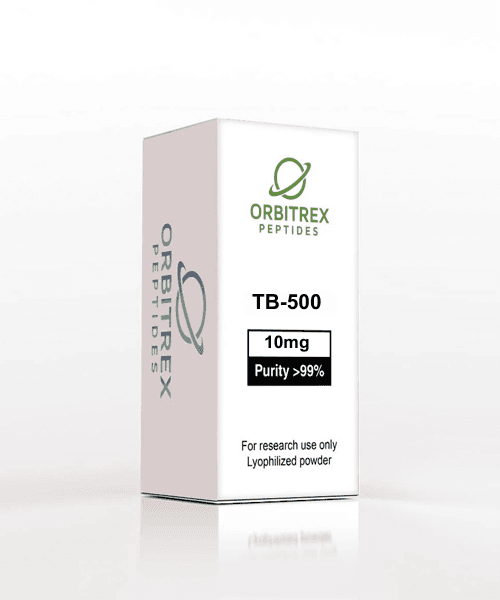
TB-500
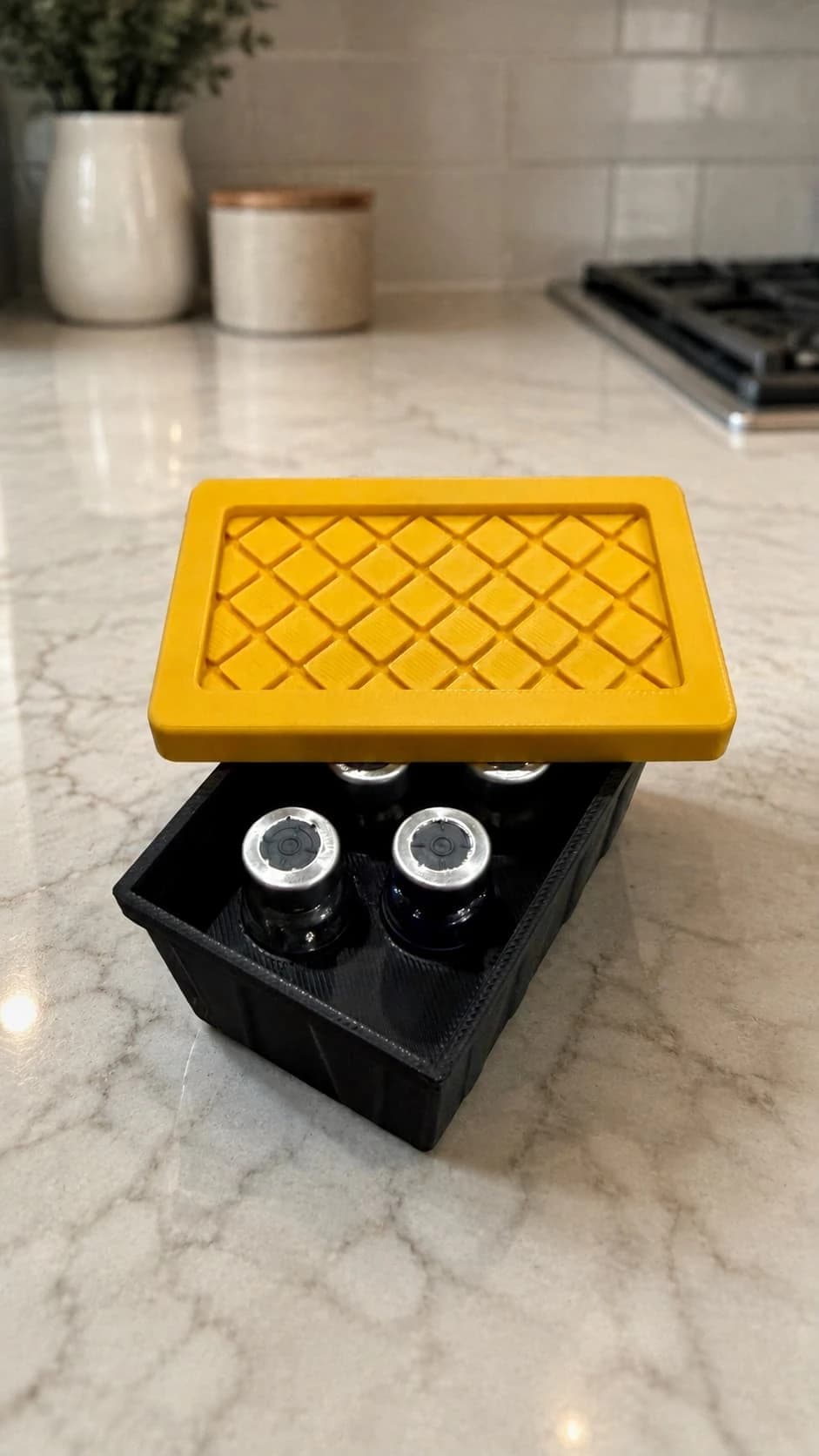
5-Vial Tote Case
At-Home Blood Test
Research Supplies
Disclosure: supply links may earn PDP a commission at no cost to you.
Core Research Supply Checklist
Use the TB-500 protocol for dose, concentration, vial, and syringe-unit calculations. These rows organize materials without recommending a schedule.
| Supply category | Planning note |
|---|---|
TB-500 material Vial strength and total material | Confirm the product label first. Cycle length by itself cannot determine a vial count. |
Reconstitution BAC water and sterile handling supplies | The water volume depends on the chosen calculation concentration, not just the number of weeks. |
Measurement One sterile U-100 syringe per planned draw | Use the protocol calculator to convert milligrams and milliliters into syringe units. |
Preparation and records Alcohol swabs, labels, and a cycle log | Track vial strength, mix date, storage details, and each research entry. |
TB-500 material
Vial strength and total material
Confirm the product label first. Cycle length by itself cannot determine a vial count.
Reconstitution
BAC water and sterile handling supplies
The water volume depends on the chosen calculation concentration, not just the number of weeks.
Measurement
One sterile U-100 syringe per planned draw
Use the protocol calculator to convert milligrams and milliliters into syringe units.
Preparation and records
Alcohol swabs, labels, and a cycle log
Track vial strength, mix date, storage details, and each research entry.
This is a research supply checklist, not a dosing recommendation. Product strength and format can vary, so confirm the label before doing any calculation.
Companion Supplies & Routine Support
Keep dosage math on the protocol page
Use the TB-500 protocol for reconstitution tables, vial math, dosing context, and U-100 syringe calculations.
TB-500 Alone vs a Wolverine Stack Cycle
A TB-500-only cycle should not be treated as the same research question as a BPC-157 + TB-500 Wolverine Stack cycle. Adding BPC-157 changes the combination, evidence base, schedule logic, and total exposure being discussed.
The Wolverine Stack cycle guide separately covers the 4–6, 6–8, and 8–12 week schedules commonly used for the combination. This TB-500 page stays focused on the TB-500 component alone.
Separate search intent
Queries about a TB-500 cycle belong here. Queries about a BPC-157 + TB-500 or Wolverine cycle belong on the dedicated combination page.
What Can and Cannot Be Concluded About TB-500 Cycle Length?
TB-500 cycle claims and evidence status
Claim
4–6 week TB-500 cycles are commonly discussed
Evidence status
Supported as a community convention
How PDP should present it
Community-reported research framework
Claim
8–12 week TB-500 cycles are commonly discussed
Evidence status
Supported as a community convention
How PDP should present it
Community-reported research framework
Claim
8 weeks is the best TB-500 cycle
Evidence status
Not established
How PDP should present it
Do not present as a proven claim
Claim
12 weeks is a clinically proven TB-500 cycle
Evidence status
Not established
How PDP should present it
Do not infer this from full-length Tβ4 studies
Claim
4 weeks off is required
Evidence status
Not established
How PDP should present it
Community convention only
Claim
FDA has identified human exposure data for TB-500 drug products
Evidence status
Not supported
How PDP should present it
FDA states it has not identified such data
Claim
Full-length thymosin beta-4 has human multi-week research
Evidence status
Supported
How PDP should present it
Published human evidence for a different molecule/formulation context
Claim
An 84-day topical Tβ4 study proves a 12-week injectable TB-500 cycle
Evidence status
Incorrect inference
How PDP should present it
Keep route, formulation, and molecule distinctions attached
| Claim | Evidence status | How PDP should present it |
|---|---|---|
| 4–6 week TB-500 cycles are commonly discussed | Supported as a community convention | Community-reported research framework |
| 8–12 week TB-500 cycles are commonly discussed | Supported as a community convention | Community-reported research framework |
| 8 weeks is the best TB-500 cycle | Not established | Do not present as a proven claim |
| 12 weeks is a clinically proven TB-500 cycle | Not established | Do not infer this from full-length Tβ4 studies |
| 4 weeks off is required | Not established | Community convention only |
| FDA has identified human exposure data for TB-500 drug products | Not supported | FDA states it has not identified such data |
| Full-length thymosin beta-4 has human multi-week research | Supported | Published human evidence for a different molecule/formulation context |
| An 84-day topical Tβ4 study proves a 12-week injectable TB-500 cycle | Incorrect inference | Keep route, formulation, and molecule distinctions attached |
Bottom line
The most defensible answer is that 4–6 weeks and 8–12 weeks are common TB-500 community cycle frameworks, but no human trial has established a standard injectable TB-500 cycle or off period.
Current FDA Context for TB-500 Research
FDA lists the thymosin beta-4 fragment known as TB-500 among bulk substances for which the agency has identified significant information gaps and potential safety concerns. FDA specifically states that it has not identified human exposure data for drug products containing the fragment.
On July 23, 2026, the FDA Pharmacy Compounding Advisory Committee also considered TB-500 free base and TB-500 acetate in connection with possible inclusion on the 503A Bulks List. FDA explains that advisory-committee recommendations are non-binding. A committee discussion should not be described as FDA approval of TB-500 or as validation of a cycle length.
Regulatory review is not cycle evidence
FDA or PCAC review can help define regulatory status and evidence gaps. It does not establish a 4-, 6-, 8-, or 12-week TB-500 research cycle.
How to Read TB-500 Cycle Guides Without Mixing Evidence Levels
- 01
Identify the molecule
Check whether the source is discussing the TB-500 fragment or full-length thymosin beta-4.
- 02
Identify the route
Separate injectable community schedules from topical or ophthalmic human research.
- 03
Separate duration from dose
A cycle length tells you how long a schedule runs. It does not establish the amount used at each administration.
- 04
Check the evidence label
Community-reported, animal, laboratory, and human clinical evidence should not be combined into one level of proof.
- 05
Do not treat repetition as validation
A 4-, 8-, or 12-week schedule can appear on many websites and still lack a controlled trial behind it.
TB-500 Cycle Length FAQ
Q1: How long is a TB-500 cycle?
There is no clinically established TB-500 cycle length. Community research references commonly describe 4–6 week shorter cycles and 8–12 week longer schedules. These are community conventions, not human trial protocols.
Q2: What is the typical TB-500 cycle length?
Four to six weeks is a common shorter range, while eight to 12 weeks is often used for longer community schedules. No controlled human TB-500 trial has established a typical or ideal cycle.
Q3: Can a TB-500 cycle last 4 weeks?
Four weeks appears in community protocols as a short active period or the early portion of a longer schedule. It has not been validated as an optimal human TB-500 cycle length.
Q4: Can a TB-500 cycle last 6 weeks?
Six weeks is commonly used as the upper end of a shorter TB-500 cycle range. No human trial has shown that six weeks is safer, better, or an ideal stopping point.
Q5: Is 8 weeks a standard TB-500 cycle?
Eight weeks is a common community framework, but it is not an FDA-approved or clinically validated standard. Human trials have not compared an 8-week injectable TB-500 cycle with other durations.
Q6: Can a TB-500 cycle last 12 weeks?
Twelve weeks appears in extended community schedules. Full-length thymosin beta-4 has been studied topically for up to 84 days, but that does not validate a 12-week injectable TB-500 cycle.
Q7: How long should the break be between TB-500 cycles?
Community schedules often mention about 4 weeks off after shorter cycles and 4–8 weeks after longer ones. No controlled human TB-500 trial has established an ideal or required off period.
Q8: Does TB-500 need to be cycled?
Human evidence does not establish that TB-500 must follow a specific on-and-off cycle. Cycling is a community convention rather than a schedule proven in controlled human TB-500 research.
Q9: How many TB-500 cycles can be run per year?
No evidence-based number has been established. There are no controlled human TB-500 studies defining a maximum annual cycle count or a required washout period between cycles.
Q10: Is TB-500 the same as thymosin beta-4?
No. TB-500 is discussed as a shorter thymosin beta-4 fragment, while many published human studies used full-length thymosin beta-4. Their study durations and formulations should not be treated as interchangeable.
Q11: Do thymosin beta-4 studies prove a TB-500 cycle length?
No. Human full-length thymosin beta-4 studies provide research context, but they used different molecules, routes, and formulations. They do not establish an injectable TB-500 cycle.
Q12: Does FDA have human exposure data for TB-500?
FDA states that it has not identified human exposure data for drug products containing the thymosin beta-4 fragment known as TB-500.
Q13: Is a TB-500 cycle the same as a Wolverine Stack cycle?
No. A Wolverine Stack combines BPC-157 with TB-500, so it is a different research question. Combination-cycle timing is covered separately in the Wolverine Stack cycle guide.
Q14: Where can I find TB-500 dose and reconstitution information?
Use the TB-500 protocol for dose ranges, frequency, reconstitution, vial concentration, and U-100 syringe math. This cycle guide stays focused on duration and breaks.
References
- 1. U.S. Food and Drug Administration Certain Bulk Drug Substances for Use in Compounding that May Present Significant Safety Risks FDA (2026)
- 2. U.S. Food and Drug Administration July 23-24, 2026: Meeting of the Pharmacy Compounding Advisory Committee FDA (2026)
- 3. Sosne G, Ousler GW Thymosin beta 4 ophthalmic solution for dry eye: a randomized, placebo-controlled, Phase II clinical trial conducted using the controlled adverse environment model Clinical Ophthalmology (2015)
- 4. ClinicalTrials.gov Safety and Efficacy of Thymosin Beta 4 Ophthalmic Solution in Patients With Dry Eye ClinicalTrials.gov (2011)
- 5. ClinicalTrials.gov Assessment of the Safety and Efficacy of RGN-259 Ophthalmic Solutions for Dry Eye Syndrome: ARISE-1 ClinicalTrials.gov
- 6. ClinicalTrials.gov Assessment of the Safety and Efficacy of RGN-259 Ophthalmic Solutions for Dry Eye Syndrome: ARISE-2 ClinicalTrials.gov
- 7. ClinicalTrials.gov Study of Thymosin Beta 4 in Patients With Venous Stasis Ulcers ClinicalTrials.gov
Related Dosing Protocols
Educational use only
Peptide Dosing Protocols is an independent educational reference. Nothing here is medical advice or a recommendation for human use. Consult a licensed healthcare provider before considering any compound.
Need TB-500 Dose and Reconstitution Context?
The main TB-500 protocol covers community dosing references, frequency, reconstitution math, syringe-unit calculations, evidence limits, and current regulatory context.

Written by Garret Grant
Founder & Lead Researcher · B.S. Civil Engineering, UCLA
Last updated: September 2026
Human-researched and AI-assisted with full editorial review. I verify sources, protocol interpretation, and final judgments personally. See methodology.
Share this page