How Long Is a Kisspeptin Cycle?
There is no clinically established on-and-off cycle for routine kisspeptin research-vial use. A cycle usually means a planned course, a break, and perhaps another course. A study that raises a hormone for hours or days does not answer all three parts of that question.
There is real human research, including work on repeated exposure. The useful answer is therefore not that kisspeptin has never been studied. It is that the result depends on the exact form, delivery method, participants, and outcome. None of the studies below validates a general two-, four-, six-, or eight-week home-use plan.
Three meanings of cycle
A peptide course, a menstrual cycle, and an IVF treatment cycle are different things. A paper using the word cycle may describe normal reproductive timing or a fertility procedure rather than repeated peptide use with time off.
Kisspeptin-10 and Kisspeptin-54 Need Separate Evidence
Kisspeptin is a family of signals involved in reproductive hormone release. KP-10 has ten amino acids, the building blocks of peptides; KP-54 has 54. Both can act on the kisspeptin receptor, a docking site on cells. Sharing that target does not make their exposure patterns or clinical results identical.
Read the route as carefully as the name
Term
Intravenous, or IV
Plain meaning
Delivered into a vein
Important limit
A clinical infusion is not a brief under-the-skin injection
Term
Subcutaneous, or SC
Plain meaning
Delivered under the skin
Important limit
A slow infusion and a brief injection still give different exposure
Term
Intranasal
Plain meaning
Delivered through the nose
Important limit
A nasal product needs its own formulation and route evidence
Term
Research vial
Plain meaning
Material sold for laboratory work
Important limit
Its label does not prove equivalence to a clinical study product
| Term | Plain meaning | Important limit |
|---|---|---|
| Intravenous, or IV | Delivered into a vein | A clinical infusion is not a brief under-the-skin injection |
| Subcutaneous, or SC | Delivered under the skin | A slow infusion and a brief injection still give different exposure |
| Intranasal | Delivered through the nose | A nasal product needs its own formulation and route evidence |
| Research vial | Material sold for laboratory work | Its label does not prove equivalence to a clinical study product |
A label saying only kisspeptin is incomplete for matching a study. Confirm the peptide form, formulation, and intended research use. The kisspeptin protocol background explains terminology and calculations; example ranges there are not validation of a human cycle.
Community Reports: Untested Cycle Lengths
Reported durations are not recommendations
These original discussions were reviewed on October 15, 2026. Product identity, purity, route, other treatments, and side effects are not independently verified. A few posts cannot establish a usual cycle, a safe break, or the chance of benefit.
In a hypothalamic amenorrhea discussion, the original poster describes ongoing KP-10 use for four weeks, later five weeks, without the hoped-for change. The route is not clearly established. This is an update during use, not a completed course with a tested break and restart.
A 60-day KP-10 account reports no sexual benefit. In the comments, the writer corrects a major detail: they had used half the amount they thought and had not checked hormone levels during use. The route remains unclear. Other replies describe different experiences and conflicting frequency advice. That disagreement does not identify a better schedule.
Another under-the-skin KP-10 account is mixed. The writer reports some return of physical sensation, occasional mental arousal, and higher libido. Loss of pleasure in the breasts, stomach, and thighs had not resolved. They also report appetite, bloating, and menstrual changes, with pre-existing polycystic ovary syndrome (PCOS), the supplement inositol, and later pelvic-floor physical therapy. The full course length is unclear, and the account cannot separate the effects of these changes.
The first two reports give durations but do not clearly confirm the route. The third confirms a route but not a complete course. None supplies a verified off-period that restored sensitivity. These limits matter more than averaging the week counts or treating continued posting as continued treatment.
What Timelines Have Human Studies Tested?
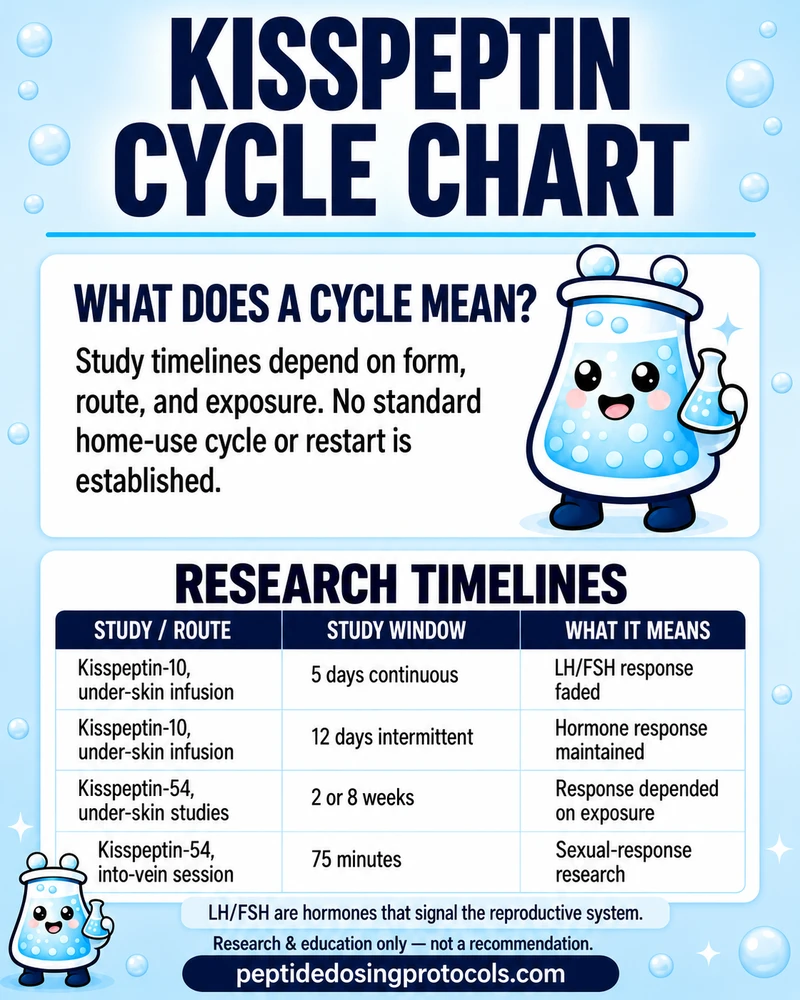
A 2026 KP-10 study tested under-the-skin infusions in healthy men. With five days of continuous delivery, testosterone remained elevated but LH and FSH were similar to the control condition by day five. An intermittent infusion arm maintained hormone stimulation over twelve days. LH and FSH are pituitary hormones that signal the reproductive organs.
This small study matters because it directly examines repeated KP-10 exposure. It used sustained delivery, not ordinary brief injections. It did not establish lasting symptom relief, fertility benefit, or a repeat-course break. The newer evidence should update older reviews without being stretched into a home-use schedule.
Selected study periods, with formulation kept attached
These are research descriptions, not suggested courses or device instructions.
Compound and route
KP-10, IV
Exposure studied
9 or 22.5 hours in a 2011 study
What the result can address
Short-term hormone stimulation
Compound and route
KP-10, SC infusion
Exposure studied
5 days continuous or 12 days intermittent in 2026
What the result can address
Hormone responses to different delivery patterns
Compound and route
KP-54, SC injections
Exposure studied
2 weeks in women with hypothalamic amenorrhea
What the result can address
Loss of hormone response with repeated exposure
Compound and route
KP-54, SC injections
Exposure studied
8 weeks of less frequent exposure in that condition
What the result can address
Hormone stimulation with partial loss of response
Compound and route
KP-54, IV
Exposure studied
75-minute sessions in sexual-desire trials
What the result can address
Immediate brain and sexual-response measures
| Compound and route | Exposure studied | What the result can address |
|---|---|---|
| KP-10, IV | 9 or 22.5 hours in a 2011 study | Short-term hormone stimulation |
| KP-10, SC infusion | 5 days continuous or 12 days intermittent in 2026 | Hormone responses to different delivery patterns |
| KP-54, SC injections | 2 weeks in women with hypothalamic amenorrhea | Loss of hormone response with repeated exposure |
| KP-54, SC injections | 8 weeks of less frequent exposure in that condition | Hormone stimulation with partial loss of response |
| KP-54, IV | 75-minute sessions in sexual-desire trials | Immediate brain and sexual-response measures |
The 2011 KP-10 study used small groups of healthy men and measured hormone changes during IV administration. A separate 2026 24-hour IV study in three men found that LH rose and then partly declined despite ongoing delivery. Neither study demonstrates a multiday home-injection cycle. The two KP-54 repeated-exposure studies are discussed below.
Kisspeptin Cycle Supplies Needed
No established research-vial cycle supports a kisspeptin vial, diluent, or syringe count. A clinical infusion setup cannot be replaced with a shopping list. The exact catalog card is a laboratory product listing, not an approved medicine. The DailyPrintz case, SiPhox test and blood-work guide, and Amazon supplies are optional resources. A clinician decides which tests, if any, fit the question; a commercial panel cannot prove an untested course safe. An optional Beyond Whoosh clinician-service listing is separate from the laboratory catalog. Neither listing establishes the exact form used in a trial or a proven home-use cycle.
Research Supplies
Choose your region
Use discount code SAVE10 at Orbitrex Peptides checkout. See why we love Orbitrex Peptides.
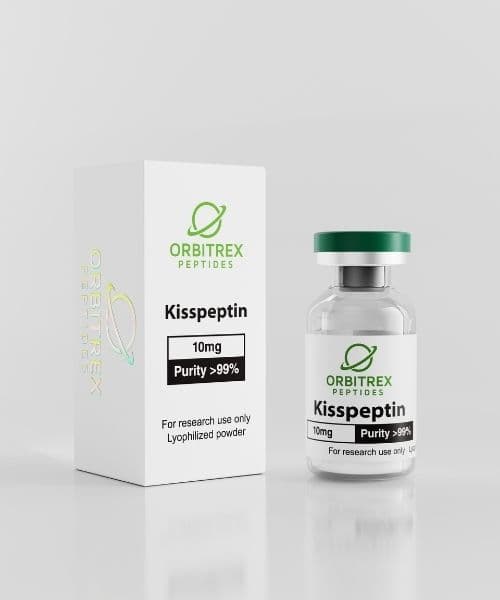
Kisspeptin
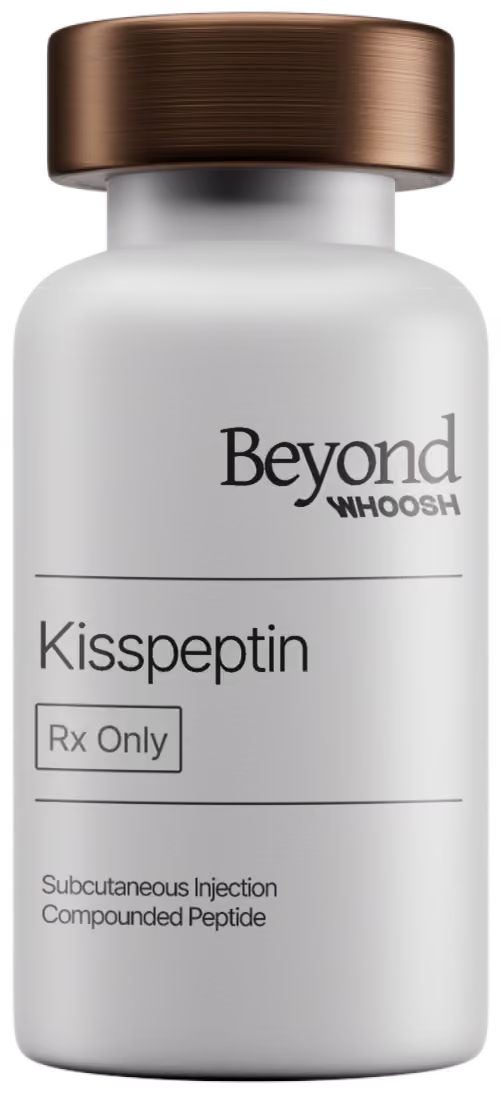
Pharmacy Grade Kisspeptin
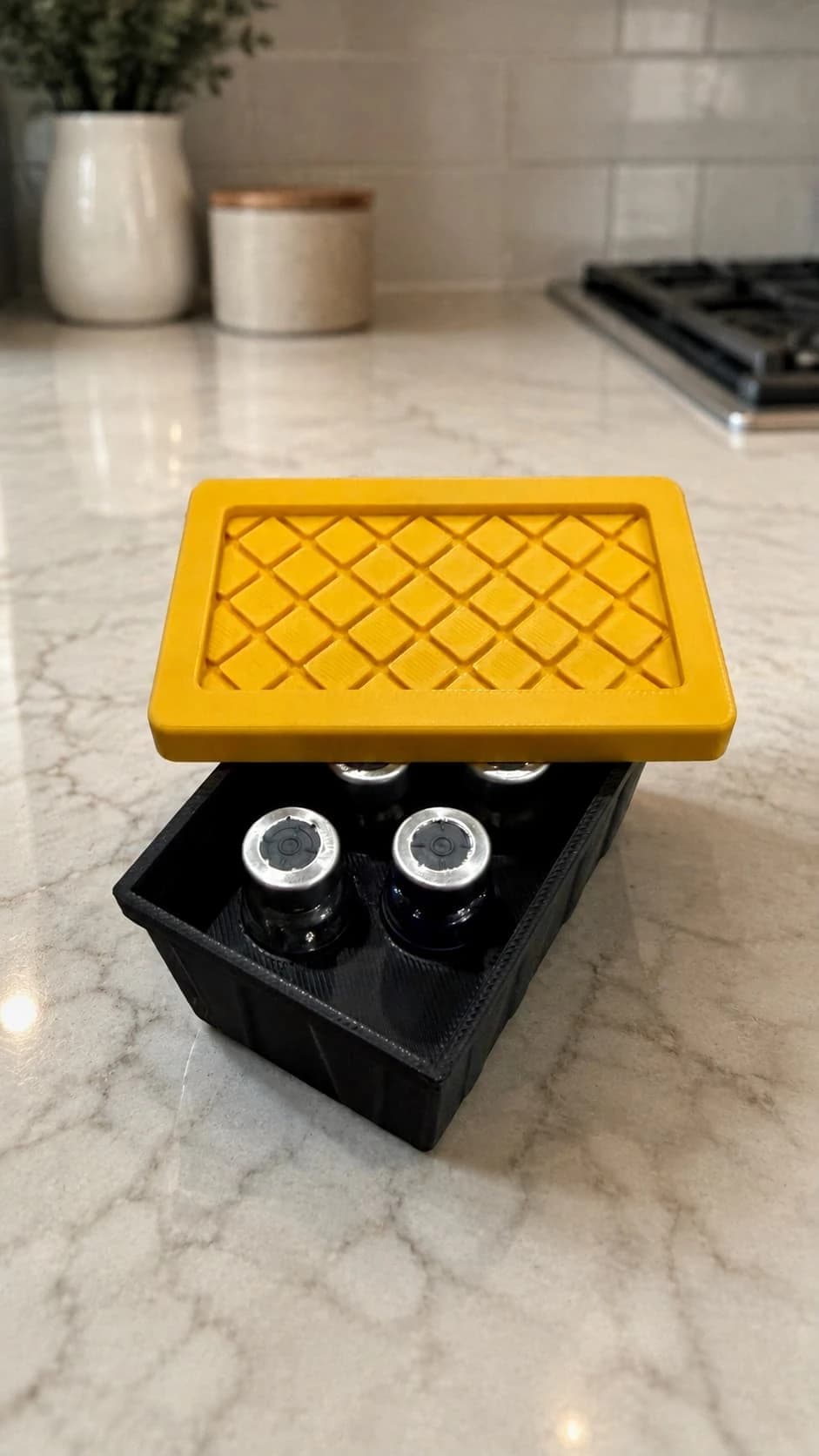
5-Vial Tote Case
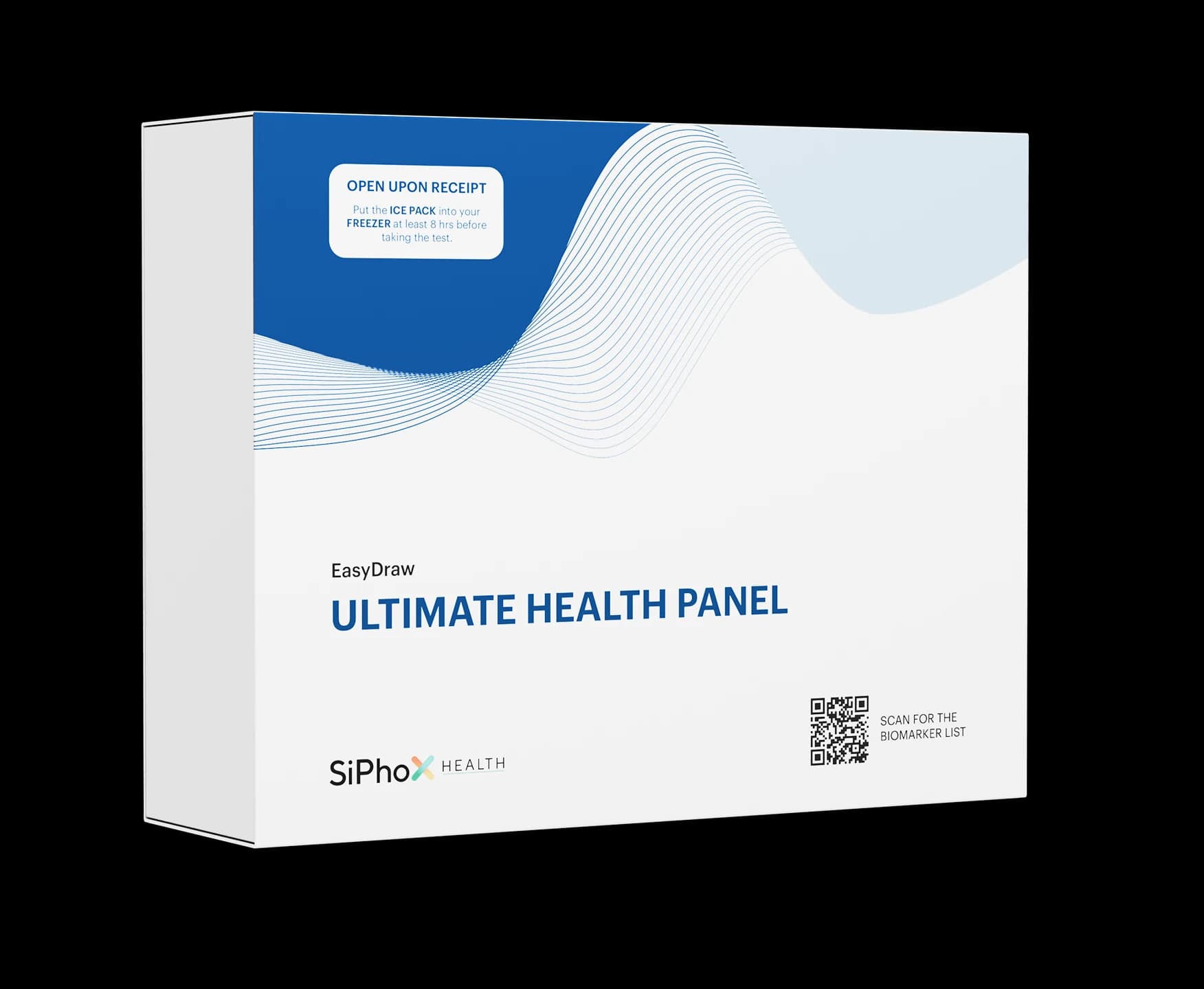
At-Home Blood Test
Research Supplies
Disclosure: supply links may earn PDP a commission at no cost to you.
Product identity and quantity
| Supply check | What it means |
|---|---|
Exact peptide form Confirm KP-10 or KP-54 | Check the batch identity and whether the product is powder, a solution, or a nasal formulation. The regional Crystal listing names Kisspeptin 10mg; that name alone does not confirm KP-10 or KP-54. |
Vials and preparation materials No established count | A study duration or online report cannot determine required vials, diluent, or syringes. This guide does not turn research infusions into a self-injection plan. |
Exact peptide form
Confirm KP-10 or KP-54
Check the batch identity and whether the product is powder, a solution, or a nasal formulation. The regional Crystal listing names Kisspeptin 10mg; that name alone does not confirm KP-10 or KP-54.
Vials and preparation materials
No established count
A study duration or online report cannot determine required vials, diluent, or syringes. This guide does not turn research infusions into a self-injection plan.
Storage, handling, and context
| Supply check | What it means |
|---|---|
Storage and discard limits Exact-product instructions | A vial's size does not establish its usable life after opening or mixing. A case, travel kit, or mini fridge does not by itself meet product temperature requirements. |
Clinical and product records Purpose matters | Record the exact identity and relevant dates. Hormone testing needs context such as symptoms, medications, and menstrual timing; a normal result does not validate a product or cycle. |
Storage and discard limits
Exact-product instructions
A vial's size does not establish its usable life after opening or mixing. A case, travel kit, or mini fridge does not by itself meet product temperature requirements.
Clinical and product records
Purpose matters
Record the exact identity and relevant dates. Hormone testing needs context such as symptoms, medications, and menstrual timing; a normal result does not validate a product or cycle.
Supplies and lab tests cannot replace evidence for the exact product, route, and goal. Accessories remain optional, and no quantities are inferred from community durations.
Companion Supplies & Routine Support
Does Kisspeptin Stop Working After Two Weeks?
Not as a universal rule. Desensitization means a response becomes weaker during repeated exposure. A rapid loss of response is also called tachyphylaxis. Those terms describe what was measured under particular conditions; they do not supply a fixed maximum course or a reset calendar.
In the 2009 study in women with hypothalamic amenorrhea, KP-54 was injected under the skin twice daily for two weeks. Hypothalamic amenorrhea means periods have stopped because the brain's reproductive signaling is reduced. The initial LH and FSH responses became much smaller by day fourteen. The study did not establish improved reproductive activity on ultrasound.
A 2010 study examined less frequent KP-54 exposure over eight weeks in the same condition. Twice-weekly administration produced only partial loss of response, with reproductive hormones still higher than during the control treatment. This was a hormone finding in a defined patient group, not proof of a general eight-week fertility or libido cycle.
Health status also matters. A small study in healthy women found that one week of KP-54 exposure did not abolish menstrual cycling, though menstrual timing changed. Together with the newer KP-10 infusion work, these findings show why one slogan about tolerance cannot cover every form and setting.
A weaker effect does not identify its cause
A change in libido or energy is not a direct receptor test. Sleep, stress, illness, medications, product variability, and the original health problem can affect how someone feels. More exposure is not an evidence-based answer to an unclear response.
Do the Libido Studies Establish an On-Demand or Multiweek Cycle?
The best-known trials studied hypoactive sexual desire disorder, or HSDD: low sexual desire that causes distress. That diagnosis is not the same as every cause of erection problems, low testosterone, or persistent sexual symptoms after medication use.
In the 2023 trial in men, 32 participants completed KP-54 and placebo visits. A placebo is a comparison treatment without the active study drug. Each visit involved a 75-minute IV infusion, with at least seven days between visits. The trial measured brain activity, penile swelling during sexual videos, and questionnaire responses.
The 2022 trial in women also used 75-minute KP-54 IV sessions. Visits were at least a month apart and occurred in the early part of the menstrual cycle. It studied sexual and attraction-related brain responses rather than a prolonged at-home course.
In these crossover designs, participants received both conditions in a randomly chosen order. The gap helped separate the two comparisons; it was not a trial of the best break for regular use. Acute changes are promising research findings, but they do not establish how long benefits last in daily life or prove an on-demand KP-10 injection plan.
How Is a Fertility Treatment Cycle Different?
In the 2014 IVF study, 53 women received a single under-the-skin KP-54 injection to help trigger egg maturation after other fertility medicines. Eggs were collected 36 hours later. IVF means fertilization outside the body under specialist care.
The 36-hour interval marks a procedure's timing, not a 36-hour peptide course. The full fertility cycle included ovarian stimulation, monitoring, egg collection, and further treatment. Those steps cannot be separated from the result and replaced with a KP-10 research vial.
A higher LH level, a mature egg, return of periods, pregnancy, and live birth are different outcomes. Evidence for one does not automatically prove the others. Changes in menstrual timing also do not prove that ovulation is predictable or that fertility has been restored.
For someone with absent periods or a fertility concern, the underlying cause matters more than finding a course length online. Research in one reproductive disorder cannot supply a plan for PCOS, a different hormonal condition, or an undiagnosed problem.
How Long Should a Break Last Before Restarting?
No standard break is established. A trial's washout interval is the time used to reduce carryover between comparison visits. It is not automatically a recovery period that restores sensitivity, nor does it establish how often a course can be repeated.
Half-life means the time for a measured drug level to fall by half. That number differs by molecule and study conditions. It does not measure complete recovery of hormone signaling, prove that symptoms are back to baseline, or establish that another exposure is appropriate.
The cited research does not provide a routine taper, catch-up plan, or personal restart rule for research vials. A pause caused by side effects is a reason to assess the problem, not simply to wait out a fixed number of days. A clinician needs to know the exact product and what happened before considering any next step.
Can These Studies Support Testosterone Therapy or PCT Claims?
The FDA's 2024 KP-10 review found insufficient evidence for the proposed treatment of male secondary hypogonadism, a condition involving low testosterone caused by reduced brain and pituitary signaling. It did not establish KP-10 as a treatment equivalent to testosterone or other licensed medicines. Later research must be assessed on its own merits; the 2026 infusion findings do not settle long-term treatment benefit.
PCT, or post-cycle therapy, usually refers online to attempts to restore hormone function after anabolic steroid use. The trials discussed here did not validate a PCT course, a way to stop prescribed testosterone, or a reliable fertility-preservation plan. Being upstream in a hormone pathway does not prove that a peptide can repair every cause of low hormone output.
Blood markers are useful only when the question and timing are clear. A rise in testosterone during an experiment is different from sustained symptom improvement. A single result cannot establish a normal hormone pattern, sperm production, or the cause of a sexual symptom.
- Separate the goal: desire, physical arousal, hormone levels, periods, and fertility are not one outcome.
- Check whether participants had the same condition, rather than assuming healthy-volunteer results apply.
- Ask what changed after stopping, not only what happened during exposure.
- Keep prescribed treatment decisions with the clinician managing the underlying condition.
What Safety Questions Remain?
The FDA review raises concerns about limited product characterization and immune reactions for compounded KP-10. An immune reaction occurs when the body's defenses react to a substance. Small, closely monitored studies cannot rule out uncommon harms or establish safety during repeated unsupervised use.
A laboratory purity report does not prove freedom from contaminating germs, correct strength, suitable storage, or a known usable life after mixing. Research-use labeling also does not make a vial a medicine. The route, preparation, and quality controls used in a published trial may be very different from a seller's product.
Pregnancy, plans to conceive, breastfeeding, menstrual changes, hormone-related illness, and other medicines require individual clinical review. These studies do not provide a complete screening checklist for research-vial use. Absence of an immediate side effect is not proof that hormone function or future fertility is unaffected.
Do not wait for a planned cycle end to seek care
Trouble breathing, fainting, chest pain, or swelling of the face or throat needs urgent medical care. New persistent symptoms, unexpected bleeding, or worsening reproductive symptoms need clinical review rather than a larger amount or a scheduled restart.
How to Judge a New Kisspeptin Cycle Claim
Start with five checks: exact peptide, route, delivery pattern, patient group, and measured result. Then ask whether the study actually tested stopping and restarting. A newer publication can add important evidence without answering every question about a product sold under the same family name.
The strongest next step is a clear clinical question and evidence that fits it. A course copied from a forum, a hormone graph, or the amount in a vial leaves too much of that question unanswered.
Kisspeptin Cycle FAQs
Q1: Is two to six weeks a proven kisspeptin cycle?
No. The reviewed studies do not establish that range as a routine course for research-vial use. Study duration depends on the peptide form, route, delivery pattern, and patient group. No matching standard off-period has been established.
Q2: Does the 2026 twelve-day KP-10 study validate daily injections?
It tested sustained under-the-skin infusions in healthy men. That delivery pattern is different from a brief injection. A hormone response during the experiment does not establish a standard injection cycle or long-term clinical benefit.
Q3: Does kisspeptin always stop working after two weeks?
No. Loss of response was seen with a particular repeated KP-54 exposure pattern in women with absent periods. Other studies found different responses. This is not a universal stopping rule for every form, route, or person.
Q4: Can the 75-minute libido studies guide KP-10 use?
Those trials used KP-54 through a vein in people with a defined sexual-desire disorder. They do not validate KP-10 research-vial injections or establish how long benefits would last at home.
Q5: Is a one-week or one-month break evidence based?
Those intervals appeared between visits in separate comparison studies. They helped separate experimental conditions. They were not tests of a standard break that restores sensitivity before repeated personal use.
Q6: Is eight weeks the longest safe course?
The eight-week KP-54 study measured reproductive hormone responses in a specific condition. It did not define a maximum safe duration. A study endpoint is not a safety boundary, and shorter use is not automatically safe.
Q7: Does a short half-life mean receptors have reset?
No. Falling drug levels and recovery of a biological response are different measurements. Half-life alone cannot set a safe or effective restart date.
Q8: Does an IVF cycle support a fertility course at home?
No. KP-54 was studied within a monitored fertility procedure involving other medicines and precisely timed care. That setting cannot be replaced with an unapproved research-vial course.
Q9: How many kisspeptin vials should a cycle require?
No evidence-based count is established for routine research-vial use. A vial size or calculation does not select a safe duration. Exact form, stability, route, and clinical context matter before any quantity has meaning.
Q10: Can normal blood tests prove a kisspeptin cycle safe?
No. A normal panel cannot verify product quality, predict every adverse effect, or establish future reproductive outcomes. A clinician should decide which tests, if any, answer the person's actual clinical question.
Sources & Research
- 1. Yeung AC, Phylactou M, Koysombat K, et al. Chronic subcutaneous kisspeptin-10 stimulates gonadotropin secretion for 12 days in healthy men European Journal of Endocrinology (2026)
- 2. George JT, Veldhuis JD, Roseweir AK, et al. Kisspeptin-10 is a potent stimulator of LH and increases pulse frequency in men Journal of Clinical Endocrinology & Metabolism (2011)
- 3. Naveed A, Lippincott MF, Stamou M, et al. Dynamic modulation of LH secretion by continuous kisspeptin infusion in healthy men Hormones (2026)
- 4. Jayasena CN, Nijher GMK, Chaudhri OB, et al. Subcutaneous injection of kisspeptin-54 acutely stimulates gonadotropin secretion in women with hypothalamic amenorrhea, but chronic administration causes tachyphylaxis Journal of Clinical Endocrinology & Metabolism (2009)
- 5. Jayasena CN, Nijher GMK, Abbara A, et al. Twice-weekly administration of kisspeptin-54 for 8 weeks stimulates release of reproductive hormones in women with hypothalamic amenorrhea Clinical Pharmacology & Therapeutics (2010)
- 6. Jayasena CN, Comninos AN, Nijher GMK, et al. Twice-daily subcutaneous injection of kisspeptin-54 does not abolish menstrual cyclicity in healthy female volunteers Journal of Clinical Endocrinology & Metabolism (2013)
- 7. Mills EG, Ertl N, Wall MB, et al. Effects of Kisspeptin on Sexual Brain Processing and Penile Tumescence in Men With Hypoactive Sexual Desire Disorder: A Randomized Clinical Trial JAMA Network Open (2023)
- 8. Thurston L, Hunjan T, Ertl N, et al. Effects of Kisspeptin Administration in Women With Hypoactive Sexual Desire Disorder: A Randomized Clinical Trial JAMA Network Open (2022)
- 9. Jayasena CN, Abbara A, Comninos AN, et al. Kisspeptin-54 triggers egg maturation in women undergoing in vitro fertilization Journal of Clinical Investigation (2014)
- 10. U.S. Food and Drug Administration Kisspeptin-10: Pharmacy Compounding Advisory Committee briefing document FDA (2024)
Related Dosing Protocols
Educational use only
Peptide Dosing Protocols is an independent educational reference. This page is not medical advice or a recommendation to use research products. Consult a licensed healthcare provider about reproductive symptoms, hormone testing, fertility care, and treatment decisions.
Keep the form and clinical question together
Read the compound background and calculation limits before comparing kisspeptin with other research peptides.

Written by Garret Grant
Founder & Lead Researcher · B.S. Civil Engineering, UCLA
Last updated: October 2026
Human-researched and AI-assisted with full editorial review. I verify sources, protocol interpretation, and final judgments personally. See methodology.
Share this page