Kisspeptin Quick Start
Kisspeptin is a signaling peptide that helps turn on the reproductive hormone pathway. It tells the brain to release GnRH, which tells the pituitary gland to release LH and FSH. In men, LH can then tell the testes to make testosterone. In women, LH and FSH help control ovulation and fertility signals.
Most research-use suppliers stock kisspeptin-10. Many human studies used kisspeptin-54. The difference matters because kisspeptin-10 clears fast, with a half-life of about 4 minutes in blood after IV dosing. Kisspeptin-54 lasts longer, with a half-life of about 28 minutes after subcutaneous dosing.
Route
Subcutaneous (SC), meaning under the skin, in research-use protocols. IV infusion is used in clinical trials only.
Form choice
Kisspeptin-10 is shorter-acting; kisspeptin-54 is the form used in human trials.
Measure
Use vial concentration (mg/mL) and U-100 syringe units for the dose.
Testosterone pathway
Kisspeptin may raise testosterone indirectly by raising LH first. It does not act like testosterone itself.
Cycle structure
Use short pulses or short cycles. Continuous exposure can make the signal fade, a problem called desensitization.
Research status
Not FDA-approved. Research-use only.
Disclaimer
This page is an educational research reference and is not medical advice. No kisspeptin product is FDA-approved. Information is for research-context planning only.
Kisspeptin Dosing Protocol & Schedule
Choose the form that matches the vial being researched. Kisspeptin-10 and kisspeptin-54 are not interchangeable. They last for different amounts of time, and the dose math is different. The schedules below are research-planning ranges, not personal medical advice.
Kisspeptin Protocol Formats
Choose the form you are researching to see route-specific notes.
SC means subcutaneous, or under the skin. This is the shorter-acting form most often stocked by research-use suppliers.
Kisspeptin-10 acts fast and clears fast. After IV dosing, its blood half-life is about 4 minutes. A subcutaneous shot may stretch the effect a little, but the LH and FSH signal is still short. That is why research-use protocols usually use small once-daily or twice-daily SC doses instead of long exposure.
Kisspeptin-10 — Common Research-Context Dosing Ranges
Approach
Low-dose pulse
Typical Range
50-100 mcg
Frequency
Once daily SC
Notes
SC means under the skin. Often timed before sleep in research-use planning.
Approach
Standard pulse
Typical Range
100-200 mcg
Frequency
Once daily SC
Notes
Common community research range, based partly on kisspeptin-54 trial data.
Approach
Split dose
Typical Range
100 mcg
Frequency
Twice daily SC
Notes
Used when the research plan calls for more frequent LH pulses.
| Approach | Typical Range | Frequency | Notes |
|---|---|---|---|
| Low-dose pulse | 50-100 mcg | Once daily SC | SC means under the skin. Often timed before sleep in research-use planning. |
| Standard pulse | 100-200 mcg | Once daily SC | Common community research range, based partly on kisspeptin-54 trial data. |
| Split dose | 100 mcg | Twice daily SC | Used when the research plan calls for more frequent LH pulses. |
These ranges come from published research and research-use community planning. Human data shows kisspeptin-10 can raise LH in men. Longer exposure may also raise testosterone, but that depends on the testes being able to respond to LH.
Tachyphylaxis with chronic dosing
Continuous exposure can make the LH signal fade. That signal fade is called desensitization or tachyphylaxis. This is why kisspeptin research usually uses short pulses or short cycles instead of nonstop exposure.
Full-length form. Used in most human clinical trials.
Kisspeptin-54 lasts longer than kisspeptin-10. After subcutaneous dosing, its blood half-life is about 28 minutes, and LH can stay higher for several hours. This is the form used in many IVF trigger and low-desire clinical studies. Trial doses are often listed as nmol/kg, so they do not convert neatly to a simple mcg dose.
Kisspeptin-54 — Reported Trial-Context Dosing
Trial Context
IVF oocyte maturation trigger (high OHSS risk)
Dose Studied
3.2-12.8 nmol/kg single bolus
Route
Subcutaneous
Source/Notes
Phase 2 trial in 60 women, Hammersmith Hospital, 2013-2014
Trial Context
IVF oocyte maturation trigger (proof-of-concept)
Dose Studied
1.6-12.8 nmol/kg single bolus
Route
Subcutaneous
Source/Notes
53-women trial; LH peaked at ~5 hours and returned to pre-trigger by 12-14 hours
Trial Context
Hypothalamic amenorrhea (chronic SC, twice weekly)
Dose Studied
6.4 nmol/kg
Route
Subcutaneous, twice weekly
Source/Notes
Reduced response over time consistent with desensitization
Trial Context
HSDD modulation (women, men)
Dose Studied
1 nmol/kg/h IV infusion
Route
Intravenous, 75-minute infusion
Source/Notes
Imperial College / Hammersmith trials, 2021-2023
| Trial Context | Dose Studied | Route | Source/Notes |
|---|---|---|---|
| IVF oocyte maturation trigger (high OHSS risk) | 3.2-12.8 nmol/kg single bolus | Subcutaneous | Phase 2 trial in 60 women, Hammersmith Hospital, 2013-2014 |
| IVF oocyte maturation trigger (proof-of-concept) | 1.6-12.8 nmol/kg single bolus | Subcutaneous | 53-women trial; LH peaked at ~5 hours and returned to pre-trigger by 12-14 hours |
| Hypothalamic amenorrhea (chronic SC, twice weekly) | 6.4 nmol/kg | Subcutaneous, twice weekly | Reduced response over time consistent with desensitization |
| HSDD modulation (women, men) | 1 nmol/kg/h IV infusion | Intravenous, 75-minute infusion | Imperial College / Hammersmith trials, 2021-2023 |
These are trial protocols, not dosing recommendations. Dose conversion depends on body weight. For example, 6.4 nmol/kg of kisspeptin-54 is about 2.85 mg for a 70 kg subject.
Cycle structure and desensitization
Kisspeptin Cycle Guidelines
Approach
Short pulse cycle
Active Length
2-4 weeks
Off Period
2-4 weeks
Reasoning
Limits desensitization; aligned with most acute research data
Approach
Standard cycle
Active Length
4-6 weeks
Off Period
4 weeks
Reasoning
Most-cited community window; longer cycles risk fading LH response
Approach
Diagnostic single use
Active Length
Single dose
Off Period
N/A
Reasoning
Mirrors clinical use as an LH/FSH stimulation test or IVF trigger
| Approach | Active Length | Off Period | Reasoning |
|---|---|---|---|
| Short pulse cycle | 2-4 weeks | 2-4 weeks | Limits desensitization; aligned with most acute research data |
| Standard cycle | 4-6 weeks | 4 weeks | Most-cited community window; longer cycles risk fading LH response |
| Diagnostic single use | Single dose | N/A | Mirrors clinical use as an LH/FSH stimulation test or IVF trigger |
Avoid nonstop exposure. When the kisspeptin signal is pushed too long, LH response can fade.
Kisspeptin Supplies Needed
Plan based on a simple kisspeptin-10 setup: one 100 mcg subcutaneous dose per day from a 10 mg vial mixed with 2 mL bacteriostatic water. At that mix, the vial is 5 mg/mL, so 2 units on a U-100 insulin syringe gives 100 mcg. If your vial size, water amount, or dose is different, redo the math before drawing.
Recommended U.S. and Canada Supply
Choose your region
Use discount code PEPPAL at Peptide Partners checkout. See why we love Peptide Partners.
Peptide Partners Shop
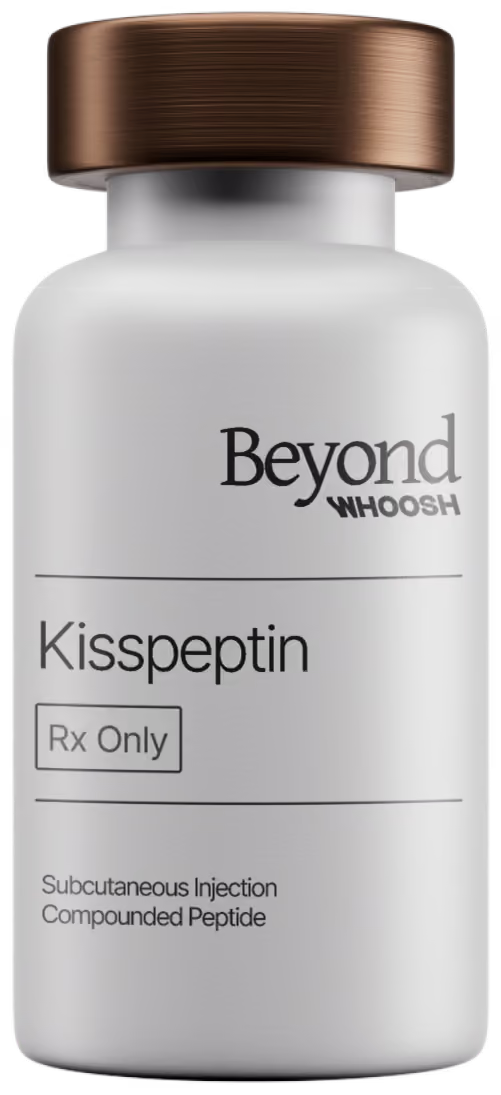
Pharmacy Grade Kisspeptin
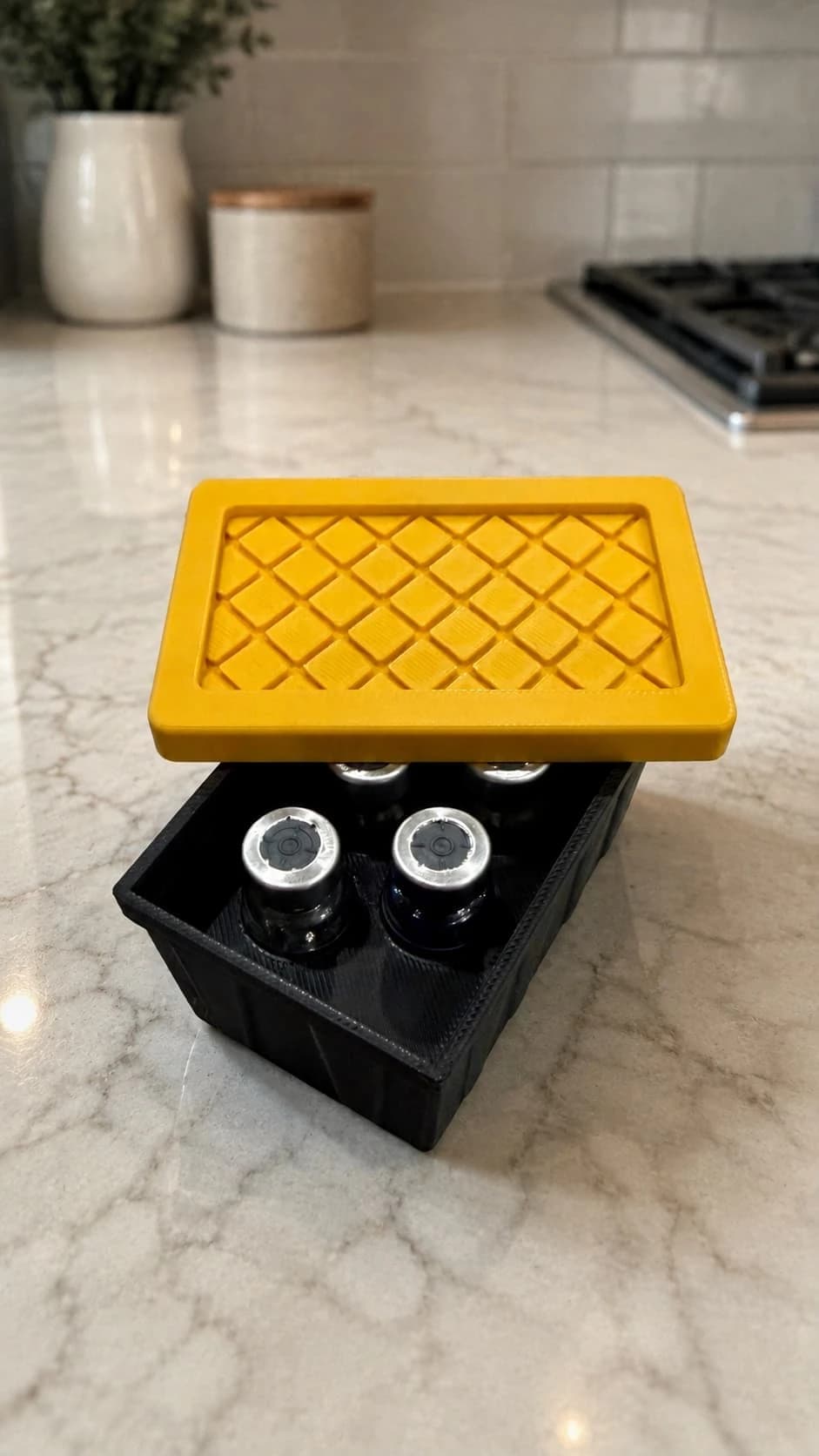
5-Vial Tote Case
At-Home Blood Test
Research Supplies
Disclosure: supply links may earn PDP a commission at no cost to you.
Peptide Vials (10 mg kisspeptin-10)
Each 10 mg vial reconstituted with 2 mL gives 5 mg/mL; one vial supports approximately 100 doses at 100 mcg.
| Cycle length | Planning note |
|---|---|
2-8 weeks 1 vial | 2 weeks: 14 doses needed; one vial provides about 100 planned draws before losses; 4 weeks: 28 doses needed; one vial provides about 100 planned draws before losses; 6 weeks: 42 doses needed; one vial provides a large margin for priming losses; 8 weeks: 56 doses needed; one vial still leaves margin for losses and schedule adjustments |
2-8 weeks
1 vial
2 weeks: 14 doses needed; one vial provides about 100 planned draws before losses; 4 weeks: 28 doses needed; one vial provides about 100 planned draws before losses; 6 weeks: 42 doses needed; one vial provides a large margin for priming losses; 8 weeks: 56 doses needed; one vial still leaves margin for losses and schedule adjustments
Insulin Syringes (U-100, 0.3 mL)
One syringe per injection. 0.3 mL barrel preferred for accurate small draws.
| Cycle length | Planning note |
|---|---|
2 weeks 14 syringes | 1 syringe per dose |
4 weeks 28 syringes | 1 syringe per dose |
6 weeks 42 syringes | 1 syringe per dose |
8 weeks 56 syringes | 1 syringe per dose |
2 weeks
14 syringes
1 syringe per dose
4 weeks
28 syringes
1 syringe per dose
6 weeks
42 syringes
1 syringe per dose
8 weeks
56 syringes
1 syringe per dose
Bacteriostatic Water
Use 2 mL per 10 mg vial. One 10 mL bottle covers up to 5 vials with margin.
| Cycle length | Planning note |
|---|---|
2-8 weeks 1 x 10 mL bottle | 1 vial uses 2 mL |
2-8 weeks
1 x 10 mL bottle
1 vial uses 2 mL
Round up for priming losses, dropped syringes, damaged swabs, and any protocol adjustments. If you are using kisspeptin-54 instead of kisspeptin-10, the trial-context doses are higher in absolute mass and one vial covers fewer doses — recalculate before ordering.
Companion Supplies & Routine Support
Kisspeptin-10 Reconstitution Calculator

Powered by PepPal
Kisspeptin-10 Reconstitution Calculator
Start with the protocol example, then customize every field.
Loaded reference
PDP default Kisspeptin-10 setup
Your draw
2units
0.02 mL on a U-100 insulin syringe
- Concentration
- 5 mg/mL
- Target in mg
- 0.1 mg
- Math-only doses per vial
- 100
One free emailed save per person, checked by PepPal.
Educational calculation tool only. The loaded amount is a reference from this page, not a personal dose recommendation. Confirm the vial label, route, syringe type, and actual liquid added before relying on a result.
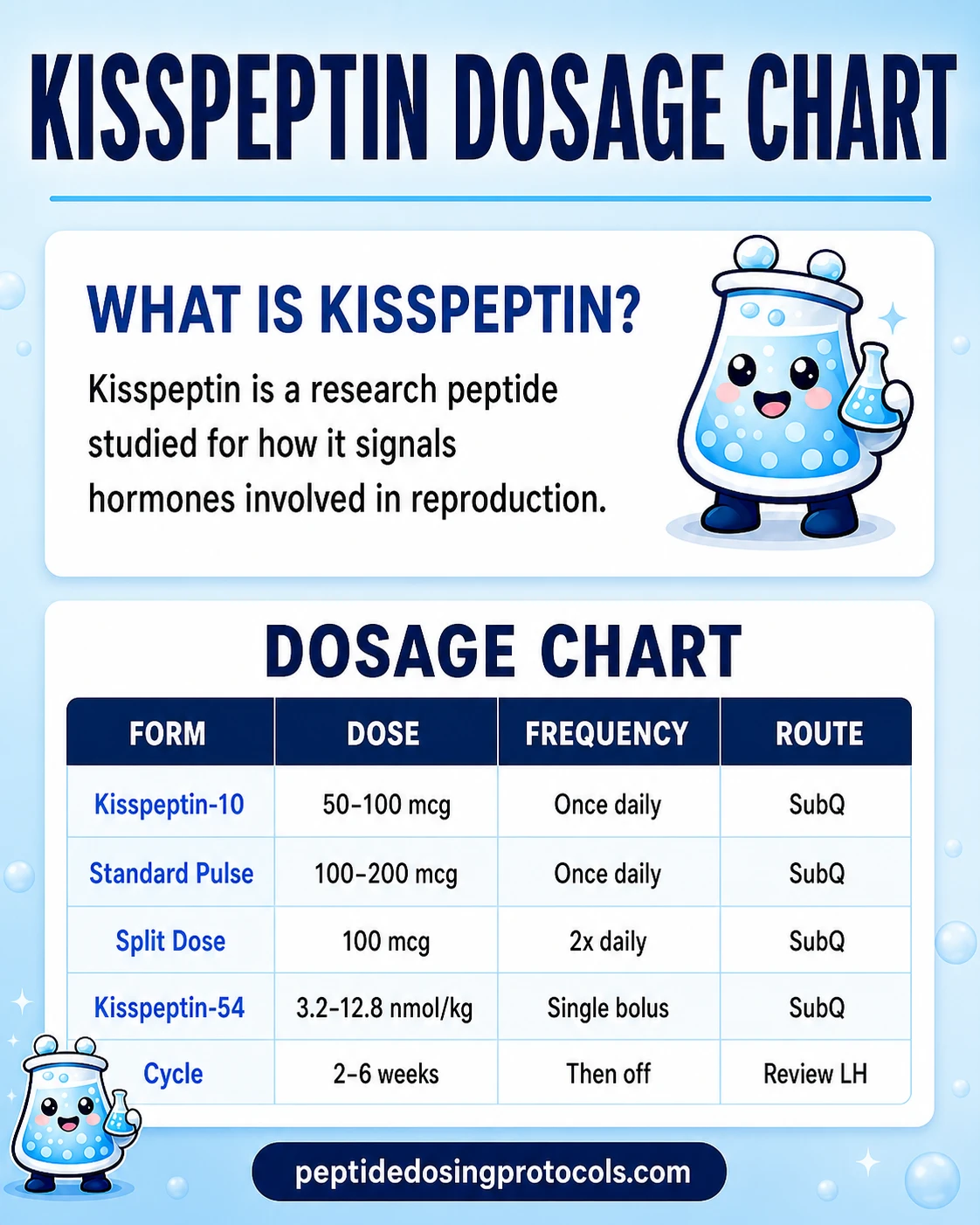
Kisspeptin Dosage Chart
This Kisspeptin dosage chart summarizes the kisspeptin-10 and kisspeptin-54 research-context dose ranges shown in the dosing section above.
Kisspeptin Reconstitution Guide
Kisspeptin ships as a lyophilized (freeze-dried) powder in single-use vials. Reconstitute with bacteriostatic water (BAC water) before drawing any dose. The volume you add determines your final concentration, and that determines how many syringe units equal your target dose.
Common Reconstitution Math (Kisspeptin-10, 10 mg vial)
BAC Water Added
1.0 mL
Final Concentration
10 mg/mL
Volume for 100 mcg
0.01 mL
U-100 Units
1 unit
BAC Water Added
1.5 mL
Final Concentration
6.67 mg/mL
Volume for 100 mcg
0.015 mL
U-100 Units
1.5 units
BAC Water Added
2.0 mL
Final Concentration
5 mg/mL
Volume for 100 mcg
0.02 mL
U-100 Units
2 units
BAC Water Added
2.5 mL
Final Concentration
4 mg/mL
Volume for 100 mcg
0.025 mL
U-100 Units
2.5 units
| BAC Water Added | Final Concentration | Volume for 100 mcg | U-100 Units |
|---|---|---|---|
| 1.0 mL | 10 mg/mL | 0.01 mL | 1 unit |
| 1.5 mL | 6.67 mg/mL | 0.015 mL | 1.5 units |
| 2.0 mL | 5 mg/mL | 0.02 mL | 2 units |
| 2.5 mL | 4 mg/mL | 0.025 mL | 2.5 units |
The 2 mL option is the default assumption on this page because it stays under a 3 mL vial limit and keeps 100 mcg equal to 2 syringe units. Smaller draws require careful measurement.
- 01
Inspect the vial
Confirm the label says kisspeptin (with the form noted: -10 or -54), check the mass, and look for any visible cracks or contamination.
- 02
Choose your BAC water volume
Use the table above to pick a volume that gives an easy syringe draw for your planned dose.
- 03
Swab both stoppers
Wipe the BAC water vial stopper and the kisspeptin vial stopper with a fresh alcohol pad each.
- 04
Draw the BAC water
Pull the planned BAC water volume into a syringe (a larger barrel like 1 mL or 3 mL is easier than insulin syringes for this step).
- 05
Slowly add water down the vial wall
Inject slowly, aiming for the side of the vial rather than directly onto the lyophilized powder. This protects the peptide from shear stress.
- 06
Swirl gently to dissolve
Roll or gently swirl the vial. Do not shake. Let it sit until the solution is fully clear.
- 07
Refrigerate and use
Store reconstituted kisspeptin at 35.6-46.4 F (2-8 C). Use within the supplier's stated beyond-use window when available.
Use a calculator
Reconstitution math is the most common source of dosing errors. A peptide reconstitution calculator is the easiest way to confirm your numbers before drawing.
How Kisspeptin Works
Kisspeptin works near the top of the hormone chain. The brain releases kisspeptin, which turns on GnRH. GnRH then tells the pituitary gland to release LH and FSH. In men, LH tells the testes to make testosterone. FSH helps support sperm production. In women, LH and FSH help control ovulation and follicle growth.
The main receptor is called GPR54, also called KISS1R. A receptor is like a lock on a cell. Kisspeptin is the key that turns that lock. When this signal works, the body can send a stronger LH and FSH message. When this pathway is broken, puberty and fertility signals can fail.
For testosterone research, the key point is simple: kisspeptin does not replace testosterone. It tries to make the body send more LH first. If the testes can respond to LH, testosterone may rise. If the pituitary or testes cannot respond, kisspeptin is unlikely to fix that problem.
Who Kisspeptin Is For and Who Should Avoid It
Human kisspeptin research has focused on healthy adult men, premenopausal women, women with missing periods from low hormone signaling, IVF trigger studies, and men and women with low sexual desire disorder. Outside those research settings, evidence is still limited.
- Pregnancy and lactation: Kisspeptin is tied to pregnancy and reproductive cycling. There is no good safety data for use during pregnancy or breastfeeding.
- Hormone-sensitive cancers: Kisspeptin can affect sex-hormone signaling. That matters for breast, ovarian, or prostate cancer history.
- Active fertility treatment outside a clinical trial: Do not try to copy an IVF trigger protocol without clinical monitoring. Timing, labs, and ultrasound checks matter.
- Primary hypogonadism: This means the testes or ovaries are the main problem. Kisspeptin works upstream, so it may not help if the gonads cannot respond.
- Pituitary disease: Kisspeptin needs a working pituitary gland to raise LH and FSH.
- Pediatric or adolescent use: Kisspeptin is part of puberty timing. It should not be used casually in children or teens.
- Heart or vascular concerns: FDA reviewers flagged animal data that may matter for heart and blood-vessel risk. Human relevance is still unclear.
Not a TRT replacement or PCT solution
Kisspeptin is not testosterone replacement. It may raise testosterone indirectly if LH rises and the testes respond, but that is not the same as TRT. Human evidence for post-cycle therapy or fertility restart is still limited.
Kisspeptin Side Effects & Safety
In published human studies, kisspeptin-10 and kisspeptin-54 were generally well tolerated when used short term. The low-desire studies reported no treatment-related serious adverse events. IVF trigger studies reported minor events, but no severe drug-related events clearly tied to kisspeptin-54.
Reported effects from clinical and research-context use
- Mild flushing or warmth shortly after dosing
- Mild injection-site redness or irritation
- Transient headache
- Brief mild nausea
- Short LH and FSH rise, usually followed by a return toward baseline
- Possible testosterone rise after longer exposure in men, if the testes respond to LH
Theoretical and chronic-use risks
- Signal fade with repeated or nonstop exposure. This is called desensitization or tachyphylaxis.
- Disruption of normal GnRH pulse timing. GnRH is the brain signal that starts LH and FSH release.
- Possible heart or blood-vessel concern based on animal data. Human risk is not clear.
- Unknown effects on hormone-sensitive tissues with long-term exposure.
- Product quality risk. No kisspeptin product is FDA-approved, and FDA reviewers flagged limited public data on kisspeptin-10 impurities.
Regulatory safety context
In October 2024, an FDA advisory committee voted against adding kisspeptin-10 to the 503A Bulks List. The review pointed to limited safety and effectiveness data, no approved product anywhere in the world, no major pharmacy-standard monograph, signal fade with chronic dosing, and concerning animal findings.
Kisspeptin Timeline & What to Monitor
Kisspeptin usually produces a fast LH and FSH signal. LH and FSH are pituitary hormones. LH is the main signal that can tell the testes to make testosterone. In IVF trigger studies, one subcutaneous kisspeptin-54 dose raised LH for several hours. Kisspeptin-10 is faster and shorter.
Reported Response Windows
Form
Kisspeptin-10 (IV bolus)
Onset
Minutes
Peak
~10-30 min
Return to baseline
<1 hour
Form
Kisspeptin-10 (SC bolus)
Onset
<30 min
Peak
~30-60 min
Return to baseline
Several hours
Form
Kisspeptin-54 (SC bolus)
Onset
~30 min
Peak
~5 hours (LH)
Return to baseline
12-14 hours
Form
Kisspeptin-54 (IV infusion)
Onset
Minutes
Peak
Varies with rate
Return to baseline
Within ~4 hours of stopping
| Form | Onset | Peak | Return to baseline |
|---|---|---|---|
| Kisspeptin-10 (IV bolus) | Minutes | ~10-30 min | <1 hour |
| Kisspeptin-10 (SC bolus) | <30 min | ~30-60 min | Several hours |
| Kisspeptin-54 (SC bolus) | ~30 min | ~5 hours (LH) | 12-14 hours |
| Kisspeptin-54 (IV infusion) | Minutes | Varies with rate | Within ~4 hours of stopping |
These windows are based on published LH response data. Testosterone, when it changes, usually lags behind LH.
What is reasonable to monitor
- Total testosterone (men): check before a cycle, then again on a steady schedule if testosterone response is the research question.
- LH and FSH: these show whether the brain-pituitary signal is responding.
- Estradiol: this estrogen marker can affect LH response, especially in women.
- SHBG and free testosterone: useful context when total testosterone changes.
- Sleep, mood, libido, and sexual-function notes: useful subjective markers, especially because kisspeptin has been studied in low-desire research.
Stopping or review points
If LH or FSH response fades during a cycle, that may be desensitization. If testosterone does not change even when LH rises, the issue may be downstream at the testes. More kisspeptin is not always the answer.
Kisspeptin Clinical Evidence Context
Kisspeptin has more human research than many research-use peptides. Still, the studies are narrow. Most focus on fertility, missing menstrual cycles from low hormone signaling, IVF triggering, and low sexual desire. The evidence is much thinner for general hormone optimization or post-cycle therapy.
IVF oocyte maturation trigger (kisspeptin-54)
IVF studies used kisspeptin-54 to help eggs mature before collection. In these studies, kisspeptin-54 triggered egg maturation and may have lowered OHSS risk compared with hCG. OHSS is ovarian hyperstimulation syndrome, a serious IVF complication.
Hypoactive sexual desire disorder (HSDD)
HSDD means low sexual desire that causes distress. In small men and women studies, IV kisspeptin-54 changed sexual brain response and some arousal measures compared with placebo.
Hypothalamic amenorrhea
Hypothalamic amenorrhea means missing periods because the brain is not sending enough hormone signal. Subcutaneous kisspeptin-54 has helped restore LH pulses in this setting, but repeated dosing can make the response fade.
Direct HPG-axis pharmacology in healthy adults
Direct head-to-head studies compared IV kisspeptin-10, IV kisspeptin-54, and IV GnRH in healthy men. GnRH raised LH more strongly, while kisspeptin-10 and kisspeptin-54 produced similar short-term LH responses.
Testosterone effect in men
In one healthy-men study, longer kisspeptin-10 infusion raised LH and also raised testosterone. Shorter 75-minute kisspeptin-54 studies raised LH/FSH but did not show a testosterone rise during that short window.
What has not been done
There is no completed Phase 3 trial, no FDA-approved kisspeptin product, and no strong long-term safety dataset. Claims about testosterone optimization, PCT, or long-term hormone support are still extrapolations.
Kisspeptin Storage & Handling
Storage Conditions
State
Lyophilized (powder form)
Storage
-4 F (-20 C) long-term
Notes
Use supplier label and stability data.
State
Reconstituted (liquid form)
Storage
35.6-46.4 F (2-8 C)
Notes
Refrigerate immediately after reconstitution; respect supplier beyond-use limits.
State
Travel / short-term transport
Storage
Cool, dry, dark
Notes
Avoid direct light, freeze-thaw cycles, and elevated temperatures.
| State | Storage | Notes |
|---|---|---|
| Lyophilized (powder form) | -4 F (-20 C) long-term | Use supplier label and stability data. |
| Reconstituted (liquid form) | 35.6-46.4 F (2-8 C) | Refrigerate immediately after reconstitution; respect supplier beyond-use limits. |
| Travel / short-term transport | Cool, dry, dark | Avoid direct light, freeze-thaw cycles, and elevated temperatures. |
Do not freeze reconstituted solution. Discard if the solution becomes cloudy, develops particulates, or smells off.
Kisspeptin Protocol Mistakes & Troubleshooting
- 01
Missed dose
Research protocols generally skip a missed dose and continue with the next planned dose rather than double-dosing. More kisspeptin does not always mean a stronger or longer signal.
- 02
Cloudy or floating particles
Discard the vial. Cloudiness, floating material, or color change can mean contamination or peptide breakdown.
- 03
Wrong BAC water volume added
Recalculate the new concentration with a calculator and adjust the draw volume. The main issue is the math.
- 04
Dose feels too high or side effects appear
A lower dose is generally favored over extending the cycle in research planning, with clinician review warranted when side effects appear. Brief flushing and mild headache are reported in trials but should not be prolonged.
- 05
Injection-site reaction
Rotate sites, use a fresh swab, and let the alcohol fully dry before injection. Persistent or worsening reactions warrant stopping the protocol.
- 06
LH/FSH not changing on labs
Confirm dose, form, and lab timing. Kisspeptin-10 can peak and fade quickly, so next-morning labs may miss the signal. The pituitary and gonads still need to work for kisspeptin to have an effect.
- 07
Storage mistake
If reconstituted vial sat at room temperature briefly, stability is variable and depends on time and temperature. If unfrozen powder spent extended time at room temperature, contact the supplier for stability data.
- 08
Form confusion
Always confirm whether the vial is kisspeptin-10 or kisspeptin-54. They are not interchangeable on a 1:1 mass basis — kisspeptin-54 is the larger molecule, has a longer half-life, and is dosed differently in research.
When to seek qualified medical care
Stop the protocol and seek qualified medical care for chest pain, severe shortness of breath, severe headache, signs of an allergic reaction, or any abrupt change in vision or neurological symptoms.
Kisspeptin Regulatory Status
As of June 2026, no kisspeptin product is FDA-approved for any use. Kisspeptin is also not approved as a drug in the European Union or Japan. There is no major pharmacy-standard monograph for kisspeptin-10 or kisspeptin-54.
On October 29, 2024, the FDA's Pharmacy Compounding Advisory Committee reviewed kisspeptin-10 for the 503A Bulks List. That list affects what compounding pharmacies may use. The committee voted against adding kisspeptin-10. FDA reviewers pointed to limited safety and effectiveness data, no approved product anywhere in the world, limited public quality data, signal fade with chronic dosing, and animal safety concerns.
The peptide regulatory picture changed again in 2026, but that did not make kisspeptin-10 an approved drug. For this page, the practical takeaway is simple: kisspeptin remains research-use only unless the FDA position changes.
Research-use only
Kisspeptin is sold in the U.S. by research-supply companies for research-use only. It is not a supplement, not a compounded medication under FDA-endorsed pathways for the proposed indication, and not an approved drug.
Kisspeptin vs hCG vs Clomiphene vs GnRH
Kisspeptin sits high in the hormone pathway. hCG, clomiphene, GnRH, and testosterone work at different spots. They are not interchangeable.
Where Each Compound Acts
Compound
Kisspeptin-10 / -54
Site of Action
Brain signal before GnRH
Use Context
Research; IVF trigger; HSDD trials
Key Difference vs Kisspeptin
Starts high in the pathway; not FDA-approved
Compound
GnRH / GnRH analogs
Site of Action
Pituitary LH/FSH release
Use Context
Some FDA-approved; fertility, prostate cancer
Key Difference vs Kisspeptin
One step lower in the pathway; longer clinical track record
Compound
Clomiphene / SERMs
Site of Action
Estrogen feedback signal
Use Context
FDA-approved for ovulation induction; off-label male hypogonadism
Key Difference vs Kisspeptin
Oral drug; different mechanism
Compound
hCG
Site of Action
Testes/ovaries (LH receptor)
Use Context
FDA-approved IVF trigger; off-label TRT support
Key Difference vs Kisspeptin
Bypasses hypothalamus entirely; OHSS risk in IVF
Compound
Exogenous testosterone (TRT)
Site of Action
Direct testosterone replacement
Use Context
FDA-approved hypogonadism
Key Difference vs Kisspeptin
Replaces testosterone directly; kisspeptin does not
| Compound | Site of Action | Use Context | Key Difference vs Kisspeptin |
|---|---|---|---|
| Kisspeptin-10 / -54 | Brain signal before GnRH | Research; IVF trigger; HSDD trials | Starts high in the pathway; not FDA-approved |
| GnRH / GnRH analogs | Pituitary LH/FSH release | Some FDA-approved; fertility, prostate cancer | One step lower in the pathway; longer clinical track record |
| Clomiphene / SERMs | Estrogen feedback signal | FDA-approved for ovulation induction; off-label male hypogonadism | Oral drug; different mechanism |
| hCG | Testes/ovaries (LH receptor) | FDA-approved IVF trigger; off-label TRT support | Bypasses hypothalamus entirely; OHSS risk in IVF |
| Exogenous testosterone (TRT) | Direct testosterone replacement | FDA-approved hypogonadism | Replaces testosterone directly; kisspeptin does not |
FDA approval status reflects U.S. positioning as of June 2026.
Kisspeptin Blood Tests & Monitoring
Kisspeptin is usually discussed in reproductive-hormone signaling research. Monitoring focuses on LH/FSH signaling, sex hormones, pregnancy context, and symptoms tied to hormone shifts.
Blood test markers to discuss with a clinician
Marker
LH, FSH, estradiol, and progesterone
Why it matters
Reviews reproductive-axis signaling and hormone status in people with ovarian-cycle context.
Timing
Baseline
Marker
Total and free testosterone
Why it matters
Reviews androgen status when testosterone, libido, fertility, or male reproductive function is part of the context.
Timing
Baseline
Marker
Prolactin
Why it matters
Elevated prolactin can affect reproductive hormones and libido.
Timing
Optional
Marker
Pregnancy test
Why it matters
Pregnancy status matters before reproductive-axis experimentation in people who can become pregnant.
Timing
Baseline
Marker
TSH and free T4
Why it matters
Thyroid status can affect menstrual patterns, fertility, libido, and energy.
Timing
Optional
| Marker | Why it matters | Timing |
|---|---|---|
| LH, FSH, estradiol, and progesterone | Reviews reproductive-axis signaling and hormone status in people with ovarian-cycle context. | Baseline |
| Total and free testosterone | Reviews androgen status when testosterone, libido, fertility, or male reproductive function is part of the context. | Baseline |
| Prolactin | Elevated prolactin can affect reproductive hormones and libido. | Optional |
| Pregnancy test | Pregnancy status matters before reproductive-axis experimentation in people who can become pregnant. | Baseline |
| TSH and free T4 | Thyroid status can affect menstrual patterns, fertility, libido, and energy. | Optional |
Monitoring guidance is reproductive-axis pathway-based and should be interpreted with cycle timing and clinician context.
At-home blood test option
Easy at home option to monitor core metrics during research cycles.
Beyond Whoosh
Pharmacy Grade Kisspeptin
Prescription-grade peptide care through Beyond Whoosh. Whoosh prescribes after a clinician reviews your eligibility.
Partner link: PDP may earn a commission at no cost to you.
Simple timing framework
Baseline
Discuss baseline hormone labs before starting, especially with fertility goals, menstrual changes, testosterone therapy, pituitary history, or endocrine medication use.
Follow-up
Repeat relevant hormone markers after 4-8 weeks or after protocol changes.
Longer term
For ongoing fertility or hormone protocols, review trends with a clinician at planned intervals.
How to interpret the labs
- Hormone labs are timing-sensitive, especially in people with menstrual cycles.
- Fertility goals, contraception, testosterone therapy, and pituitary history should be reviewed clinically.
- Single hormone results can be misleading without timing, symptoms, and medication context.
Do not wait for routine labs
Severe pelvic pain, unexpected heavy bleeding, severe headaches, vision changes, or pregnancy symptoms need medical review.
FAQ
Q1: What is kisspeptin?
Kisspeptin is a signaling peptide that helps start the reproductive hormone pathway. It tells the brain to release GnRH. GnRH then tells the pituitary gland to release LH and FSH. In men, LH can tell the testes to make testosterone. In women, LH and FSH help support ovulation and fertility signals.
Q2: What is the typical kisspeptin dosage?
Typical research-context kisspeptin-10 dosing is 50-200 mcg subcutaneously, once or twice daily. Subcutaneous means under the skin. Trial-context kisspeptin-54 doses are usually written as nmol/kg, so they are harder to compare to simple mcg dosing. These are research-context numbers, not personal dosing recommendations.
Q3: What is the difference between kisspeptin-10 and kisspeptin-54?
Kisspeptin-10 is the shorter form. Kisspeptin-54 is the longer form. Both work on the same receptor, but they do not last the same amount of time. Kisspeptin-10 has a half-life of about 4 minutes in blood after IV dosing. Kisspeptin-54 lasts longer, about 28 minutes after subcutaneous dosing. Kisspeptin-10 is usually easier to find from research suppliers.
Q4: How is kisspeptin reconstituted?
Kisspeptin ships as a lyophilized powder. You add bacteriostatic water and gently swirl until clear. The volume you add determines the final concentration. For a 10 mg vial reconstituted with 2 mL, the final concentration is 5 mg/mL, so 2 units on a U-100 syringe equals 0.02 mL or 100 mcg. This page avoids assumptions above 3 mL because many research vials cannot hold more than that.
Q5: What is a typical kisspeptin cycle length?
Research-context cycles are usually 2-6 weeks on, with 2-4 weeks off. Continuous, uninterrupted dosing is avoided because kisspeptin causes desensitization — the LH response fades over time when the receptor is overstimulated. A diagnostic single use (mimicking a clinical LH/FSH stimulation test or an IVF trigger) is also used in clinical settings.
Q6: Is kisspeptin FDA-approved?
No. As of June 2026, no kisspeptin product is FDA-approved for any indication, in the U.S. or anywhere else. There is no USP, EU, or Japanese Pharmacopoeia monograph for kisspeptin-10 or kisspeptin-54. The FDA's Pharmacy Compounding Advisory Committee voted in October 2024 against adding kisspeptin-10 to the 503A Bulks List for compounding for secondary male hypogonadism.
Q7: What are the main kisspeptin side effects?
Reported effects from clinical trials include mild flushing, headache, short nausea, and minor injection-site irritation. The main research concern is signal fade with repeated or nonstop dosing. This is called tachyphylaxis or desensitization. The FDA also flagged animal data that may matter for heart and blood-vessel risk, but human risk is not clear.
Q8: Can kisspeptin be used as TRT or for post-cycle therapy?
Kisspeptin is not testosterone replacement. It may raise testosterone indirectly by raising LH first, if the testes can respond. But community use for TRT, post-cycle therapy, or general hormone optimization is ahead of the human evidence. There is no completed Phase 3 trial supporting kisspeptin as a TRT alternative or PCT tool.
Q9: What supplies are needed for a kisspeptin protocol?
A typical 4-week SC kisspeptin-10 cycle at 100 mcg daily needs one 10 mg vial, about 28 U-100 insulin syringes (0.3 mL barrel preferred), one 10 mL bottle of bacteriostatic water (you only use about 2 mL per vial), and roughly 56 alcohol swabs. Round up to allow for priming losses and any dropped or damaged supplies.
Q10: How does kisspeptin compare to hCG?
Kisspeptin and hCG work at different levels. Kisspeptin starts higher up in the brain pathway and tries to trigger the body's own GnRH, LH, and testosterone signal. hCG acts more like LH directly at the testes or ovaries. hCG has FDA approval for IVF triggering; kisspeptin does not. In IVF research, kisspeptin-54 may have a lower OHSS risk than hCG.
Q11: Is this kisspeptin protocol page medical advice?
No. This page is an educational research reference. It summarizes published trial protocols, research-context community planning, and FDA regulatory documents. It is not a personal dosing recommendation. Consult a licensed physician for any decisions about your own hormone status, fertility, or sexual health.
Sources & Research
- 1. Jayasena CN, Abbara A, Comninos AN, et al. Kisspeptin-54 triggers egg maturation in women undergoing in vitro fertilization. Journal of Clinical Investigation (2014)
- 2. Abbara A, Jayasena CN, Christopoulos G, et al. Efficacy of Kisspeptin-54 to Trigger Oocyte Maturation in Women at High Risk of OHSS During IVF Therapy. Journal of Clinical Endocrinology & Metabolism (2015)
- 3. Comninos AN, Demetriou L, Wall MB, et al. Effects of Kisspeptin Administration in Women With Hypoactive Sexual Desire Disorder: A Randomized Clinical Trial. JAMA Network Open (2022)
- 4. Thurston L, Hunjan T, Ertl N, et al. Effects of Kisspeptin on Sexual Brain Processing and Penile Tumescence in Men With Hypoactive Sexual Desire Disorder: A Randomized Clinical Trial. JAMA Network Open (2023)
- 5. George JT, Veldhuis JD, Roseweir AK, et al. Kisspeptin-10 Is a Potent Stimulator of LH and Increases Pulse Frequency in Men. Journal of Clinical Endocrinology & Metabolism (2011)
- 6. Narayanaswamy S, Prague JK, Jayasena CN, et al. Direct comparison of the effects of intravenous kisspeptin-10, kisspeptin-54 and GnRH on gonadotrophin secretion in healthy men. Human Reproduction (2015)
- 7. Abbara A, Eng PC, Phylactou M, et al. Kisspeptin: a novel physiological trigger for oocyte maturation in IVF treatment (Lancet 2014 trial). The Lancet (2014)
- 8. Trevisan CM, Montagna E, de Oliveira R, et al. Role of Kisspeptin on Hypothalamic-Pituitary-Gonadal Pathology and Its Effect on Reproduction. PMC review (2021)
- 9. Plant TM The neurobiological mechanism underlying hypothalamic GnRH pulse generation: the role of kisspeptin neurons in the arcuate nucleus. Journal of Endocrinology (2019)
- 10. Hu KL, Chang HM, Zhao HC, et al. The Role of Kisspeptin in the Control of the Hypothalamic-Pituitary-Gonadal Axis and Reproduction. Frontiers in Endocrinology (2022)
- 11. Abbara A, Jayasena CN, Comninos AN, et al. Use of kisspeptin to trigger oocyte maturation during in vitro fertilisation (IVF) treatment. Frontiers in Endocrinology (2022)
- 12. U.S. Food and Drug Administration FDA Briefing Document, Pharmacy Compounding Advisory Committee Meeting — Kisspeptin-10 (review against inclusion on 503A Bulks List). FDA (2024)
- 13. U.S. Food and Drug Administration Summary Minutes, October 29, 2024 PCAC Meeting (kisspeptin-10 vote). FDA (2024)
- 14. Skorupskaite K, George JT, Anderson RA The kisspeptin-GnRH pathway in human reproductive health and disease. Journal of Endocrinology (review) (2016)
- 15. George JT, Veldhuis JD, Roseweir AK, et al. Subcutaneous infusion of kisspeptin-54 stimulates gonadotrophin release in women and the response correlates with basal oestradiol levels. Clinical Endocrinology (2017)
Related Dosing Protocols

Written by Garret Grant
Founder & Lead Researcher · B.S. Civil Engineering, UCLA
Last updated: August 2026
Human-researched and AI-assisted with full editorial review. I verify sources, protocol interpretation, and final judgments personally. See methodology.
Share this page