
What RAD-140 (Testolone) is
Educational research information only — not medical advice
This page explains what researchers and regulators have reported about RAD-140. It is not a dosing protocol, not a cycle guide, and not medical advice. RAD-140 is not approved for human use. Talk to a qualified clinician before considering any androgen-receptor compound.
RAD-140, also called Testolone, is a selective androgen receptor modulator (SARM). A SARM is a lab-made compound that switches on the androgen receptor, the same receptor that testosterone uses. The goal of a SARM is to act mostly on muscle and bone while acting less on tissues like the prostate and skin.
RAD-140 is taken by mouth. It was first made by Radius Health and is now studied by Ellipses Pharma as an investigational cancer drug under the name vosilasarm (EP0062). Outside of those trials, RAD-140 is sold online as a "research chemical." It is not a legal dietary supplement and is not approved for human use.
Serious liver-injury risk
Several published medical case reports describe people who developed severe liver injury after taking RAD-140 for muscle building, sometimes within a few weeks. Reported problems include jaundice, very high bilirubin, and a recovery that can take 3 to 5 months. In the most severe cases, doctors warn that liver failure needing a transplant is possible. The safety section below covers this in detail.
What the human research shows (and what doses were studied)
Human research on RAD-140 is early and narrow. It has mostly been studied as a possible cancer treatment, not as a muscle-building product. In some breast cancers, the androgen receptor can act like a brake on tumor growth, so researchers tested whether turning it on could slow the cancer.
In the first-in-human Phase 1 trial (NCT03088527), postmenopausal women with ER+/HER2- metastatic breast cancer took RAD-140 by mouth. The daily doses studied ranged from 50 mg to 100 mg, and the provisional maximum tolerated dose was reported as 100 mg once daily. Researchers reported an acceptable early safety profile and some signs of anti-tumor activity. Even so, a notable share of participants developed raised liver enzymes (AST and ALT) and raised bilirubin while under close medical supervision. This is not a dosing recommendation.
Why the trial doses are not a guide for use
Those doses were given to cancer patients inside a monitored hospital trial with regular blood tests. The trial itself recorded liver-enzyme problems at those doses. Reporting what was studied is not the same as saying it is safe to take. RAD-140 is not approved for any non-cancer use, and this page does not tell anyone what dose to take.
A reformulated version (EP0062 / vosilasarm) is now in an ongoing Phase 1/2 cancer trial (NCT05573126), sometimes combined with other cancer drugs. Other human studies gave healthy volunteers very small "micro-doses" only to map how the body breaks RAD-140 down, which helps anti-doping labs detect it. No trial has tested RAD-140 for bodybuilding, and no SARM has ever finished full approval.
RAD-140 dosing ranges, cycle length, labs, and PCT discussion
No established clinical dosing guidelines
RAD-140 is not FDA-approved, and there are no established clinical dosing guidelines for performance, body-composition, or wellness use. The ranges below are anecdotal user-reported ranges summarized from the Swolverine article, not medical advice or proof that any dose is low-risk.
The Swolverine RAD-140 dosage guide presents these numbers as common user-reported ranges, not verified medical guidance. They are included here because readers search for them, but they do not override the liver-injury reports, testosterone-suppression concern, FDA status, WADA ban, or lack of approved human-use labeling.
Common anecdotal RAD-140 daily ranges reported by users
User-reported tier
Beginner range
Daily RAD-140 amount
5-10 mg/day
How to interpret it
Common starting range reported by users; not proven safer than higher ranges.
User-reported tier
Intermediate range
Daily RAD-140 amount
10-20 mg/day
How to interpret it
Higher anecdotal range; suppression and side-effect concerns become more relevant.
User-reported tier
High / riskier range
Daily RAD-140 amount
20-30 mg/day
How to interpret it
Riskier user-reported range; not medically established.
User-reported tier
Above 30 mg/day
Daily RAD-140 amount
Not commonly recommended in the article
How to interpret it
The article notes risk increases without proportional benefit.
| User-reported tier | Daily RAD-140 amount | How to interpret it |
|---|---|---|
| Beginner range | 5-10 mg/day | Common starting range reported by users; not proven safer than higher ranges. |
| Intermediate range | 10-20 mg/day | Higher anecdotal range; suppression and side-effect concerns become more relevant. |
| High / riskier range | 20-30 mg/day | Riskier user-reported range; not medically established. |
| Above 30 mg/day | Not commonly recommended in the article | The article notes risk increases without proportional benefit. |
These are non-clinical, anecdotal ranges from a consumer article, not FDA labeling, clinical prescribing guidance, or a PDP recommendation.
Common anecdotal cycle-length framing
Cycle type
Common cycle length
Length
6-8 weeks
Safety framing
Often described by users as a typical cycle length; not an approved protocol.
Cycle type
More experienced / extended use
Length
8-10 weeks
Safety framing
Longer exposure may increase endocrine disruption and testosterone-suppression risk.
| Cycle type | Length | Safety framing |
|---|---|---|
| Common cycle length | 6-8 weeks | Often described by users as a typical cycle length; not an approved protocol. |
| More experienced / extended use | 8-10 weeks | Longer exposure may increase endocrine disruption and testosterone-suppression risk. |
RAD-140 has no approved bodybuilding or wellness cycle. Longer cycles do not make the use medically validated.
Time-off and dosing-frequency notes from the article
Topic
Time off
Article summary
Equal to or greater than the cycle length
Caution
Example: an 8-week cycle would mean at least 8 weeks off in the article's framing.
Topic
Dosing frequency
Article summary
Once daily is described as typically sufficient
Caution
The article cites an estimated 16-20 hour half-life; clinical cancer-trial pharmacokinetic reporting has described a longer half-life, so do not use this as a medical dosing basis.
Topic
Split dosing
Article summary
Some users split AM/PM
Caution
The article frames this as a way users try to reduce issues like insomnia or GI discomfort, not as proven risk reduction.
| Topic | Article summary | Caution |
|---|---|---|
| Time off | Equal to or greater than the cycle length | Example: an 8-week cycle would mean at least 8 weeks off in the article's framing. |
| Dosing frequency | Once daily is described as typically sufficient | The article cites an estimated 16-20 hour half-life; clinical cancer-trial pharmacokinetic reporting has described a longer half-life, so do not use this as a medical dosing basis. |
| Split dosing | Some users split AM/PM | The article frames this as a way users try to reduce issues like insomnia or GI discomfort, not as proven risk reduction. |
Administration is usually discussed as oral RAD-140 in liquid or capsule form. For liquid products, the article recommends an accurate oral syringe instead of estimating drops. It also notes that taking RAD-140 with a small meal may improve gastrointestinal comfort for some users, while late-night dosing may be a poor fit for people who find it stimulating.
Lab work commonly discussed around RAD-140 cycles
Timing
Before starting
Labs mentioned
Baseline labs
Why it matters
Establishes hormone, liver, blood-count, and lipid context before exposure.
Timing
Around week 4
Labs mentioned
Mid-cycle labs
Why it matters
Checks whether liver enzymes, lipids, or hormone markers are moving in a concerning direction.
Timing
3-4 weeks post-cycle
Labs mentioned
Post-cycle labs
Why it matters
Helps assess whether suppression or lab abnormalities persist after stopping.
| Timing | Labs mentioned | Why it matters |
|---|---|---|
| Before starting | Baseline labs | Establishes hormone, liver, blood-count, and lipid context before exposure. |
| Around week 4 | Mid-cycle labs | Checks whether liver enzymes, lipids, or hormone markers are moving in a concerning direction. |
| 3-4 weeks post-cycle | Post-cycle labs | Helps assess whether suppression or lab abnormalities persist after stopping. |
The lab list mentioned includes total testosterone, free testosterone, LH, FSH, AST, ALT, lipid panel, and CBC. Lab interpretation belongs with a qualified clinician.
Because RAD-140 can suppress natural hormone production, the article discusses post-cycle therapy (PCT) as something users commonly consider after a cycle. It describes a typical PCT window as around 4 weeks post-cycle and mentions SERMs such as tamoxifen or clomiphene as common anecdotal approaches. Those are prescription medications and should only be used with appropriate medical supervision.
Avoid treating community ranges as guidance
Use these tables as a summary of what people report online, not as instructions, approval, or evidence that any range is low-risk.
The Phase 1 cancer-trial doses described earlier are a separate clinical research context and are not a physique-use dose guide. If you are dealing with hormone, recovery, liver, lipid, or body-composition goals, the practical next step is a conversation with a qualified clinician who can review your bloodwork and history.
RAD-140 Supplies Needed
This section is for inventory planning only. RAD-140 is not approved for human use, and this page does not provide medical dosing recommendations.
Recommended USA Supply
Choose your region
Use discount code SAVE15 at Ares Research Lab checkout. See why we love Ares Research Lab.
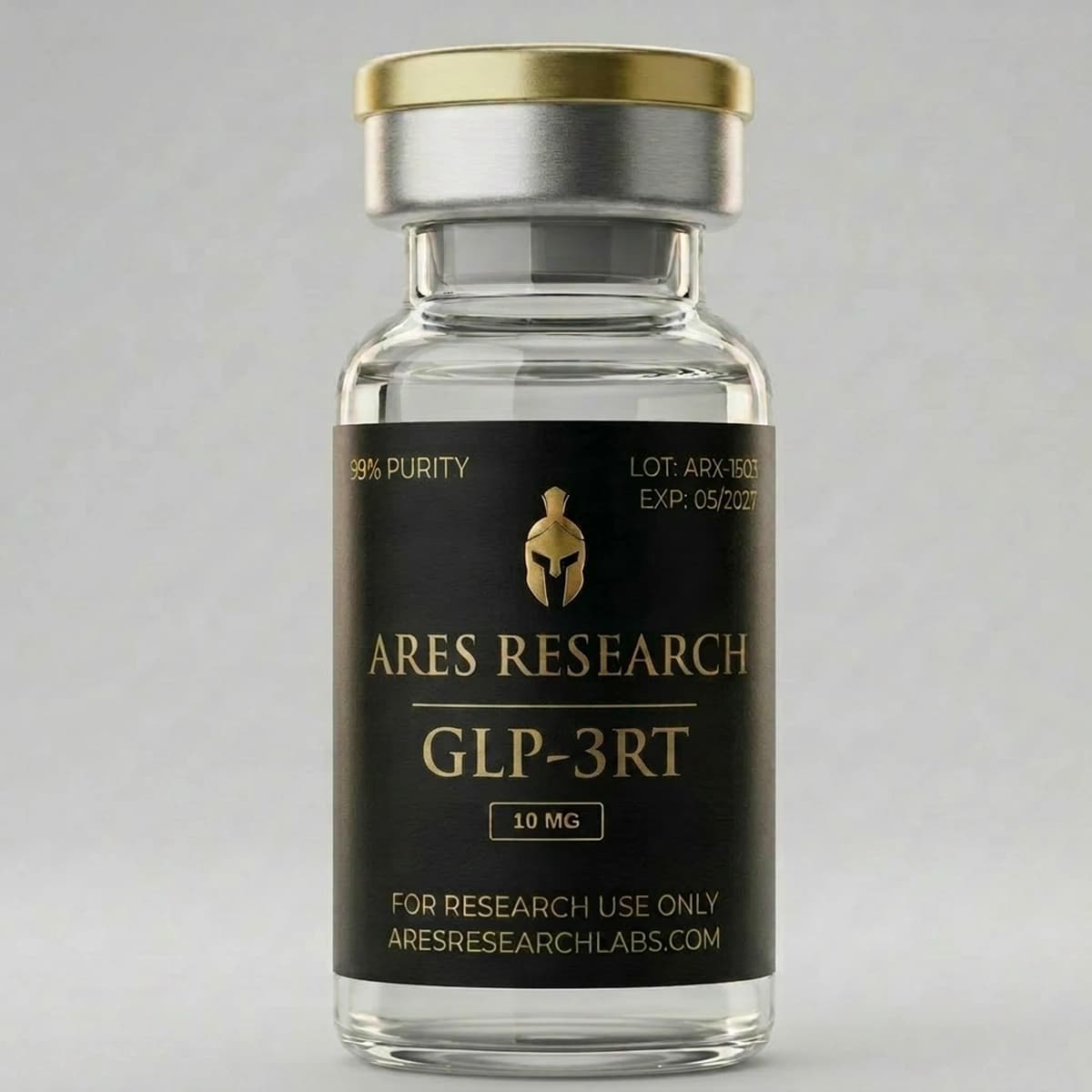
RAD-140 (Testolone)
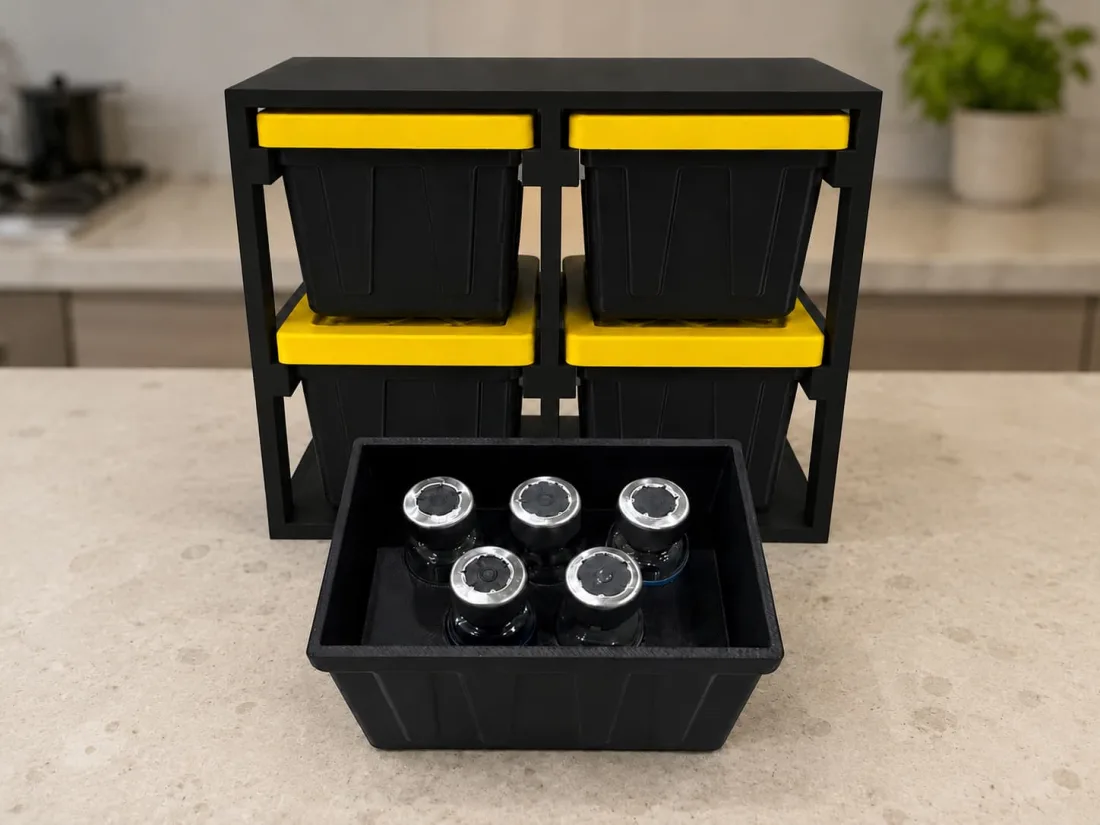
5-Vial Tote Case
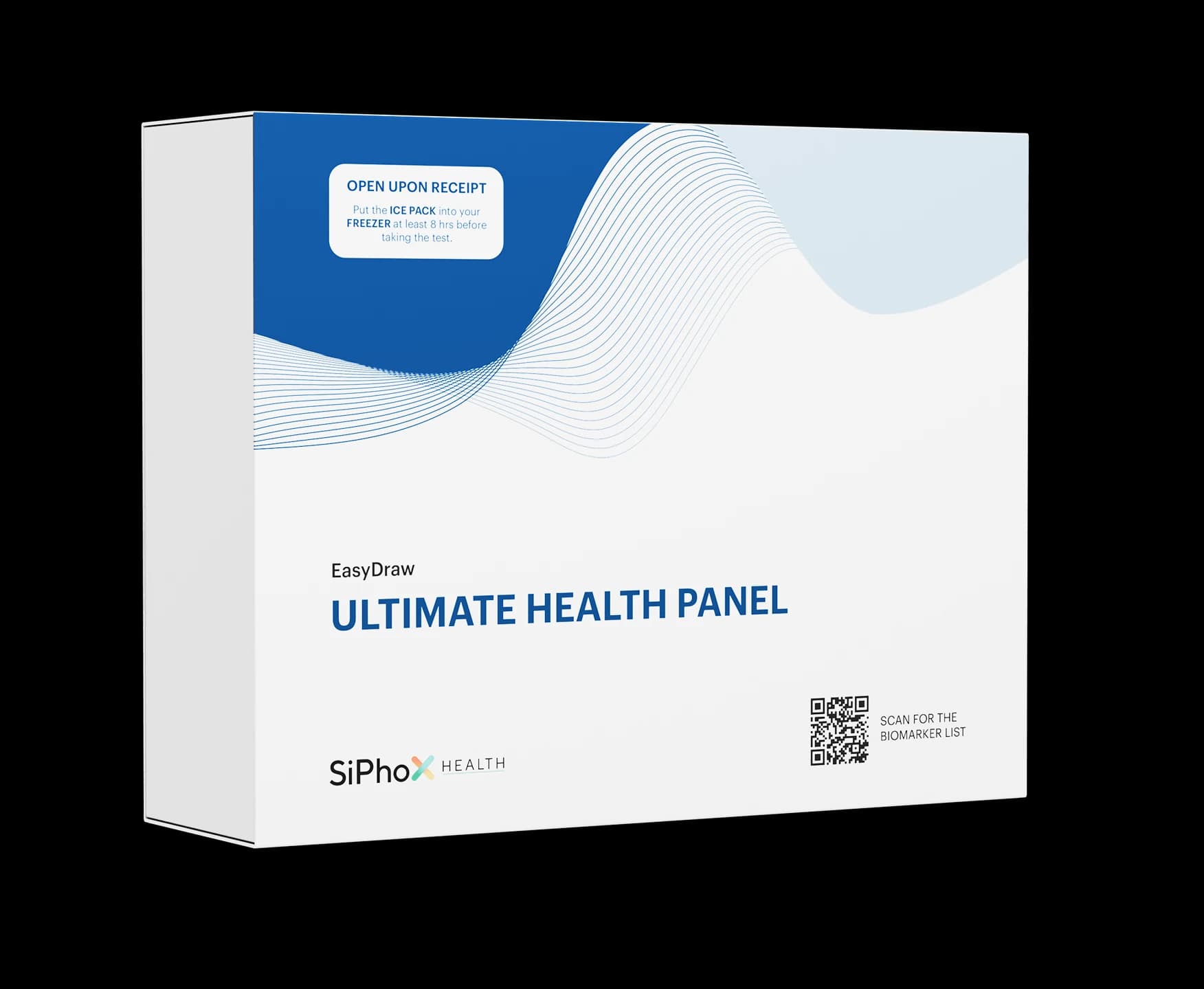
At-Home Blood Test
Research Supplies
Disclosure: supply links may earn PDP a commission at no cost to you.
RAD-140 research compound
Use a product-specific supplier page and current COA for research inventory planning.
| Planning context | Planning note |
|---|---|
6-8 week community-reported cycle, 8-10 week extended community-reported cycle Supplier-dependent | 6-8 week community-reported cycle: Confirm concentration, capsule count or liquid volume, batch testing, and expiration before purchase.; 8-10 week extended community-reported cycle: Longer exposure raises suppression and monitoring concerns; do not treat supplier quantity as a dosing recommendation. |
6-8 week community-reported cycle, 8-10 week extended community-reported cycle
Supplier-dependent
6-8 week community-reported cycle: Confirm concentration, capsule count or liquid volume, batch testing, and expiration before purchase.; 8-10 week extended community-reported cycle: Longer exposure raises suppression and monitoring concerns; do not treat supplier quantity as a dosing recommendation.
This table is for supply planning only. It does not establish a safe dose, approved cycle, or medical protocol.
Oral measuring and tracking supplies
RAD-140 is usually discussed as an oral liquid or capsule, so injectable peptide supplies are not part of the standard setup.
| Planning context | Planning note |
|---|---|
Liquid RAD-140 Accurate oral syringe | Use measured volume instead of estimating drops if working with a liquid research product. |
Capsule RAD-140 Label and batch record | Record capsule strength, lot number, COA date, and any lab-work timing notes. |
Monitoring plan Baseline, week 4, and post-cycle labs | The article discusses total/free testosterone, LH, FSH, AST, ALT, lipid panel, and CBC with clinician interpretation. |
Liquid RAD-140
Accurate oral syringe
Use measured volume instead of estimating drops if working with a liquid research product.
Capsule RAD-140
Label and batch record
Record capsule strength, lot number, COA date, and any lab-work timing notes.
Monitoring plan
Baseline, week 4, and post-cycle labs
The article discusses total/free testosterone, LH, FSH, AST, ALT, lipid panel, and CBC with clinician interpretation.
No BAC water, syringes, alcohol swabs, or sharps container are listed here because RAD-140 is discussed as an oral research chemical, not an injectable peptide.
Companion Supplies & Routine Support
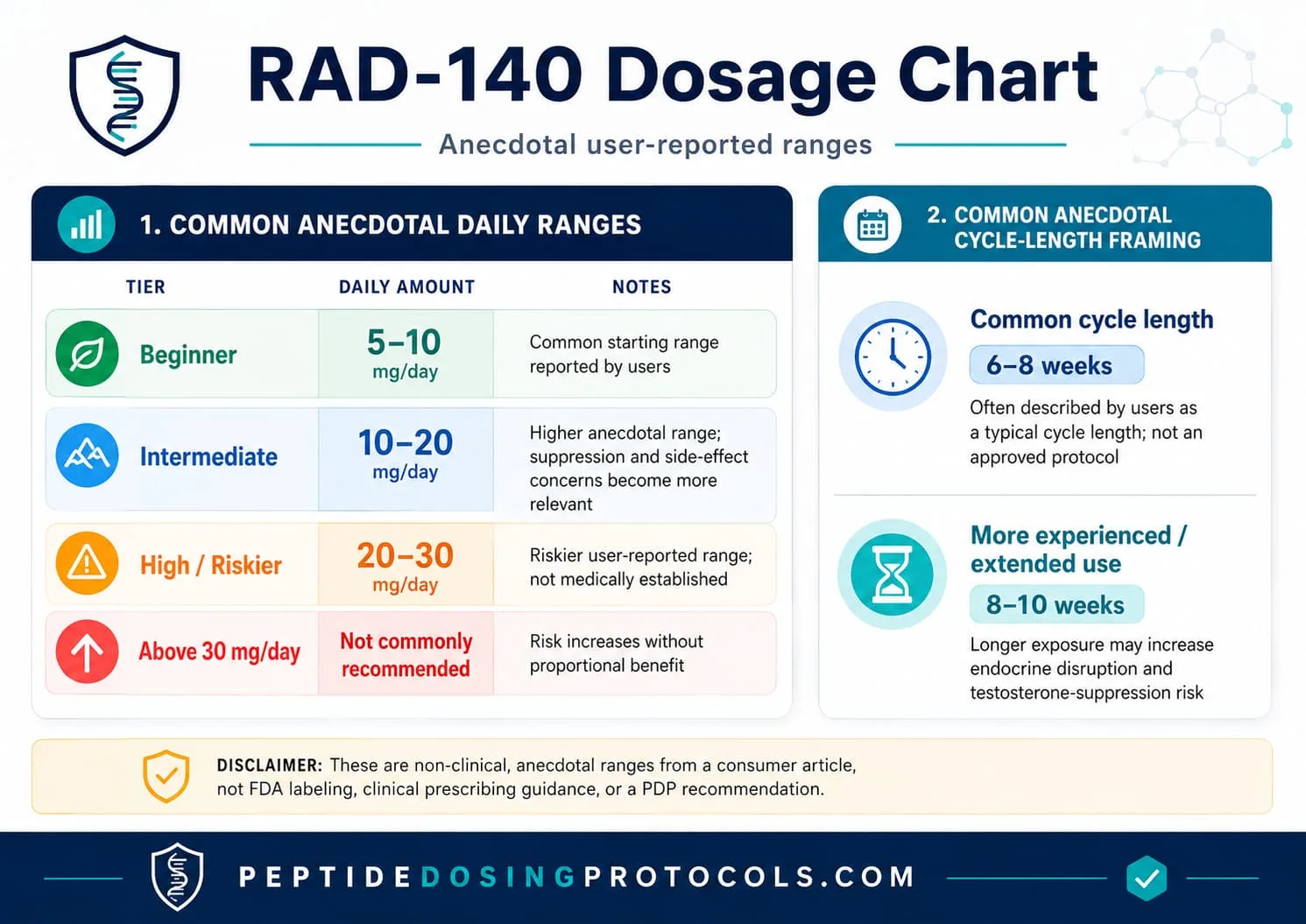
RAD-140 Dosage Chart
This RAD-140 dosage chart summarizes the anecdotal user-reported daily ranges and cycle framing discussed above. It is included as a visual reference only, not FDA-approved dosing guidance or a safe-use recommendation.
Why people search for RAD-140
Most real-world interest in RAD-140 is about body composition: building muscle, getting stronger, and "recomp" (losing fat while keeping muscle). It is often discussed in gym, fitness, and online communities as a "legal-seeming" alternative to anabolic steroids, and it is frequently grouped with other SARMs like ostarine and ligandrol.
It is important to separate popularity from proof. Wide online discussion does not equal evidence that RAD-140 is safe or that it works the way ads claim. The only human trials are early cancer studies, and the published muscle-building "results" come from anecdotes, not controlled research. The same communities have also produced the liver-injury case reports below.
- Common interest cluster: muscle gain, strength, and body recomposition.
- Often framed online as a steroid alternative or stacked with other SARMs.
- Evidence reality: only early human cancer data plus harm reports; no muscle-building trials.
How RAD-140 works
In plain terms, RAD-140 attaches to the androgen receptor and switches it on. When that receptor is active in muscle and bone, it can signal those tissues to grow. That is the effect people are usually thinking of when they search for RAD-140.
The "selective" idea is that RAD-140 is meant to act strongly on muscle and bone and more weakly on the prostate and skin. Its chemistry is built around an oxadiazole ring with a benzonitrile group, which is a different structure from the four-ring "steroid nucleus." That structural difference is why RAD-140 is called nonsteroidal.
The honest limit here is that "selective" does not mean "side-effect free." Human data is thin, and the published harms below show the liver and natural hormone system can still be affected. Most of what is known about how RAD-140 acts in muscle comes from animal and cell studies, not large human trials.
RAD-140 side effects and the liver-injury risk
Liver injury is the headline risk
Multiple peer-reviewed case reports describe drug-induced liver injury (DILI) in people who took RAD-140 for muscle growth. The pattern is usually cholestatic, which means bile flow is blocked, leading to jaundice (yellow skin and eyes), dark urine, itching, and very high bilirubin. Reported cases include young, previously healthy men, with onset after only a few weeks of use in some reports.
Doctors note that the liver usually recovers after stopping RAD-140, but recovery can take 3 to 5 months, and liver values sometimes get worse before they get better. In the most severe published cases, clinicians warn that acute liver failure needing a transplant is possible. A US national drug-injury database (LiverTox) lists RAD-140 among SARMs tied to liver harm.
Hormone, heart, and other reported effects
- Testosterone suppression: RAD-140 acts on the androgen receptor and can lower the body's own testosterone production.
- Cardiovascular concern: the FDA links SARMs as a class to a higher risk of heart attack and stroke; a published case described heart-muscle inflammation (myopericarditis) after a first dose.
- Cholesterol and other effects: SARMs can affect blood lipids; reported issues also include sleep problems, mood changes, and sexual dysfunction.
- Contamination risk: products sold online are unregulated and may contain different or extra ingredients than the label states.
Warning signs that need urgent medical care
Yellow skin or eyes, dark urine, pale stools, severe itching, ongoing nausea, right-upper-belly pain, or unusual tiredness can be signs of liver injury. Anyone with these symptoms should stop and seek medical care right away.
Who has the most to lose
Because RAD-140 is not approved and has documented liver and hormone risks, it carries clear danger for many groups. This is general safety information, not a screening tool.
- Anyone pregnant, trying to become pregnant, or breastfeeding — androgens can harm a developing baby.
- Anyone with liver disease, past liver injury, or who drinks heavily.
- Anyone with heart disease or major heart-risk factors.
- Competitive or tested athletes — RAD-140 is banned and detectable (see status below).
- Active-duty US military service members — SARMs are prohibited.
- Anyone taking other medications, since interactions and combined liver stress are possible.
RAD-140 legal, FDA, WADA, and military status
As of June 2026, RAD-140 is not approved by the FDA for any use. The FDA treats products sold as SARMs as unapproved new drugs and says they cannot be legally marketed as dietary supplements or drugs in the US. In December 2025, the FDA issued warning letters to companies selling RAD-140 and updated its public warning that bodybuilding products containing SARMs can cause serious liver damage, heart attack, and stroke.
In sports, RAD-140 is named on the 2026 WADA Prohibited List under section S1.2, "Other Anabolic Agents," and is banned at all times, both in and out of competition. USADA enforces this for US athletes. (For context, several peptide hormones are also banned by WADA under section S2, so a WADA ban is not unique to SARMs.) RAD-140 is also on the US Department of Defense prohibited list, so it is banned for military service members.
"Research chemical" labels do not make it legal to use
Selling RAD-140 with a "for research use only" or "not for human consumption" label does not make it an approved or legal product for people. It remains an unapproved drug.
RAD-140 vs RAD-150, LGD-4033, and steroids
RAD-140 is a SARM, not a steroid and not a peptide. A peptide is a short chain of amino acids; RAD-140 is a small synthetic molecule. A steroid has a four-ring carbon core; RAD-140 does not. These are different chemical families, even though all three can affect muscle.
How RAD-140 compares to nearby compounds (for context only)
Compound
RAD-140 (Testolone)
What it is
Nonsteroidal SARM
Status
Not FDA-approved; WADA-banned; liver-injury case reports
Compound
RAD-150 (TLB-150)
What it is
A modified ester version sold online, marketed as related to RAD-140
Status
Even less studied; no approval; same SARM safety concerns
Compound
LGD-4033 (Ligandrol)
What it is
Another nonsteroidal SARM
Status
Not FDA-approved; WADA-banned; also linked to liver injury
Compound
Anabolic steroids
What it is
Steroid-structure androgens
Status
Long-known liver and heart risks; controlled substances in the US
| Compound | What it is | Status |
|---|---|---|
| RAD-140 (Testolone) | Nonsteroidal SARM | Not FDA-approved; WADA-banned; liver-injury case reports |
| RAD-150 (TLB-150) | A modified ester version sold online, marketed as related to RAD-140 | Even less studied; no approval; same SARM safety concerns |
| LGD-4033 (Ligandrol) | Another nonsteroidal SARM | Not FDA-approved; WADA-banned; also linked to liver injury |
| Anabolic steroids | Steroid-structure androgens | Long-known liver and heart risks; controlled substances in the US |
These compounds are not interchangeable. RAD-150 in particular has far less published human data than RAD-140.
A key point for the "is it safer than steroids" question: being nonsteroidal does not mean being safe. RAD-140 still suppresses natural testosterone and has its own documented liver-injury risk.
FAQ
Q1: Is RAD-140 a steroid?
No. RAD-140 (Testolone) is a nonsteroidal SARM. It activates the same androgen receptor that testosterone uses, but its chemical structure is different from steroids. It is still banned in sport and is not approved for human use.
Q2: Is RAD-140 a peptide?
No. A peptide is a short chain of amino acids. RAD-140 is a small synthetic molecule called a SARM. It is listed here as research education because people often group it with peptides, but it is a different type of compound.
Q3: Is RAD-140 a SARM?
Yes. RAD-140 is a selective androgen receptor modulator. Its lab name is vosilasarm and its development code is EP0062. All SARMs are investigational and none are FDA-approved.
Q4: Is RAD-140 safe?
RAD-140 has not been shown to be safe for human use. Published medical case reports link it to severe liver injury, including jaundice and very high bilirubin, sometimes after only a few weeks. It can also suppress natural testosterone. This page is educational only and is not medical advice.
Q5: Can RAD-140 damage your liver?
Yes, this is the main reported risk. Several peer-reviewed case reports describe drug-induced liver injury in people taking RAD-140 for muscle growth. Recovery can take 3 to 5 months after stopping, and doctors warn that liver failure needing a transplant is possible in severe cases.
Q6: Does RAD-140 suppress testosterone?
It can. Because RAD-140 acts on the androgen receptor, it can signal the body to make less of its own testosterone. The long-term effects of this are not well studied in humans.
Q7: What is the half-life of RAD-140?
Clinical pharmacokinetic data from the Phase 1 cancer trial reported an elimination half-life of roughly 44 to 60 hours, which is longer than the often-repeated online claim of about 20 hours. This is a pharmacology fact, not a dosing schedule.
Q8: Is RAD-140 legal?
RAD-140 is not an approved drug and is not a legal dietary supplement in the US. The FDA has sent warning letters to companies selling it. It is also banned by WADA for athletes and prohibited for US military service members. A "research use only" label does not make it legal to use.
Q9: Is RAD-140 FDA approved?
No. As of June 2026, RAD-140 is not approved by the FDA for any use. It has only reached early human trials as an investigational cancer compound.
Q10: RAD-140 vs RAD-150 vs LGD-4033 — what's the difference?
All three are SARMs that are not FDA-approved. RAD-150 is a modified version sold online with even less human data than RAD-140. LGD-4033 (Ligandrol) is a separate SARM that is also linked to liver injury. None are interchangeable, and none has been shown to be low-risk.
Q11: Does this page give medical RAD-140 dosing, cycle, or PCT instructions?
No. This page summarizes common anecdotal user-reported RAD-140 ranges and cycle discussions because readers search for them, but those ranges are not medical recommendations, not FDA-approved guidance, or proof that any dose is low-risk. PCT drugs such as tamoxifen or clomiphene are prescription medications and require appropriate medical supervision.
Q12: Is this medical advice?
No. This page is an educational research reference. It does not diagnose, treat, or recommend a dose, and it is not a substitute for advice from a licensed medical professional.
Sources & Research
- 1. Radius Health, Inc. Phase 1, First-in-Human Study of RAD140 in Postmenopausal Women With Breast Cancer (NCT03088527) ClinicalTrials.gov (2017)
- 2. Hamilton EP, et al. Phase I dose escalation study of a selective androgen receptor modulator RAD140 in ER+/HER2- breast cancer (provisional MTD 100 mg QD) Annals of Oncology (2019)
- 3. Han HS, et al. Results of a phase 1 study of vosilasarm (EP0062), a first-in-class oral SARM, in advanced AR+/ER+/HER2- breast cancer (NCT05573126) Journal of Clinical Oncology (2025)
- 4. NCATS Inxight Drugs Vosilasarm (RAD140 / EP0062) — compound identity, development history, and trial record NIH / NCATS (2025)
- 5. Swolverine RAD-140 dosage guide article covering community dosing ranges, cycles, PCT and recovery support Swolverine (n.d.)
- 6. Leung K, Yaramada P, Goyal P, et al. RAD-140 Drug-Induced Liver Injury (cholestatic injury, peak bilirubin 38.5 mg/dL after 5 weeks) Ochsner Journal (2022)
- 7. American College of Gastroenterology (ACG) S4449: Severe Drug-Induced Liver Injury Due to RAD-140 Use (transplant risk; 3-5 month recovery) American Journal of Gastroenterology (2024)
- 8. Demangone MR, Abi Karam KR, Li J. Selective Androgen Receptor Modulators Leading to Liver Injury: A Case Report Cureus (2024)
- 9. Case report (Australia) Severe liver injury following use of RAD-140 for body building (worsened after cessation) PMC / Clinical Case Reports (2024)
- 10. Niazi B, Quach B, Fisher K, Peeraphatdit T. Cholestatic drug-induced liver injury from RAD-140 successfully treated with corticosteroids ACG Case Reports Journal (2025)
- 11. LiverTox (NIDDK/NIH) Selective Androgen Receptor Modulators — hepatotoxicity summary (updated Sept 2025) NCBI Bookshelf (2025)
- 12. U.S. Food and Drug Administration Certain bodybuilding products put consumers at risk for heart attack, stroke, serious liver damage and more FDA (2025)
- 13. U.S. Food and Drug Administration Warning Letter to Atomix LLC naming RAD-140 (Testolone) as an unapproved new drug (Dec 12, 2025) FDA (2025)
- 14. World Anti-Doping Agency The 2026 Prohibited List — RAD140 named under S1.2 Other Anabolic Agents WADA (2026)
- 15. Operation Supplement Safety (OPSS), U.S. DoD SARMs: What's the harm? — SARMs unapproved and prohibited for service members DoD / OPSS (2025)
Related Dosing Protocols
Educational use only
This guide is an educational research reference, not medical advice, a dosing protocol, or a treatment plan. RAD-140 is not approved for human use. Talk to a qualified clinician before considering any androgen-receptor compound.
Understand the liver risk first
RAD-140 has been tied to severe liver injury in published case reports. Review the safety section and speak with a qualified clinician before considering any androgen-receptor compound.

Written by Garret Grant
Founder & Lead Researcher · B.S. Civil Engineering, UCLA
Last updated: July 2026
Human-researched and AI-assisted with full editorial review. I verify sources, protocol interpretation, and final judgments personally. See methodology.
Share this page